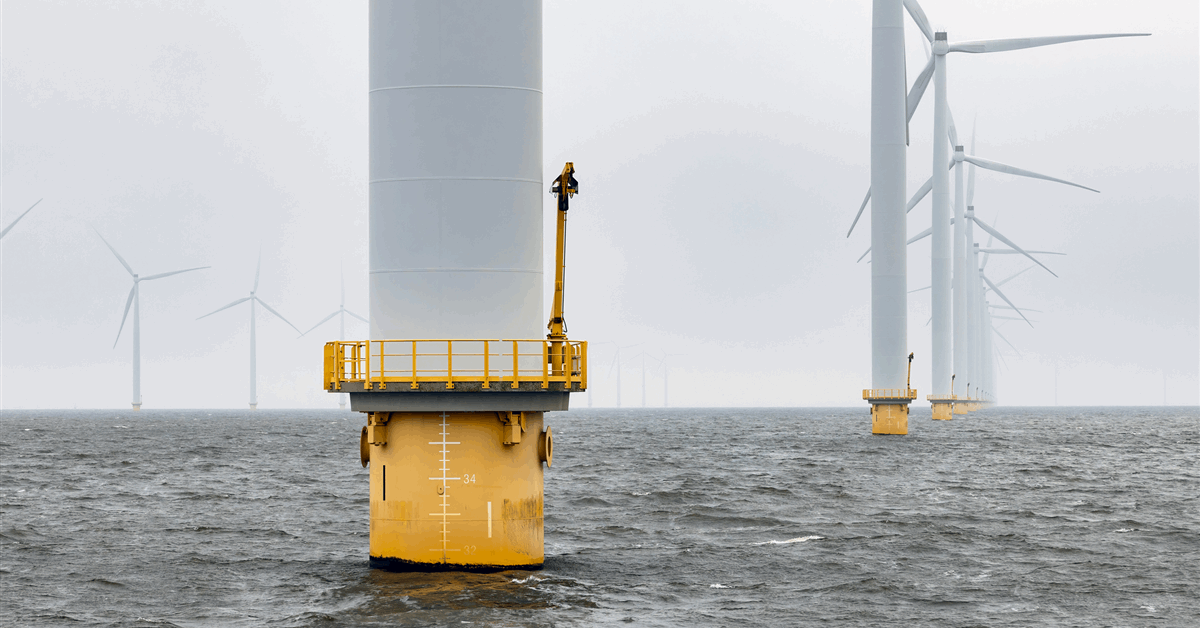
The recent announcement by EDF Renewables and ESB Energy securing rights to develop the Gwynt Glas Floating Offshore Wind Farm in the Celtic Sea signals a crucial pivot in the broader energy investment landscape. While the immediate focus of many oil and gas investors remains on the daily fluctuations of crude prices and geopolitical catalysts, this 1.5-gigawatt (GW) project underscores the strategic imperative of diversification and the accelerating momentum of the energy transition. For sophisticated investors, understanding such large-scale renewable commitments is not merely a side note; it’s fundamental to forecasting long-term capital flows, assessing competitive energy supplies, and identifying companies best positioned for a net-zero future.
Celtic Sea: A New Frontier for Energy Capital Allocation
The Gwynt Glas project, a joint venture between EDF Renewables and ESB Energy, represents a significant leap forward for floating offshore wind technology. Located strategically in the Celtic Sea, adjacent to both the UK and Ireland, this development has the potential to generate substantial clean electricity, aligning with both nations’ ambitious net-zero targets. What makes this particular win noteworthy is its reliance on floating technology, which allows for deployment in deeper waters previously inaccessible to fixed-bottom turbines. This expands the potential footprint for offshore wind dramatically, unlocking vast new energy resources. The competitive seabed tender process, which saw Gwynt Glas present comprehensive proposals for both development and socio-economic value, highlights the rigorous selection criteria and the commitment required for such ventures. Investors should recognize this as a signal of high barriers to entry and the need for robust project execution capabilities, attributes that can differentiate energy companies in a transitioning market.
Navigating Volatility: Renewable Stability Amidst Robust Crude Markets
The commitment to projects like Gwynt Glas unfolds against a backdrop of dynamic and often volatile fossil fuel markets. As of today, Brent crude trades at $95.19 per barrel, showing a daily gain of 0.42%, with a range between $91 and $96.89. WTI crude similarly saw an increase, reaching $92.36, up 1.18% for the day. While these prices reflect a robust environment for crude producers, the past two weeks have shown significant price swings; Brent, for instance, has declined by approximately $9, or 8.8%, from $102.22 on March 25th to $93.22 on April 14th. This inherent volatility in crude pricing often drives short-term investment decisions. In contrast, large-scale renewable projects, once operational, offer long-term, more predictable revenue streams backed by power purchase agreements (PPAs). For companies like EDF and ESB, investing in Gwynt Glas is a strategic move to balance their energy portfolios, mitigating exposure to crude price swings and positioning themselves for sustained growth in the decarbonized economy. This blend of market conditions makes the capital allocation decisions of integrated energy players particularly interesting for investors seeking diversification and risk management.
Investor Focus: Beyond the Barrel, Towards Long-Term Energy Security
Our proprietary reader intent data reveals a strong focus among investors on immediate crude market dynamics. Questions like “Build a base-case Brent price forecast for next quarter” and “What is the consensus 2026 Brent forecast?” dominate inquiries, highlighting the perennial preoccupation with short-term commodity price movements. However, smart money is increasingly looking beyond the immediate barrel count. The Gwynt Glas project, with its anticipated operation in the early 2030s following a three-to-five-year development and consent period, represents a long-term investment in energy security and sustainability. For oil and gas companies, this implies a growing challenge in attracting capital if they do not articulate a clear transition strategy. Investors are increasingly evaluating companies not just on their current hydrocarbon production, but on their credible pathways to diversify revenue streams and reduce carbon intensity. The successful execution of projects like Gwynt Glas by traditional energy players demonstrates a viable route for navigating this evolving investment landscape, offering a counterpoint to the short-term crude price fixation.
Forward Momentum: Upcoming Events and the Broader Energy Horizon
The energy calendar over the next two weeks is packed with events that will undoubtedly influence the short-to-medium term outlook for traditional oil and gas. We anticipate key insights from the Baker Hughes Rig Count on April 17th and 24th, providing crucial data on drilling activity. More critically, the OPEC+ Joint Ministerial Monitoring Committee (JMMC) meeting on April 18th, followed by the full Ministerial OPEC+ Meeting on April 20th, will set the tone for global crude supply policy. These are pivotal dates for any investor focused on crude price trajectories. API and EIA weekly inventory reports, scheduled for April 21st/22nd and April 28th/29th, will further refine supply-demand balances. While these events dictate immediate market reactions for crude, the Gwynt Glas project, with its long development horizon, reminds us that significant capital is simultaneously being deployed in projects that will shape the energy mix a decade from now. Investors must weigh the immediate impacts of OPEC+ decisions and inventory shifts against the long-term, structural changes driven by large-scale renewable developments. The ongoing energy transition is not a distant future event; it is happening now, with capital commitments being made that will profoundly impact the competitive landscape for all energy sources.


