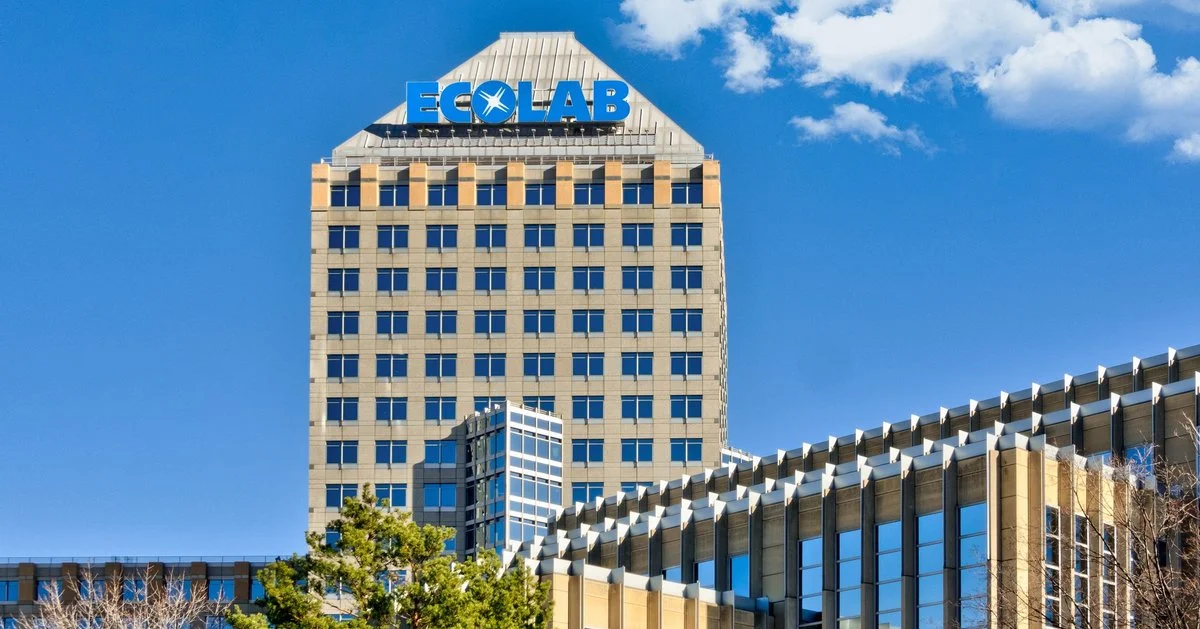
In an energy landscape increasingly defined by both price volatility and stringent environmental mandates, the strategic alliance between industrial conglomerate SCG and water and hygiene solutions leader Ecolab presents a compelling case study for investors. This renewed five-year Memorandum of Understanding, set to run from June 2025 to May 2030, deepens a three-decade partnership, signaling a clear commitment to integrating sustainability with core business competitiveness. For oil and gas investors, understanding how major industrial players like SCG are navigating their energy transition and operational efficiency offers critical insights into broader market resilience and long-term value creation.
The Strategic Imperative: ESG as a Value Driver for Industrials
SCG, a diversified industrial powerhouse with significant energy and resource intensity in its operations, is not just paying lip service to ESG; it is embedding these principles into its operational DNA. The announced partnership with Ecolab specifically targets measurable outcomes: enhancing water reuse beyond the 2024 baseline of 13.10% and substantially reducing greenhouse gas emissions by 2030, all foundational steps towards its ambitious Net Zero 2050 target. This isn’t merely about compliance; it’s a strategic move to future-proof operations. By focusing on areas like water optimization and energy efficiency within SCG Packaging (SCGP) and SCG Chemicals (SCGC), the company aims to mitigate rising operational costs, enhance resource security, and bolster its social license to operate. For investors, these initiatives translate directly into reduced risk profiles and potentially superior long-term financial performance, as companies better positioned for a low-carbon future tend to attract more capital and weather market disruptions more effectively.
Operationalizing Sustainability: Measurable Goals Amidst Market Flux
The collaboration with Ecolab is designed to translate sustainability ambitions into tangible operational gains. Ecolab’s expertise in water solutions and process optimization will be critical in driving efficiency improvements and integrating renewable energy sources across SCG’s key divisions. This focus on “innovative process improvements” and “measurable outcomes” is precisely what investors demand in an era where environmental claims often face intense scrutiny. However, the macro-economic backdrop for such investments is perpetually shifting. As of today, Brent crude trades at $90.38, reflecting a significant 9.07% drop from yesterday, with its day range spanning from $86.08 to $98.97. This sharp decline from $112.78 just weeks ago, observed over the 14-day trend, where Brent fell by 18.5% from March 30th to April 17th, highlights the inherent volatility in energy markets. For heavy industrial conglomerates like SCG, while lower crude prices might offer some immediate relief on direct energy input costs, the broader market volatility underscores the critical need for operational resilience. Investments in efficiency and water reuse, therefore, become even more paramount to maintain margins and ensure stability, regardless of energy price swings.
Investor Focus: Hedging Against Future Energy Uncertainty
Our proprietary reader intent data reveals a keen investor focus on future oil price trajectory, with questions like “what do you predict the price of oil per barrel will be by end of 2026?” dominating queries. This pervasive uncertainty about long-term energy costs, alongside questions regarding OPEC+ production quotas, underscores the market’s need for clarity and predictability. In this environment, companies that proactively manage their energy and resource consumption through partnerships like the SCG-Ecolab alliance are effectively constructing a hedge against future volatility and potential carbon pricing. By reducing their reliance on external energy inputs and optimizing internal resource loops, SCG is enhancing its competitive position. Investors are increasingly recognizing that these strategic ESG initiatives are not just about corporate responsibility but about fundamental business resilience and long-term shareholder value creation in a world grappling with energy transition and resource scarcity. The dual focus on “reducing costs” and “improving efficiency” directly addresses investor concerns about profitability in a volatile commodity market.
Forward Outlook: Expanding Impact and Upcoming Market Catalysts
The current Memorandum of Understanding initially targets SCG Packaging and SCG Chemicals, but the potential for expansion across other SCG businesses hints at a broader, systemic transformation. This scalability is a key factor for investors assessing the long-term impact of such partnerships. Looking ahead, the next two weeks are packed with critical energy market catalysts that will undoubtedly influence the broader investment landscape. The upcoming OPEC+ Joint Ministerial Monitoring Committee (JMMC) meeting on April 18th, followed by the Full Ministerial meeting on April 19th, will set the tone for crude supply. Subsequent API and EIA weekly inventory reports on April 21st, 22nd, 28th, and 29th, alongside Baker Hughes Rig Count releases on April 24th and May 1st, will provide vital insights into demand-supply dynamics and North American production trends. The outcomes of these events – particularly OPEC+’s stance on production quotas, a recurring theme in investor questions – will undoubtedly influence crude supply and pricing dynamics. For industrial players like SCG, ongoing investments in operational efficiency and renewable integration become a crucial buffer against potential input cost shocks or policy shifts that could emerge from these discussions, reinforcing the strategic value of their ESG commitments.
Investment Implications: Resilience Through Responsible Growth
The SCG-Ecolab partnership exemplifies a growing trend where industrial giants are strategically aligning with technology providers to achieve ambitious sustainability targets. For investors, this signals a commitment to long-term value creation through reduced operational risks, enhanced resource efficiency, and improved environmental stewardship. In a market where Brent crude is trading at $90.38 and WTI at $82.59, down significantly from recent highs, the imperative for cost control and efficiency is clearer than ever. Companies that can demonstrate a credible path to Net Zero, coupled with tangible operational savings, are better positioned to attract and retain capital. This alliance is more than just an environmental initiative; it is a blueprint for building a more resilient, competitive, and sustainably profitable enterprise in an evolving global economy.


