

Shrinking Credit Demand Signals Economic Headwinds, What It Means for Energy Investors
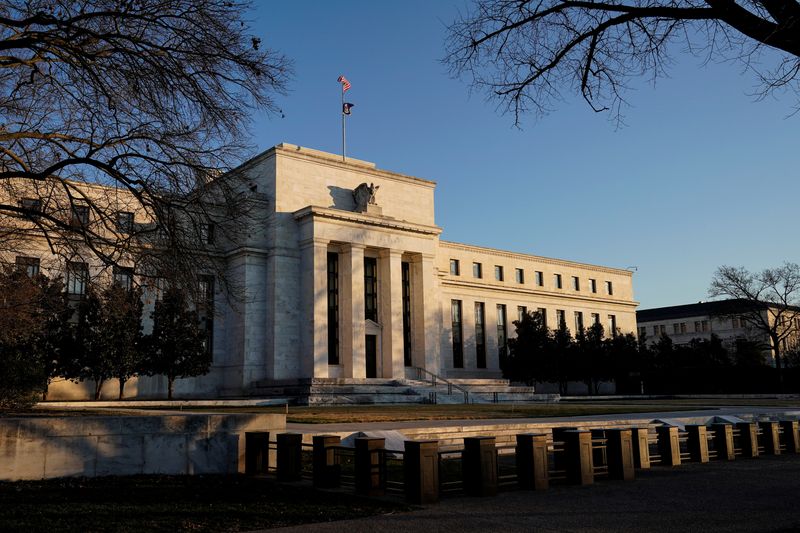
The latest insights from the nation’s top lending institutions paint a concerning picture for the broader economic landscape, with significant implications for oil and gas investors. A recent Federal Reserve report, based on its April Senior Loan Officer Survey (SLOOS) detailing first-quarter activity, reveals a broad retreat in credit demand from both businesses and consumers. This reversal from a brief surge in the prior quarter, coupled with a notable tightening of lending standards, suggests a growing caution within the financial system that could translate into slower economic growth and, by extension, softer energy demand.
For those tracking the pulse of the global energy market, these shifts in credit availability are critical. Reduced access to capital for businesses can stifle investment in new projects, while constrained consumer spending directly impacts fuel consumption. As expert financial journalists, we delve into the specifics of this report and what it signals for your oil and gas investment strategies.
Business Lending: A Chilling Effect on Capital Expenditure
The report highlights a pronounced weakening in demand for commercial and industrial (C&I) loans during the first three months of the year. Banks indicated that the number of institutions reporting weaker demand for C&I loans from small firms outstripped those reporting stronger demand by the largest margin seen in a year. For larger firms, the appetite for loans reached its lowest point since the third quarter of last year. This stands in stark contrast to the fourth quarter, which saw a net increase in C&I loan demand across all business sizes.
Beyond demand, lending standards themselves have become more stringent. The net percentage of bank officials reporting stricter standards for business loans rose sharply in Q1. For large firms, these standards tightened to levels not seen in a year and a half, while for small firms, the tightening marked a one-year high. Lending officers attributed these more restrictive conditions to an increasingly challenging economic environment, citing a “less favorable or more uncertain” outlook. Additional factors contributing to this caution included heightened concerns about the impact of legislative changes, supervisory actions, shifts in accounting standards, worsening industry-specific problems, and a general reduction in risk tolerance.
For the capital-intensive oil and gas sector, this environment poses significant challenges. Tighter credit markets can directly impede upstream exploration and production (E&P) companies seeking financing for new drilling projects or acquisitions. Midstream operators might find it harder to secure funds for pipeline expansion, while downstream refiners could face obstacles in financing upgrades or capacity enhancements. Reduced access to capital translates to slower project development, potentially impacting future supply and the overall health of the energy supply chain. Investors should consider how this credit crunch might influence the capital expenditure plans and growth trajectories of their portfolio companies.
Consumer Spending: Direct Impact on Energy Demand
On the household front, the survey noted a “weaker demand” for various forms of consumer credit. Lending standards for households remained largely unchanged overall, though specific tightening was observed for credit card loans, while auto lending standards held steady throughout the first quarter. More critically, demand for credit for residential real estate, credit cards, and other consumer loans softened considerably. The data revealed that banks reporting weaker credit card loan demand outnumbered those reporting stronger demand by the widest margin since the second quarter of 2020, a period marked by profound economic uncertainty.
This decline in consumer credit demand is a direct signal of potential headwinds for household spending, a key driver of energy consumption. Reduced consumer borrowing for homes, vehicles, and discretionary purchases can lead to fewer miles driven, less air travel, and a general slowdown in economic activity that underpins demand for refined products like gasoline, diesel, and jet fuel. Furthermore, a pullback in consumer confidence and spending can ripple through various industries, ultimately dampening industrial energy usage as well. Oil and gas investors must recognize that a financially constrained consumer base translates directly to softer demand at the pump and across the broader energy complex.
Macroeconomic Ripples and Energy Investment Implications
The composite picture emerging from the Federal Reserve’s report points to a broader economic deceleration driven by a more cautious financial sector and potentially waning confidence among borrowers. When banks become more risk-averse and businesses/consumers pull back on borrowing, it inevitably slows the velocity of money and overall economic growth. This is a critical indicator for the energy markets, which are inherently cyclical and sensitive to global economic health.
A slowdown in economic activity typically correlates with a decrease in global energy demand, putting downward pressure on crude oil and natural gas prices. For oil and gas companies, this could mean reduced revenues, compressed margins, and a reevaluation of investment plans. Companies might prioritize debt reduction and shareholder returns over aggressive growth, or even scale back operational activity in a less favorable demand environment. Investors should therefore scrutinize company balance sheets, cash flow generation, and strategic flexibility in light of these credit market trends.
The reasons cited by banks for tightening standards – a less favorable or more uncertain economic outlook, coupled with increased concerns over legislative changes and risk tolerance – further underscore the prevailing sentiment of caution. Such uncertainty can deter long-term investments, particularly in capital-intensive sectors like energy where project timelines are extensive and returns depend on sustained demand. The interplay of tightening credit and increased economic uncertainty creates a challenging backdrop for maintaining robust energy demand and fostering new supply development.
In conclusion, the Federal Reserve’s latest survey on credit demand and lending standards offers a sober assessment of current economic conditions. For oil and gas investors, this data serves as an important early warning signal. A contraction in credit, both for businesses and consumers, points to potential deceleration in economic activity, which historically translates into softer energy demand and a more challenging operating environment for energy companies. Vigilance regarding these financial indicators, alongside traditional energy market fundamentals, will be paramount for navigating the evolving investment landscape.
