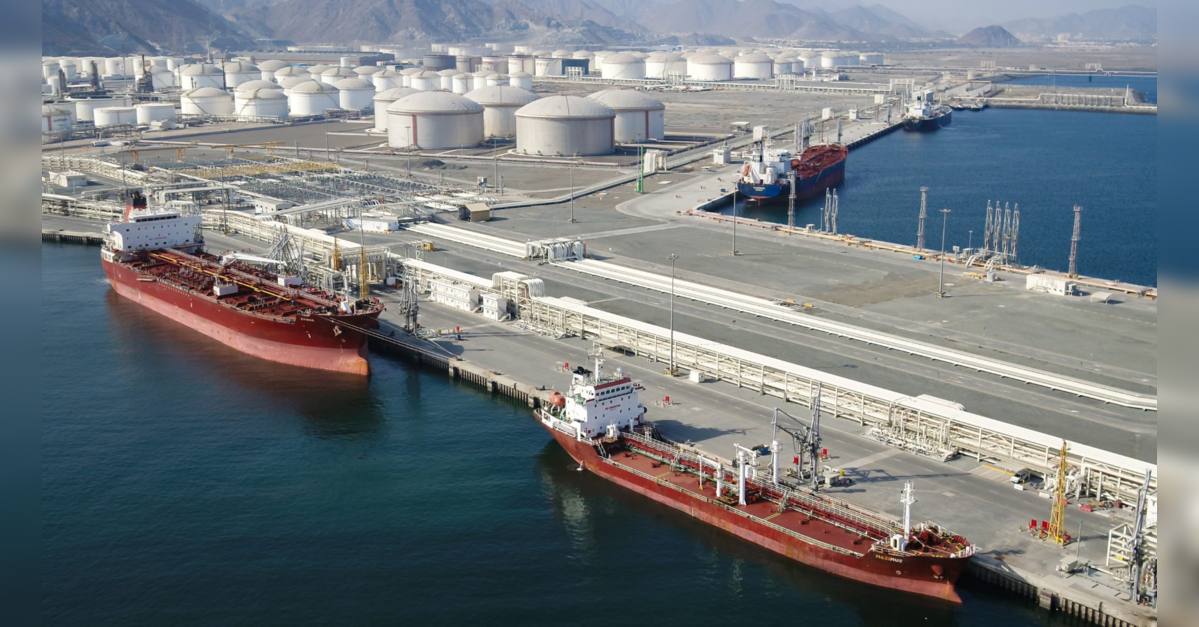
The global oil market is once again reminded of its inherent vulnerabilities following a recent drone strike at the Fujairah port in the United Arab Emirates. This incident, which led to a fire at a petroleum facility and the subsequent suspension of oil loading operations, underscores the escalating geopolitical risks in a crucial energy corridor. As authorities assess the damage and emergency teams work to fully control the situation, investors are left to weigh the immediate implications against the backdrop of heightened tensions in the Middle East. While the market’s initial reaction might appear subdued, the strategic importance of Fujairah cannot be overstated, prompting a deeper dive into the potential for sustained supply disruptions and their impact on crude oil prices and investor sentiment.
Fujairah: A Critical Node Under Pressure
The recent drone strike on a petroleum facility at Fujairah port, which resulted in a fire and the temporary suspension of oil loading operations, represents a significant escalation of risk in a region already grappling with geopolitical instability. This incident follows previous attacks, highlighting a concerning trend of targeting vital energy infrastructure. Fujairah’s strategic location on the Gulf of Oman, outside the Strait of Hormuz, makes it an indispensable hub for the United Arab Emirates to export crude oil, bypassing the narrow chokepoint through which a substantial portion of global oil supplies flow. Its role as a major oil storage and bunkering center grants it immense economic and security importance, not just for the UAE but for international energy markets at large. Any sustained disruption at this facility directly impacts the flexibility and resilience of global oil supply chains, potentially forcing rerouting and increasing transit times and costs.
Analyzing the immediate market response, Brent crude currently trades at $92.9 per barrel, reflecting a modest decline of 0.36% today, with WTI crude standing at $89.25, down 0.47%. This seemingly muted reaction might initially appear to downplay the severity of the supply risk. However, it’s crucial to contextualize this against the broader market trend. Our proprietary data reveals that Brent has experienced a notable decline over the past two weeks, dropping by over 7% from $101.16 on April 1st to $94.09 on April 21st. The current price action, therefore, might reflect a market balancing existing bearish pressures with the fresh supply-side concerns emanating from Fujairah. The question for investors now shifts from the immediate incident to the duration of the disruption and its ripple effects.
Geopolitical Dynamics and the Enduring Risk Premium
The latest strike at Fujairah unfolds amid a period of heightened tensions across the Middle East, directly linked to ongoing conflicts involving key regional and international actors. This volatile environment inherently introduces an elevated risk premium into crude oil prices, even if not always immediately or overtly reflected in daily trading. The targeting of critical infrastructure like Fujairah underscores the vulnerability of global energy supply chains to geopolitical flashpoints. While authorities have confirmed the fire was contained, the repeated nature of such incidents sends a clear signal to the market about the persistent threat to energy assets in the region. Investors must consider that even if physical damage is quickly mitigated, the psychological impact and the perceived increase in future supply disruption risk can maintain upward pressure on insurance premiums, shipping costs, and ultimately, crude oil benchmarks.
The strategic significance of Fujairah, specifically its ability to circumvent the Strait of Hormuz, means that any compromise of its operations pushes more crude oil traffic back through the Strait, increasing congestion and potential bottlenecks. This dynamic significantly amplifies the geopolitical risk, as it concentrates a larger volume of global supply into an even narrower chokepoint. The market’s long-term pricing models will increasingly need to factor in this heightened geopolitical uncertainty, leading to a structural re-evaluation of supply security from the Middle East. This persistent threat matrix suggests that even with ample global inventories, the “fear factor” alone can underpin a higher baseline for oil prices, rewarding those who account for such tail risks in their investment strategies.
Navigating Investor Sentiment and Future Price Trajectories
Our first-party intent data from OilMarketCap.com reveals that investors are intensely focused on the trajectory of crude oil prices, with common inquiries centering on whether WTI is heading up or down, and comprehensive predictions for crude oil prices by the end of 2026. This forward-looking perspective is crucial, especially when evaluating incidents like the Fujairah strike. While immediate price reactions may be contained, the incident adds another layer of complexity to these long-term outlooks. The market is constantly weighing the balance between global demand growth, OPEC+ production policies, and, critically, geopolitical supply disruptions. A strike at a hub like Fujairah, even if quickly resolved, injects uncertainty into the supply side of the equation, potentially impacting these long-term price forecasts.
Investors are also keenly interested in how specific companies, such as Repsol, might perform under current market conditions. The performance of integrated energy companies is intrinsically linked to the stability of crude oil prices and the reliability of global supply chains. A sustained period of geopolitical instability and potential supply disruptions can impact upstream production economics, refining margins, and overall profitability. Therefore, while individual company performance involves many factors, the overarching geopolitical landscape, as exemplified by events in Fujairah, remains a significant determinant. The market’s current assessment, as reflected in the slight daily dips for Brent and WTI, suggests that either the immediate impact of the Fujairah incident is perceived as minor or that other macroeconomic headwinds are currently exerting stronger downward pressure. However, ignoring the underlying supply risk would be a misstep for any long-term investor.
Upcoming Events to Guide Investment Decisions
For investors seeking clarity amidst this volatility, the coming weeks present several critical data releases that will shape the market’s understanding of supply-demand fundamentals and potential future price movements. These events become even more significant in the wake of incidents like the Fujairah disruption, as they offer opportunities to gauge the resilience of global supply chains and the overall market sentiment. This Wednesday, April 22nd, marks the release of the EIA Weekly Petroleum Status Report, which will provide crucial insights into U.S. crude inventories, refining activity, and product supplied. A tightening of U.S. inventories, especially in light of international supply concerns, could provide upward price momentum.
Looking ahead, the Baker Hughes Rig Count on April 24th and May 1st will offer an indication of North American production trends, while the API Weekly Crude Inventory reports on April 28th and May 5th will serve as important precursors to the official EIA data. Perhaps most critically, the EIA Short-Term Energy Outlook, scheduled for release on May 2nd, will offer a comprehensive update on global supply and demand forecasts, incorporating the latest geopolitical developments and economic projections. This report will be essential for recalibrating investor expectations for crude prices through the remainder of 2026. Monitoring these key indicators will allow investors to more accurately assess the balance between the ongoing geopolitical risks highlighted by the Fujairah incident and the underlying market fundamentals, informing more robust investment decisions in a dynamic energy landscape.


