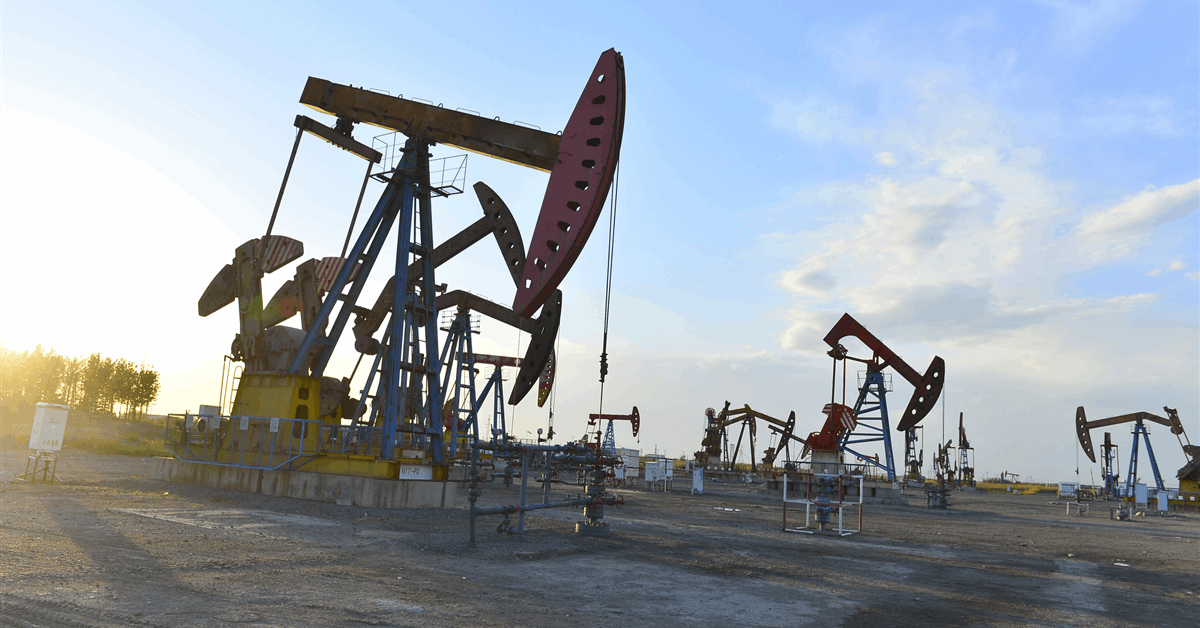
The Department of the Interior (DOI) has unveiled proposed updates to land regulations that promise to reshape the economics of onshore oil and gas production on federal lands. This move, aimed at facilitating commingled production from multiple leases, represents a significant policy evolution, leveraging advancements in measurement technology to drive efficiency, reduce environmental footprints, and unlock substantial profit potential for operators. For investors tracking the domestic upstream sector, these changes are not merely bureaucratic adjustments; they signal a fundamental shift towards more flexible, cost-effective, and technologically driven energy development, offering a fresh catalyst for value creation in an ever-evolving market.
Unlocking Billions: The Regulatory Shift and Cost Efficiencies
For years, onshore commingling – the practice of combining production from multiple wells or leases into a single stream – has been hampered by stringent requirements. Operators were largely restricted to commingling only when mineral ownership, royalty rates, and revenue distribution were identical across license areas. This regulatory framework, designed for an earlier era, created unnecessary barriers, especially in regions like the Western U.S. where mineral ownership is often complex and fragmented. The DOI’s proposed changes directly address these limitations, allowing commingling even when these conditions differ, effectively cutting through regulatory red tape that has constrained energy potential.
The cornerstone of this policy shift is the acknowledgment of modern technological capabilities. The DOI explicitly recognizes that “major advancements in metering and measurement technologies” now allow operators to accurately track production and allocate royalties with precision, even at the individual wellhead level. This technological leap meets the Bureau of Land Management’s stringent standards, ensuring fair compensation for all mineral owners. The financial implications are substantial: the DOI estimates these updated regulations could yield up to $1.8 billion in annual industry savings. These savings are not just theoretical; they represent direct capital that operators can reinvest into new energy production, bolstering domestic supply, enhancing operational flexibility, and significantly reducing the need for duplicative infrastructure, which further benefits both industry economics and environmental stewardship.
Market Realities and Investor Focus: Optimizing Amidst Volatility
The timing of these regulatory updates is particularly salient given current market dynamics. As of today, April 15th, Brent crude trades at $94.94, showing a modest intraday gain of 0.16%, with WTI crude at $91.42, up 0.15%. However, a broader perspective reveals Brent has softened significantly, dropping by approximately 8.8% from its recent high of $102.22 on March 25th to $93.22 just yesterday. This recent downward trend in crude prices underscores the critical need for cost efficiencies and enhanced production capabilities within the domestic industry. In a market where price stability is not guaranteed, the ability to reduce operating costs by up to $1.8 billion annually becomes a powerful competitive advantage, directly impacting profit margins and free cash flow generation for operators on federal lands.
Our proprietary investor intent data highlights a consistent theme among our readers: a strong desire for clarity on crude price trajectories, with many actively seeking base-case Brent price forecasts for the next quarter and consensus 2026 forecasts. Against this backdrop of price uncertainty, regulatory reforms that improve unit economics are incredibly valuable. This easing of commingling rules provides a tangible lever for U.S. onshore producers to improve their financial resilience and bolster cash flows, irrespective of short-term price volatility. Investors are keenly looking for strategies to de-risk portfolios and find sustainable value, and enhanced operational flexibility leading to significant cost savings offers precisely that.
The Path Forward: Anticipating Implementation and Long-Term Impact
The DOI has signaled an intent to “move quickly” to update the relevant regulations, with a formal rulemaking process to follow, including opportunities for public comment. While the immediate impact of this rule change won’t be reflected in the upcoming Baker Hughes Rig Count reports on April 17th and April 24th, or the EIA’s weekly petroleum status reports for April 21st and April 28th, the long-term implications for U.S. domestic supply are substantial. The American Petroleum Institute (API) has already welcomed the proposal, indicating broad industry support, which could help expedite the process. This consensus suggests a smoother path to implementation than many other regulatory changes.
Investors should closely monitor the progress of this rulemaking, as it represents a fundamental shift in operational flexibility that will eventually translate into higher rig efficiencies, optimized field development, and potentially revised production forecasts for federal lands. While global supply dynamics will continue to be influenced by events such as the upcoming OPEC+ Joint Ministerial Monitoring Committee (JMMC) meeting on April 18th and the Full Ministerial meeting on April 20th, increased efficiency and lower costs in U.S. onshore federal acreage will contribute to the long-term non-OPEC supply picture. This regulatory modernization is about “common sense and catching up with today’s technology,” as Interior Secretary Doug Burgum noted, ensuring that U.S. energy production remains competitive and technologically advanced.
Operational Advantages and Environmental Stewardship
Beyond the direct cost savings, the proposed changes offer a suite of operational advantages and environmental benefits. By allowing greater flexibility in how production is combined and measured, operators can optimize their field development plans, reducing the need for multiple surface facilities, roads, and pipelines. This not only increases efficiency but also significantly reduces surface disturbance, directly benefiting local ecosystems and aligning with broader environmental goals. The ability to produce from multiple zones or leases through fewer wellbores and shared infrastructure simplifies logistics, streamlines permitting, and accelerates project timelines.
This approach mirrors a similar update earlier this year in the deep waters of the Gulf of America, where the allowable pressure differential for downhole commingling in the Paleogene Wilcox deepwater play was raised from 200 psi to 1,500 psi. Such precedents demonstrate a broader governmental recognition of technological advancements enabling safer and more efficient multi-reservoir production. For onshore operators, this regulatory evolution means more robust project economics, the potential to bring marginal assets into play, and a more streamlined path to increasing domestic energy output while minimizing the environmental footprint – a true win-win for stakeholders across the board.


