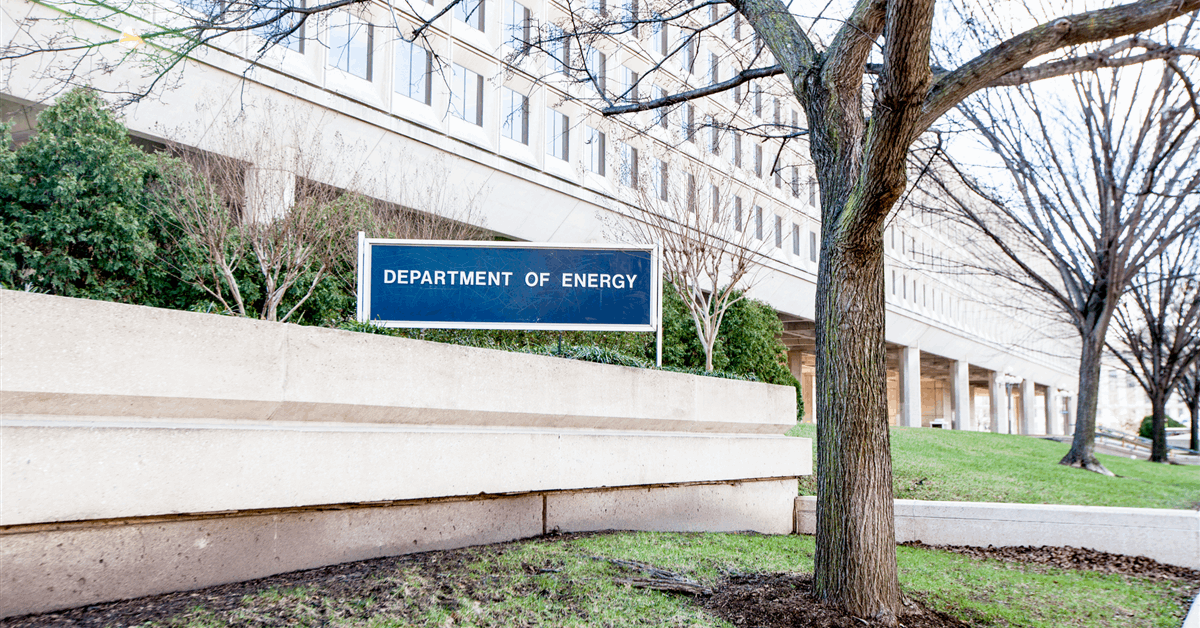
The United States Department of Energy (DOE) has delivered a significant boost to the U.S. liquefied natural gas (LNG) export complex, granting Venture Global Inc. authorization to increase shipments from its Plaquemines LNG facility. This strategic approval allows for an additional 0.45 billion cubic feet per day (Bcfpd) of gas equivalent to be exported to non-Free Trade Agreement (non-FTA) countries, representing a substantial 13% expansion. This move underscores the administration’s commitment to leveraging America’s abundant natural gas resources to meet burgeoning global demand and enhance energy security. For investors, this isn’t just a regulatory update; it’s a clear signal of sustained growth potential in the U.S. LNG sector, reinforcing its critical role in the international energy landscape amidst evolving market dynamics and geopolitical considerations.
Plaquemines LNG: A Cornerstone of U.S. Export Growth
The DOE’s latest order elevates Plaquemines LNG’s total permitted export volume to 3.85 Bcfpd, equivalent to 1.41 trillion cubic feet annually or 27.2 million metric tons per annum (MMtpa) of LNG. Crucially, this authorization specifically targets non-FTA countries, which our proprietary market analysis indicates account for the vast majority of U.S. LNG imports. What makes this expansion particularly impactful for investors is that it requires no additional construction, meaning the increased volumes can flow immediately, translating directly into enhanced revenue generation for Venture Global. The facility, which commenced exports in December 2024, has rapidly scaled operations, already exceeding 3 Bcf/d, demonstrating its operational efficiency and robust market integration. This approval extends through 2050, providing long-term visibility and stability for stakeholders.
This authorization is part of a broader push by the current administration, which has approved over 18.6 Bcf/d of LNG export capacity since lifting prior restrictions. Venture Global itself is not resting on its laurels; the company submitted plans for a significant brownfield expansion in 2025, aiming to add over 30 MMtpa of capacity to the Plaquemines complex. By November 17, 2025, driven by “continued optimization of liquefaction trains and strong market demand,” the proposed expansion’s capacity was increased by nearly 40% from its initial March 6, 2025 announcement. This ambitious project, estimated at $18 billion, will ultimately comprise 32 modular liquefaction trains, pushing the entire Plaquemines complex’s peak production capacity to over 58 MMtpa. The company’s 2026 outlook projects cargo exports of 486-527, with a significant 341-371 expected from Plaquemines alone, signaling aggressive growth targets and a strong operational ramp-up.
Navigating Crude Volatility Amidst LNG Expansion
While the focus here is on natural gas, the broader energy market remains highly interconnected. Investors are keenly observing crude oil movements, which can influence sentiment across the entire energy complex. As of today, April 22, 2026, Brent Crude trades at $92.9, reflecting a 0.36% dip on the day within a range of $92.57-$94.21. WTI Crude follows a similar trajectory, priced at $89.25, a 0.47% decrease, trading between $88.76-$90.71. This recent softness is part of a larger trend; our proprietary data shows Brent has declined approximately 7% from $101.16 on April 1st to $94.09 on April 21st. The increase in U.S. LNG exports, while directly impacting natural gas markets, indirectly contributes to global energy stability by diversifying supply sources and providing an alternative to crude-derived energy in some applications.
Robust LNG export capacity can act as a crucial geopolitical tool, bolstering the energy security of allied nations and potentially dampening the impact of supply disruptions in other energy commodities. For investors, this means that companies with significant exposure to LNG infrastructure and production may offer a degree of insulation from the more volatile short-term fluctuations observed in crude markets. The long-term demand for natural gas, driven by both energy transition goals and base-load power requirements, solidifies the investment case for LNG assets, even as crude prices react to macro-economic indicators and geopolitical headlines.
Addressing Investor Queries and Upcoming Market Catalysts
Our first-party reader intent data reveals that investors are intensely focused on market direction, with common queries including “is WTI going up or down?” and “what do you predict the price of oil per barrel will be by end of 2026?” These questions highlight the pervasive uncertainty and the desire for clarity on future price trajectories. While LNG approvals like the one for Plaquemines provide long-term directional clarity for natural gas, crude oil’s immediate path is subject to a series of upcoming catalysts that investors must monitor closely.
The next two weeks are packed with critical data releases that will undoubtedly influence short-term energy market sentiment. Investors should pay close attention to the EIA Weekly Petroleum Status Reports scheduled for April 22nd and April 29th, as these provide crucial insights into U.S. crude oil and product inventories, refining activity, and demand indicators. Complementing this, the API Weekly Crude Inventory reports on April 28th and May 5th offer an early look at inventory movements. On the supply side, the Baker Hughes Rig Count, due on April 24th and May 1st, will signal future production trends. Perhaps most significantly, the EIA Short-Term Energy Outlook on May 2nd will offer updated forecasts for global supply, demand, and prices, directly addressing the year-end price predictions that our readers are so eager to understand. The sustained build-out of U.S. LNG infrastructure, exemplified by Plaquemines, provides a foundational demand sink for natural gas, stabilizing that market segment and offering a counter-cyclical investment against potential crude volatility.
Strategic Outlook: U.S. LNG as a Differentiator for Energy Portfolios
The DOE’s latest authorization for Plaquemines LNG is more than just a permit modification; it’s a testament to the strategic importance of U.S. natural gas exports in the global energy matrix. For energy investors, this situation presents a compelling opportunity to diversify portfolios and capitalize on long-term structural demand. Companies like Venture Global, with their modular, incremental expansion strategies, are demonstrating capital efficiency and speed-to-market, which are critical in today’s dynamic environment. The decision to increase capacity by optimizing existing infrastructure, rather than requiring new construction, immediately enhances the project’s profitability and accelerates cash flow generation.
The permit’s validity until 2050 provides exceptional long-term revenue visibility, making LNG export facilities attractive infrastructure investments. Furthermore, the ability to export to non-FTA countries ensures access to the largest and often highest-paying markets. As global energy consumption continues to rise, and nations increasingly seek reliable, cleaner-burning fuels, U.S. LNG is positioned as a preferred supplier. This sustained policy support, coupled with aggressive expansion plans from key players, suggests that U.S. LNG will remain a significant growth driver for the energy sector, offering a robust investment thesis for those looking beyond the immediate fluctuations of crude oil and seeking long-term value creation in the evolving global energy landscape.


