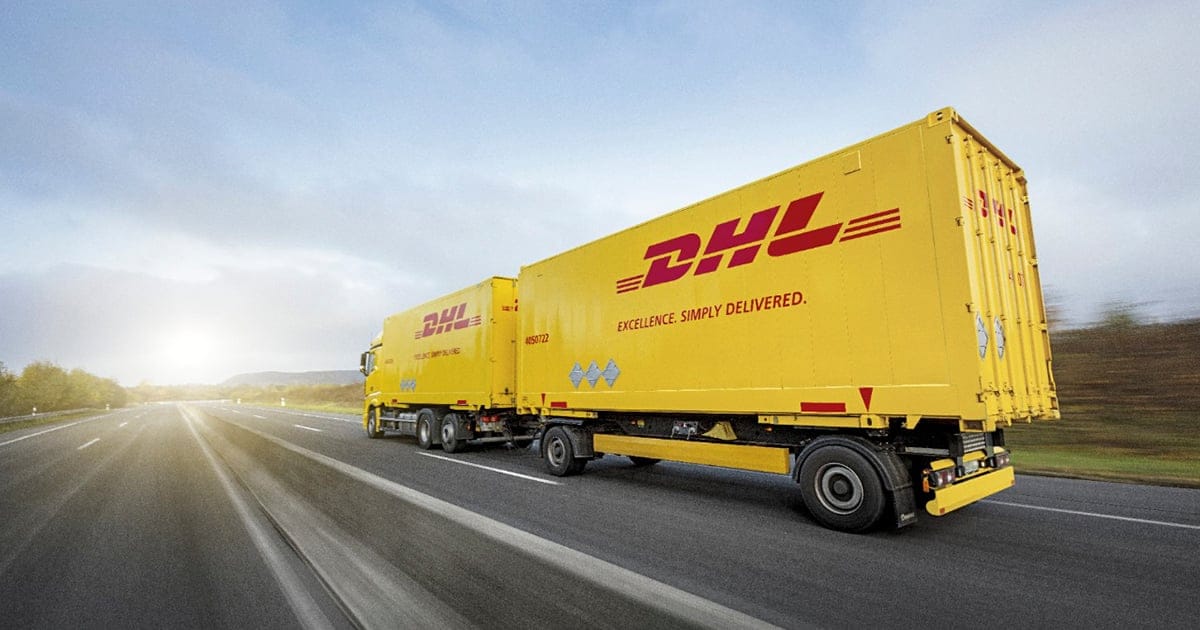
The energy landscape is in constant flux, but discerning investors understand that short-term volatility often masks profound long-term strategic shifts. A prime example of this enduring transformation is DHL Group’s ambitious commitment to India, allocating approximately EUR 1 billion, or $1.16 billion, by 2030 towards scaling low-emission logistics infrastructure and electrifying its operations. This significant capital deployment is not merely an expansion; it represents a calculated pivot towards a future where supply chains are not only efficient but also deeply integrated with sustainability mandates. For oil and gas investors, this move signals an accelerating demand reorientation within a critical sector, compelling a closer look at evolving energy consumption patterns and emerging investment opportunities.
India’s Ascent as a Green Logistics and Technology Hub
DHL’s $1.16 billion investment underscores India’s growing strategic importance, positioning the nation as a pivotal hub for global sustainability and technological advancement. This capital infusion is directed at tangible infrastructure, including the expansion of two major low-emission operating hubs for its Indian subsidiary, Blue Dart, notably a new integrated ground hub in Haryana and what is set to be India’s largest low-emission integrated facility in Bijwasan. Beyond mere expansion, the initiative actively targets the clean mobility and circular energy value chains. DHL Supply Chain is establishing its first dedicated Health Logistics hub in Bhiwandi to manage temperature-controlled pharmaceuticals, while DHL Express will launch its initial automatic sorting center in Delhi, enhancing productivity and energy efficiency. Crucially, the program includes establishing Electric Vehicle and Battery Logistics Centers of Excellence in Chennai and Mumbai. These centers are designed to cater to India’s burgeoning clean transport sector, providing essential services for EV manufacturers and battery producers, from certified storage to cross-border movement of high-value battery systems. This deep integration into the clean energy supply chain highlights a deliberate long-term strategy, prioritizing resilience and sustainability over short-term tactical plays.
Navigating Market Volatility Amidst Structural Shifts
The commitment to green logistics comes at a time when traditional energy markets are experiencing significant turbulence. As of today, Brent Crude trades at $90.61, marking a sharp 8.83% decline on the day, with its range fluctuating between $86.08 and $98.97. Similarly, WTI Crude is at $82.68, down 9.31%, moving within a daily band of $78.97 to $90.34. Gasoline prices have also seen a dip, currently at $2.93, down 5.18%. This immediate market snapshot is part of a broader trend; our proprietary data indicates Brent has dropped from $112.57 on March 27th to $98.57 just yesterday, a $14, or 12.4%, reduction over two weeks. These considerable price corrections might prompt some investors to question the urgency of decarbonization efforts. However, the DHL investment provides a powerful counter-narrative. It demonstrates that despite short-term fluctuations in crude oil prices, major global players are pressing forward with substantial capital allocations toward decarbonized facilities, fleet electrification, and digital services. This strategic resilience reflects a recognition that geopolitical pressures, evolving trade patterns, and a growing demand for sustainable supply chains are structural forces that transcend daily price movements. For sophisticated investors, these seemingly conflicting signals — immediate market downturns versus long-term green investments — highlight the critical need to differentiate between cyclical volatility and irreversible secular trends.
Investor Focus: Deciphering Future Demand Signals and Upcoming Catalysts
Our proprietary reader intent data reveals that a top investor query this week is, “What do you predict the price of oil per barrel will be by end of 2026?” While direct answers are speculative, investments like DHL’s offer critical insights into the evolving demand side of the equation, shaping those long-term forecasts. The accelerated shift towards electric vehicles in logistics and the establishment of dedicated battery support infrastructure will inevitably curb future demand growth for traditional fuels, even if the impact isn’t immediate. Investors are also keenly awaiting upcoming calendar events that could sway short-term market dynamics. The OPEC+ Joint Ministerial Monitoring Committee (JMMC) meeting today, April 17th, followed by the Full Ministerial meeting tomorrow, April 18th, are critical for understanding immediate supply strategies. These discussions on production quotas, which are also a frequent topic among our readers, will directly influence near-term price direction. However, the broader context of demand evolution, influenced by corporate sustainability mandates, should not be overlooked. Further data points like the API Weekly Crude Inventory (April 21st, April 28th) and the EIA Weekly Petroleum Status Report (April 22nd, April 29th) will provide supply-demand snapshots, while the Baker Hughes Rig Count (April 24th, May 1st) will signal future production intentions. DHL’s emphasis on digital capacity, including a fifth IT Services Center in Indore and training in AI for process optimization, also signals efficiency gains that will indirectly reduce fuel consumption across its global operations. This forward-looking embrace of technology, driven by sustainability, is a powerful indicator for investors seeking to understand the trajectory of energy demand beyond current headlines.
Strategic Implications for Oil & Gas Investors
For oil and gas investors, DHL’s substantial investment in India’s green logistics sector is a clear and compelling signal. It underscores the accelerating pace of the energy transition within a global industry that has historically been a significant consumer of fossil fuels. While the immediate impact on crude oil demand may be marginal, the long-term implications are profound. This strategic move aligns with DHL’s broader Strategy 2030 climate targets and its net-zero 2050 plan, demonstrating that decarbonization is not a peripheral initiative but a core business imperative for leading global enterprises. Investors must consider how such large-scale capital allocations will reshape future demand curves for refined products. The growth of EV logistics, battery centers of excellence, and low-emission hubs directly translates to reduced reliance on diesel and gasoline. This creates a compelling case for re-evaluating long-term portfolios, potentially shifting focus towards companies that are either facilitating this transition or innovating within the new energy ecosystem. Opportunities may arise in specialized energy storage solutions, renewable energy generation for logistics facilities, advanced battery technologies, and the digital infrastructure underpinning efficient, low-carbon supply chains. Astute oil and gas investors will recognize that while traditional energy remains vital, the smart money is increasingly flowing into the sectors that are actively building the infrastructure for a decarbonized future, positioning themselves to capitalize on the systemic shifts driven by global giants like DHL.


