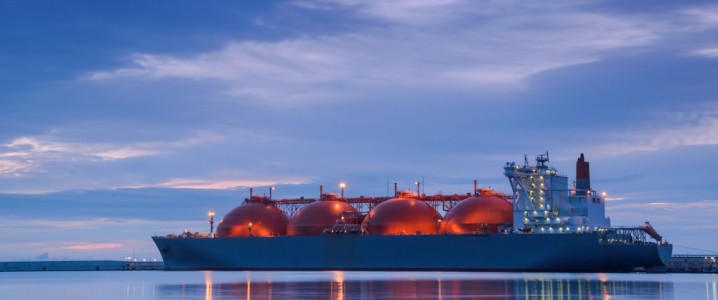
Devon Energy Corporation has secured a significant long-term natural gas supply agreement, reinforcing its strategic pivot towards diversified revenue streams in a volatile energy landscape. The U.S. producer has inked a 10-year deal to supply natural gas to Centrica, the UK-based energy giant and owner of British Gas, starting in 2028. This pivotal agreement, committing 50,000 MMBtu per day of natural gas, equivalent to five LNG cargoes annually, marks a clear intention by Devon to capitalize on global natural gas demand, particularly in Europe. Critically, the volumes will be indexed to the European gas hub price, TTF, offering Devon international price exposure and a degree of insulation from domestic market fluctuations. This move is more than just a transaction; it’s a strategic realignment for Devon, locking in future cash flows and signaling a broadening of its market reach.
Devon’s Strategic Vision for Global Gas Markets
The newly announced 10-year natural gas agreement with Centrica, commencing in 2028, provides Devon Energy with a robust framework for long-term revenue predictability. By committing 50,000 MMBtu per day, Devon is securing a significant portion of its future gas production to a stable, international buyer. The indexing of these LNG volumes to the European TTF hub price is a crucial element of the deal, offering Devon direct exposure to European gas prices. This strategy aims to align feed gas pricing with demand centers, thereby managing market price risk for Centrica while simultaneously providing Devon with a valuable hedge against potential regional imbalances in North American gas markets. This isn’t an isolated incident; Centrica previously signed a similar agreement with Coterra Energy at the end of last year, a 10-year deal for 100,000 MMbtu/d also commencing in 2028 and linked to European gas prices like TTF and NBP. This pattern suggests a growing trend of U.S. producers leveraging abundant domestic natural gas resources to meet European energy security needs, creating a transatlantic bridge for gas supply and demand.
Navigating Volatility: Long-Term LNG Contracts Amidst Shifting Commodity Prices
In a market characterized by significant price swings, Devon’s long-term LNG deal offers a compelling narrative of revenue stability. As of today, Brent crude trades at $98.69, marking a notable 3.96% increase within a day’s range of $94.42-$99.84. This daily uptick contrasts sharply with the broader trend observed over the past two weeks, where Brent prices declined by over 12%, moving from $108.01 on March 26th to $94.58 on April 15th. Such volatility underscores the strategic value of fixed, long-term agreements indexed to specific hubs. While crude prices influence overall energy sentiment, Devon’s 10-year gas supply contract, tied to the TTF, provides a dedicated revenue stream that is less susceptible to the immediate gyrations of the crude market or even domestic Henry Hub spot prices. This indexing diversifies Devon’s price exposure geographically, tapping into European demand dynamics which can often diverge from North American supply-demand fundamentals. For investors, this translates into enhanced visibility for a portion of Devon’s future earnings, adding a layer of resilience to its financial outlook.
Investor Focus: Hedging Against Uncertainty and Future Market Catalysts
Investors are keenly observing market signals, frequently asking about the consensus 2026 Brent forecast or seeking to build a base-case Brent price forecast for the next quarter. Devon’s proactive move with this LNG agreement addresses a core aspect of these concerns: how to secure predictable returns in an unpredictable market. While Brent forecasts remain critical for overall E&P valuations, this deal provides Devon with a distinct advantage by de-risking a portion of its future natural gas revenue. The long-term nature of this contract, beginning in 2028, ensures a significant income stream irrespective of short-term commodity price volatility. Looking ahead, several upcoming energy events will shape the broader market context. The OPEC+ Joint Ministerial Monitoring Committee (JMMC) meeting on April 18th, followed by the Full Ministerial meeting on April 20th, could introduce significant supply-side changes impacting crude prices globally. While not directly affecting Devon’s 2028 LNG revenues, these events influence general investor sentiment towards the energy sector. Similarly, the EIA Weekly Petroleum Status Reports on April 22nd and April 29th, alongside API Weekly Crude Inventory reports on April 21st and April 28th, will offer crucial insights into U.S. supply-demand balances. For Devon, these reports, coupled with the Baker Hughes Rig Counts on April 17th and April 24th, provide a backdrop against which its long-term LNG strategy gains even more prominence as a stable, forward-looking play. This strategic diversification also indirectly answers questions about Asian LNG spot prices, by illustrating a long-term commitment to a specific, geographically relevant market, rather than relying solely on volatile spot transactions.
The Evolving Landscape of U.S. LNG Exports and Infrastructure
Devon Energy’s latest agreement is not an isolated event but rather indicative of a broader, accelerating trend in the U.S. energy sector: the strategic integration of domestic natural gas production with global LNG export capabilities. Centrica’s complementary move to partner with Energy Capital Partners LLP to acquire a stake in the UK’s largest LNG import terminal at the Isle of Grain for an enterprise value of $2 billion underscores this evolving landscape. This investment in critical infrastructure demonstrates Centrica’s commitment to securing the receiving end of the LNG value chain, creating a robust, vertically integrated solution for gas supply to the UK. For U.S. producers like Devon, such infrastructure commitments from buyers are crucial. They provide the necessary certainty and off-take agreements that de-risk future liquefaction projects and support the financial investment decisions required for expanding U.S. LNG export capacity. This synergy between long-term supply agreements and downstream infrastructure investment is creating a more resilient and interconnected global natural gas market. The ability for U.S. companies to tap into diverse international markets, particularly those with strong demand and favorable pricing hubs like TTF, strengthens their long-term growth prospects and solidifies the U.S. position as a key global energy supplier.


