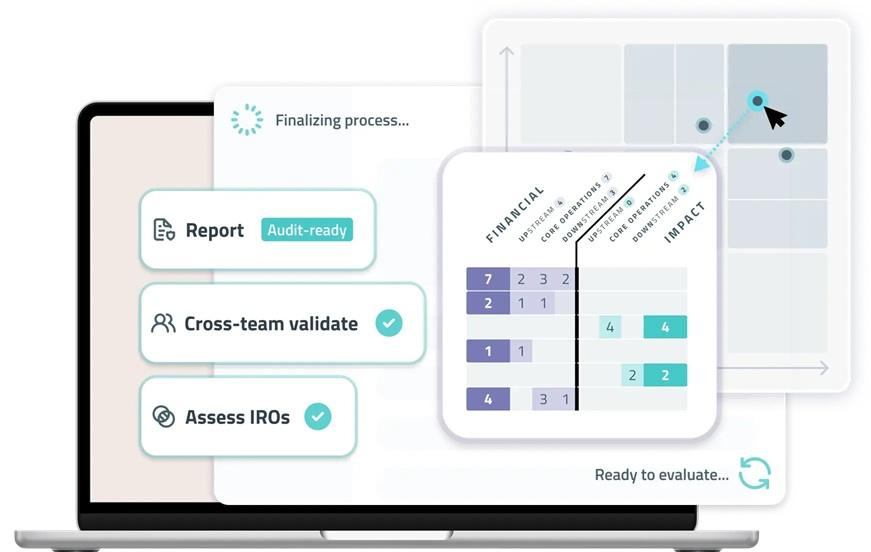
The energy sector continues to navigate a complex matrix of market dynamics, geopolitical shifts, and increasingly stringent environmental, social, and governance (ESG) expectations. For oil and gas investors, understanding how companies are adapting to this multi-faceted challenge is paramount. The recent introduction of simplified ESG software solutions, designed to streamline materiality assessments and regulatory alignment, underscores a critical pivot within the industry: moving from reactive compliance to proactive, strategic risk and opportunity management. This evolution is not merely about ticking boxes; it’s about embedding resilience and competitive advantage, a factor that is gaining significant weight in investment decisions amidst ongoing market volatility and evolving stakeholder demands.
ESG Integration: A Mandate for Value Creation, Not Just Compliance
The conversation around ESG in oil and gas has matured beyond basic reporting. Investors are no longer just asking if a company has an ESG strategy, but rather, how robust and auditable that strategy is, and how it translates into tangible value. Solutions that offer structured insights into impacts, risks, and opportunities, coupled with double materiality assessments, directly address this demand. They empower sustainability, legal, and risk teams to deliver concrete data, shifting the perception of ESG from a compliance burden to a strategic imperative. This shift is particularly relevant given that our internal data indicates investors are increasingly seeking granular, verifiable information about company performance. Questions like “What data sources does EnerGPT use?” and “What APIs or feeds power your market data?” from our proprietary reader intent signals reveal a strong desire for transparency and data-driven insights into corporate governance and risk exposure, extending well beyond traditional financial metrics.
Navigating Volatility: ESG as a Stability Anchor in Turbulent Markets
Market conditions underscore the imperative for robust risk management across all facets of operations. As of today, Brent Crude trades at $90.38 per barrel, marking a significant intraday decline of 9.07%, having plunged from an earlier high of $98.97 to a low of $86.08. WTI Crude mirrors this sentiment, currently at $82.59, down 9.41% within a day range of $78.97-$90.34. This sharp downturn is not an isolated event; our 14-day Brent trend data shows a substantial drop from $112.78 on March 30th to $91.87 on April 17th, representing an 18.5% decrease. Such pronounced volatility highlights the critical need for energy companies to fortify their operational and financial resilience. Companies that can confidently run repeatable, audit-ready assessments for ESG risks, including climate change and resource use, are better positioned to weather these economic storms. A strong ESG framework, particularly one supported by sophisticated analytics, can signal to investors a deeper understanding and management of long-term risks, potentially contributing to more stable valuations even when commodity prices fluctuate wildly. Investors are keenly observing how companies manage these multifaceted risks, as evidenced by questions around long-term price predictions for oil, indicating a focus on sustained value rather than short-term gains.
Strategic Advantage: Identifying Opportunities in a Shifting Landscape
Beyond mitigating risks, advanced ESG tools offer a pathway to identifying new opportunities. By providing capabilities for monitoring key trends, peer benchmarking, and regulatory shifts, these solutions enable energy companies to anticipate change rather than merely react to it. For instance, a detailed materiality assessment might highlight a company’s unique position to capitalize on emerging carbon capture technologies or sustainable energy initiatives. This proactive stance transforms potential regulatory burdens into innovation drivers. As investors pose questions such as “How well do you think Repsol will end in April 2026?”, they are seeking indicators of future performance and competitive edge. Companies that leverage comprehensive tools to move from compliance to strategic advantage, identifying new avenues for growth and efficiency in areas like resource use or business conduct, are more likely to demonstrate long-term value creation.
Forward-Looking Outlook: Upcoming Events and the ESG Imperative
The coming weeks present several pivotal events for the energy sector, each carrying implications for company strategy and investor sentiment. The OPEC+ Joint Ministerial Monitoring Committee (JMMC) meeting on April 18th, immediately followed by the Full Ministerial meeting on April 19th, will be closely watched for production quota decisions. Our proprietary reader intent data shows high interest in “What are OPEC+ current production quotas?”, reflecting the market’s focus on supply-side dynamics. Any shifts here will profoundly impact pricing and, consequently, investment decisions in new projects, all of which now carry significant ESG considerations. Furthermore, the API Weekly Crude Inventory (April 21st, April 28th) and EIA Weekly Petroleum Status Reports (April 22nd, April 29th) will offer crucial insights into demand and inventory levels. Alongside these, the Baker Hughes Rig Count reports (April 24th, May 1st) provide a barometer of upstream activity. In this environment of constant flux, companies equipped with agile ESG assessment capabilities can more effectively integrate market and regulatory changes into their strategic planning, ensuring that new investments or operational adjustments align with evolving sustainability mandates and investor expectations. This forward-looking integration of ESG into core business strategy is essential for navigating the complex interplay of market forces and regulatory pressures.


