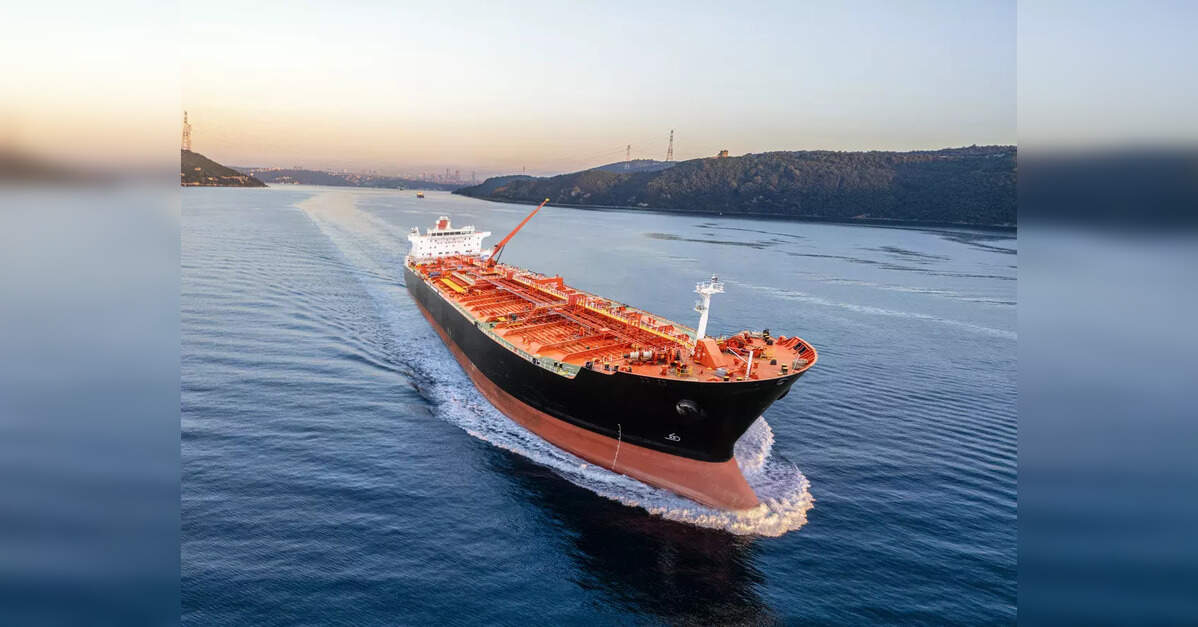
The global oil and gas investment landscape is being fundamentally reshaped by the emergence and rapid expansion of Russia’s so-called “dark fleet.” This shadow armada of tankers, operating under obscure ownership and often employing deceptive flagging practices, is proving instrumental in circumventing Western sanctions and maintaining the flow of Russian crude to key markets. For investors, understanding the scale and strategic implications of this parallel shipping network is no longer a niche concern but a critical factor in assessing supply stability, price trajectories, and geopolitical risks within the energy sector.
The Expanding Reach of the Shadow Fleet
The operational scale of Russia’s dark fleet has grown dramatically, becoming a pivotal, if opaque, component of global crude oil trade. By September 2025, an estimated 90 Russian “shadow” vessels were actively operating under false flags, representing a six-fold increase from December 2024. This burgeoning fleet has been critical in transporting 11 million tonnes of Russian crude, valued at €4.7 billion, during the first nine months of 2025 alone. A significant portion of these illicit shipments has found its way to India, which has emerged as the single largest national destination for crude moved by this expanding network. Specifically, 30 such vessels transported 5.4 million tonnes of Russian crude to India during this period, valued at an estimated €2.1 billion. This marks a profound shift for India, traditionally reliant on Middle Eastern oil, with Russian crude now accounting for nearly 40 percent of its total imports, up from less than 1 percent prior to February 2022. The continued proliferation of false flagging, with 113 Russian vessels engaging in this practice, underscores the persistent efforts to obscure origin and destination, creating a complex web of logistics that directly impacts global supply chain transparency and regulatory oversight.
Market Realities: Price Action Amidst Covert Supply
The sustained flow of Russian crude via the dark fleet has tangible implications for global oil prices, creating a unique dynamic where sanctions aim to restrict supply, yet a parallel system ensures its continuation. As of today, Brent Crude trades at $95.49, showing a marginal increase of 0.01% within a day range of $93.87-$95.69. WTI Crude, meanwhile, stands at $87.29, down 0.15% within a range of $85.5-$87.47. These figures reflect a broader market context, where Brent has seen a significant downward trend over the past two weeks, dropping from $118.35 on March 31st, 2026, to $94.86 on April 20th, 2026—a substantial decrease of 19.8%. While broader macroeconomic concerns and demand outlooks certainly contribute to this volatility, the consistent, albeit discounted, supply of Russian oil through the dark fleet acts as a persistent underlying factor, potentially tempering price spikes that might otherwise occur if supply were more effectively constrained. Investors must consider how this ongoing, unsanctioned supply influences the supply-demand balance, particularly as major consumers like India continue to absorb substantial volumes, thereby impacting the efficacy of Western sanctions and the overall stability of the crude market.
Addressing Investor Concerns: Navigating Price & Performance
Our proprietary intent data reveals that investors are actively grappling with significant uncertainty, with questions like “is WTI going up or down?” and “what do you predict the price of oil per barrel will be by end of 2026?” being particularly prevalent. The dark fleet’s activities introduce a unique variable into these price predictions. On one hand, the continued circumvention of sanctions by the dark fleet ensures a baseline supply of Russian oil, which could exert downward pressure on prices by maintaining market saturation. On the other hand, the inherent risks associated with these operations — including potential breakdowns, heightened geopolitical tensions, or more aggressive enforcement measures — could introduce sudden supply disruptions and upward price volatility. For companies like Repsol, which operate within a global, interconnected energy market, these covert supply chains can introduce both competitive pressures from discounted crude and broader market instability. Investors evaluating integrated oil and gas companies must consider how effectively these firms can navigate a market increasingly influenced by both transparent, regulated trade and opaque, sanction-evading networks, and how this impacts their long-term performance and strategic positioning in a fractured global energy landscape.
Upcoming Catalysts and Forward-Looking Analysis
The trajectory of crude oil prices and the influence of the dark fleet will undoubtedly be shaped by several key upcoming events that investors should monitor closely. The OPEC+ Joint Ministerial Monitoring Committee (JMMC) Meeting on April 21st, 2026, is a critical near-term catalyst. Any decisions regarding production quotas will directly interact with the persistent, unsanctioned supply flowing via the dark fleet. If OPEC+ opts for production cuts, the impact on prices could be partially mitigated by the continued availability of Russian crude, diluting the intended market tightening. Furthermore, the EIA Weekly Petroleum Status Reports on April 22nd and April 29th, 2026, will offer vital insights into U.S. crude inventories and overall market balances. These reports will provide a clearer picture of how global supply, including that from the dark fleet, is being absorbed or contributing to inventory builds. Looking further ahead, the EIA Short-Term Energy Outlook on May 2nd, 2026, will be crucial for investors seeking a comprehensive outlook on global supply, demand, and price forecasts through the end of the year. The EIA’s assessment of the dark fleet’s enduring role in maintaining Russian oil exports will be a key determinant in their supply-side projections, and consequently, in investor strategies for the remainder of 2026 and beyond.
Strategic Implications and Investment Risks
The sustained operation of the dark fleet and its significant role in Russian oil exports to India and other destinations presents several strategic implications and risks for energy investors. Firstly, it underscores the difficulty of enforcing comprehensive sanctions in a globalized energy market, suggesting that geopolitical leverage through financial restrictions has its limitations. Secondly, the increasing reliance on aged tankers operating in “legal grey areas” heightens the risk of maritime incidents, environmental disasters, and insurance complexities. Such events could lead to localized supply disruptions, increased shipping costs, and significant financial liabilities, impacting not only the directly involved parties but also the broader maritime insurance sector and commodity markets. For investors, this translates into elevated operational risks for shipping companies and refiners dealing with these unconventional supply chains, and potentially increased volatility in crude prices due to unforeseen disruptions. The re-routing of major trade flows, as exemplified by India’s pivot towards Russian crude, also signals a long-term reshaping of global energy alliances and supply infrastructure, demanding a recalibration of investment strategies across the entire oil and gas value chain.


