Governments Urge Conservation as Energy Security Takes Center Stage
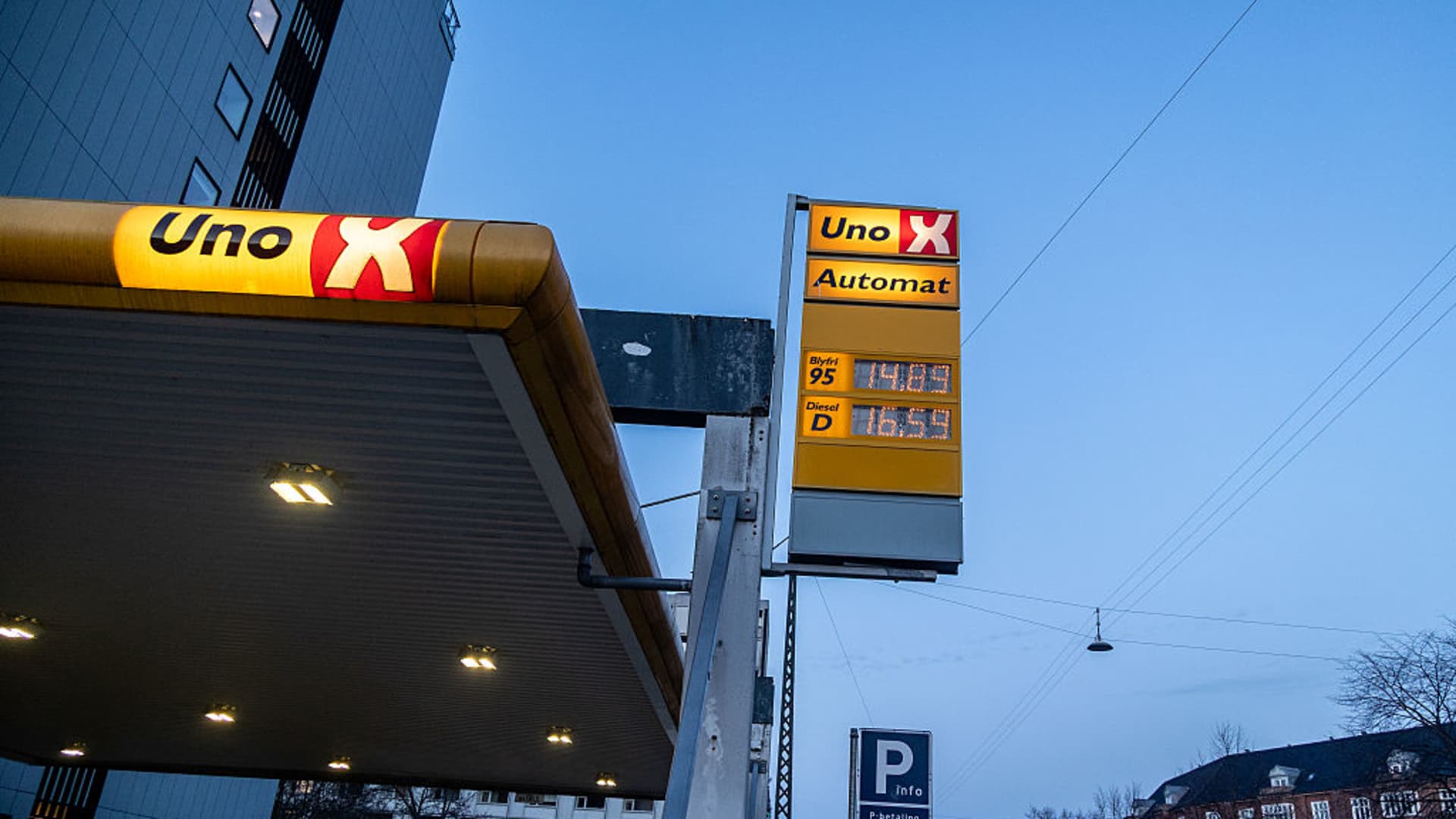
The call from Denmark’s Minister for Climate, Energy, and Utilities, Lars Aagaard, for citizens to reduce energy consumption and forgo non-essential car journeys, underscores a growing global trend: governments are actively seeking to manage energy demand in the face of persistent geopolitical risks and perceived high oil prices. This isn’t an isolated incident; similar pleas have been echoed from the UK to Vietnam and the Philippines, where measures like temporary four-day workweeks aim to curb fuel use. For investors, these signals are critical. They indicate a deep-seated concern among policymakers about energy security and the inflationary impact of elevated crude costs, even if the immediate market snapshot presents a more complex picture. Our proprietary reader intent data reveals a consistent investor focus on price direction, with questions like “is WTI going up or down?” dominating sentiment, reflecting the uncertainty these governmental actions introduce into the demand outlook.
Market Realities: Price Retreat Amidst Geopolitical Premiums
While government rhetoric often highlights “towering oil prices,” our first-party market data offers a more nuanced perspective on recent price action. As of today, Brent Crude trades at $92.83 per barrel, down 0.44% within a day range of $92.57 to $94.21. West Texas Intermediate (WTI) Crude is at $89.30, a 0.41% dip, moving between $88.76 and $90.71. Gasoline prices have also softened marginally to $3.11, down 0.64%. More significantly, our 14-day Brent trend analysis reveals a notable pull-back: Brent has declined approximately 7% from a recent high of $101.16 on April 1st to $94.09 on April 21st. This contrasts sharply with the narrative of “skyrocketing” prices, suggesting that while the underlying geopolitical risks from the Middle East conflict remain potent, and concerns over the Strait of Hormuz persist, the immediate pressure on prices has eased slightly. Investors must distinguish between the past peak that triggered governmental responses and the current market trajectory, which, while still elevated historically, has seen some downward correction. The “strength” in the market, in this context, refers more to the persistent geopolitical premium and the necessity for demand-side management, rather than an unchecked upward price spiral.
Strategic Reserves: A Temporary Buoy or Long-Term Drain?
In an effort to assuage market fears and mitigate supply disruptions, the International Energy Agency (IEA) has agreed to release 400 million barrels of oil from its member countries’ strategic reserves. Concurrently, the U.S. has announced a separate release of 172 million barrels from its Strategic Petroleum Reserve (SPR), with shipments slated to begin next week and span roughly 120 days. These coordinated efforts represent a significant volume injected into the market, designed to bridge immediate supply gaps and calm volatility. For investors, this presents a double-edged sword. On one hand, such releases offer a near-term ceiling on upward price movements, potentially alleviating some of the inflationary pressures driving government conservation efforts. On the other hand, repeated drawdowns from strategic reserves diminish a vital buffer against future, unforeseen supply shocks. This depletion raises questions about long-term energy security and could lead to greater price volatility down the line once these temporary measures conclude. The efficacy and timing of these releases will be closely watched, as their impact on global crude balances could be substantial, albeit transient.
The Road Ahead: Key Data Points and Investor Outlook
Looking forward, the oil market will be heavily influenced by a series of critical data releases and ongoing geopolitical developments. Our proprietary event calendar highlights several key upcoming catalysts that investors should monitor closely. The EIA Weekly Petroleum Status Report, scheduled for Wednesday, April 22nd, and again on April 29th and May 6th, will offer crucial insights into U.S. crude inventories, refinery utilization, and product supplied, providing a real-time pulse on supply and demand dynamics. Similarly, the Baker Hughes Rig Count on April 24th and May 1st will indicate North American drilling activity, hinting at future supply trends. The API Weekly Crude Inventory reports on April 28th and May 5th provide an early look at U.S. stock levels. Perhaps most impactful for a broader outlook will be the EIA Short-Term Energy Outlook (STEO) due on May 2nd, which will offer updated forecasts for global supply, demand, and prices. Investors, keenly asking “what do you predict the price of oil per barrel will be by end of 2026?”, will scrutinize these reports for clues. While precise long-term predictions remain challenging, these data points, combined with the evolution of geopolitical tensions and the actual impact of governmental demand-reduction strategies, will collectively shape the trajectory of WTI and Brent, informing investment decisions in companies like Repsol and across the sector.