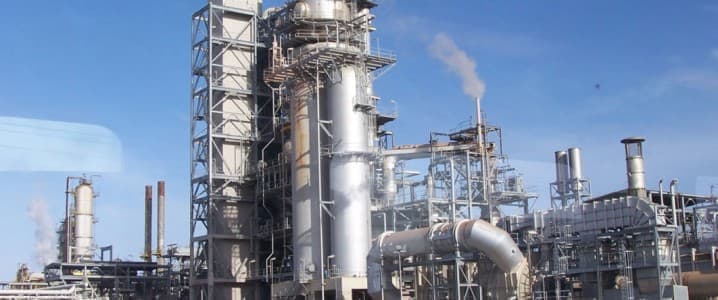
Dangote Refinery Outage Extends To November: What Investors Need To Know
The highly anticipated Dangote Refinery, a cornerstone of Nigeria’s energy independence strategy, is facing a significant setback with a prolonged gasoline outage now expected to stretch into November. This extension, far beyond initial optimistic estimates, signals deeper structural issues with its critical Residue Fluidized Catalytic Cracking Unit (RFCCU). For investors tracking global refined product markets and West African energy dynamics, this development is not merely a regional hiccup but a material factor influencing trade flows, pricing, and the investment landscape for both upstream and downstream assets. Our proprietary data indicates heightened investor interest in supply-demand balances, making this extended disruption a key focus for portfolio strategists.
The Dangote Disruption: A Deep Dive into RFCCU Woes
The heart of the problem lies within the Dangote Refinery’s Residue Fluidized Catalytic Cracking Unit (RFCCU), the primary engine for gasoline production. This crucial unit has been offline since August 29, initially due to catalyst leaks. While early reports from various sources suggested a swift resolution, with some forecasting a restart by mid-September or within a two-week window, the latest assessments paint a starkly different picture. We now understand that major equipment replacement is required, pushing the estimated repair timeline to two to three months and consequently extending the outage well into November. This 650,000 barrel-per-day facility was designed to meet nearly all of Nigeria’s substantial daily gasoline consumption of over 50 million liters, effectively eliminating the nation’s reliance on imported, often subsidized, cargoes. The extended downtime not only reopens this import gap but also undermines the near-term expectations of energy security for Nigeria and impacts anticipated supply volumes for neighboring West African states.
Market Data Snapshot: Refining Margins and Crude Dynamics Under Pressure
The prolonged Dangote outage introduces a significant variable into an already dynamic energy market. As of today, our live feeds show Brent crude trading at $98.57, reflecting a 0.83% intraday decline within a range of $97.92 to $98.57. WTI crude mirrors this trend, standing at $90.18, down 1.09%. This current softness in crude prices is notable, especially considering the 14-day trend where Brent has fallen from $112.57 on March 27 to today’s $98.57, representing a substantial 12.4% contraction. Yet, against this backdrop of falling crude, gasoline prices are holding firm at $3.09, showing minimal intraday movement. This divergence points to underlying tightness in refined product markets. The absence of Dangote’s anticipated gasoline volumes, particularly in the Atlantic Basin and West Africa, is a contributing factor. For investors, this scenario suggests a potential widening of crack spreads, benefiting refiners with available capacity in other regions, particularly in the U.S. and Europe, who may see increased demand for their refined product exports.
Investor Questions & Strategic Implications for Global Refiners
Our proprietary reader intent data reveals a consistent theme among investors this week: a keen focus on global supply-demand balances and the transparency of market data. Questions like “What are OPEC+ current production quotas?” and inquiries about the models powering our real-time crude price responses underscore a desire for clarity in an uncertain market. The Dangote situation directly impacts these concerns. Investors are now evaluating how a major refinery outage in a demand-rich region will influence global product flows and, by extension, the strategic positioning of other refining assets. The prolonged downtime means West African gasoline markets, which had banked on supply from Lagos, will remain undersupplied, forcing governments and private marketers to source additional cargoes at potentially elevated prices. This creates a clear uplift for refiners in the Atlantic Basin, particularly those in the U.S. and Europe, who are now poised to cover these shortfalls. Companies with robust export capabilities and efficient refining operations are likely to capture increased margins, making them attractive investment targets in the near to medium term. The disruption highlights the fragility of global supply chains and the critical importance of diverse refining capacity.
Forward Look: Navigating Uncertainty with Upcoming Events
The extended Dangote outage will undoubtedly cast a long shadow over upcoming energy calendar events, providing critical context for investors. The OPEC+ Joint Ministerial Monitoring Committee (JMMC) meeting on April 18, followed by the Full Ministerial meeting on April 20, will be closely watched. While primarily focused on crude production quotas, the group’s discussions will implicitly consider global market stability, which now includes a tighter refined product market due to the Dangote situation. Any signals regarding supply adjustments from OPEC+ will be interpreted through the lens of this refined product deficit. Furthermore, the EIA Weekly Petroleum Status Reports on April 22 and April 29 will be crucial. Investors will scrutinize U.S. gasoline inventories, refinery utilization rates, and export data for indications of how global markets are responding to the West African shortfall. An increase in U.S. refined product exports, particularly gasoline, could signal a direct response to the demand vacuum. Even the Baker Hughes Rig Count reports on April 17 and April 24, while more focused on upstream activity, will be relevant as sustained tightness in product markets could eventually translate into incentives for increased crude production. Investors must integrate this ongoing Dangote disruption into their analysis of these upcoming data points to accurately forecast market direction and position their portfolios.


