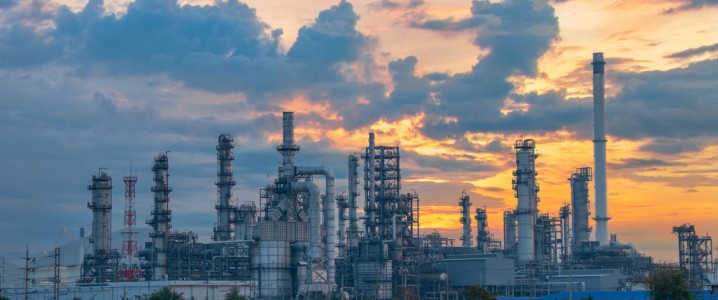
Nigeria’s energy landscape stands at a critical juncture, with Aliko Dangote, owner of Africa’s largest refinery, making a significant call for a comprehensive ban on fuel imports. This move, framed under President Bola Tinubu’s “Nigeria First” policy, aims to bolster domestic refining capacity and secure national energy independence. However, implementing such a policy carries substantial implications for market dynamics, investor sentiment, and global energy flows, especially against a backdrop of volatile crude prices and an evolving geopolitical environment. Our analysis delves into the strategic rationale behind Dangote’s proposal, the operational realities of the colossal Dangote Refinery, and the broader market signals investors must consider.
Nigeria’s Drive for Self-Sufficiency Amid Global Price Volatility
Aliko Dangote’s advocacy for an immediate ban on fuel imports is a direct challenge to Nigeria’s long-standing reliance on foreign petroleum products. His argument centers on two key pillars: the “Nigeria First” policy, which prioritizes local production, and concerns over the quality and fairness of imported fuels. Dangote highlights the influx of “cheap, often toxic petroleum products” that he claims are blended to substandard levels, unsuitable for markets like Europe or North America. Furthermore, he points to imports derived from discounted Russian oil, which create an unfair competitive advantage against local refiners. This push comes at a time of significant global crude price fluctuations. As of today, Brent Crude trades at $90.38 per barrel, marking a sharp 9.07% decline within the day’s range of $86.08 to $98.97. Similarly, WTI Crude is at $82.59, down 9.41% from its daily high. This recent downturn in crude prices, with Brent having plummeted by 18.5% from $112.78 on March 30th to $91.87 on April 17th, could theoretically make imported products even more attractive if not for the “discounted Russian oil” factor. For investors, the interplay between global crude prices, refining margins, and domestic policy intervention in Nigeria creates a complex risk-reward profile.
The Dangote Refinery: A Game Changer’s Early Hurdles and Triumphs
The Dangote Refinery, an engineering marvel with a 650,000 barrels per day capacity and a price tag of $20 billion, represents Nigeria’s most ambitious stride towards energy independence. Operational since 2024, the facility has been steadily ramping up its production, with the ultimate goal of not only meeting all of Nigeria’s domestic fuel needs but also generating a surplus for export. This ramp-up has already yielded interesting market dynamics; despite the long-term goal of self-sufficiency, the first quarter of this year saw a temporary increase in U.S. crude oil exports to Nigeria. This “twist” was largely attributed to domestic demand fluctuations during refinery maintenance, making U.S. crude more affordable for Nigerian buyers in the short term. However, Dangote’s recent statements suggest the refinery is now poised for significant output, claiming that Nigeria has already become a net exporter of fuels, with 1.35 billion litres of gasoline exported over the last 50 days. This indicates a rapid maturation of the refinery’s operational capabilities, significantly strengthening the argument for an import ban and potentially reshaping regional refined product markets. Investors are keenly watching how this massive facility will stabilize its output and impact the profitability of other African energy ventures.
Navigating Future Supply & Demand: OPEC+ and Inventory Signals
The proposed import ban in Nigeria will not exist in a vacuum; its success and market impact will be heavily influenced by broader global oil dynamics, particularly those dictated by key producers and market data. Investors are keenly focused on upcoming events, notably the OPEC+ Joint Ministerial Monitoring Committee (JMMC) meeting on April 18th, followed by the full Ministerial meeting on April 19th. These gatherings are crucial for understanding future supply strategies and production quotas, which directly impact global crude prices. With Brent already experiencing significant downward pressure, any discussions around production adjustments could either exacerbate or mitigate price volatility. Furthermore, market participants will be closely scrutinizing the API Weekly Crude Inventory reports on April 21st and April 28th, as well as the EIA Weekly Petroleum Status Reports on April 22nd and April 29th. These inventory figures provide critical insights into U.S. demand and supply balances, which often serve as a bellwether for global oil consumption trends. A tightening global supply or robust demand could support crude prices, potentially shifting the economic calculus for Dangote’s domestic output versus the cost of any remaining imports, while continued inventory builds might signal weakness. The Baker Hughes Rig Count on April 24th and May 1st will also offer a forward-looking perspective on future drilling activity and long-term supply potential.
Investor Outlook: Weighing Policy, Profitability, and African Energy Independence
The prospect of a Nigerian fuel import ban presents a multifaceted investment scenario, directly addressing questions our readers frequently ask, such as predictions for oil prices by the end of 2026 and the stability of OPEC+ quotas. For investors eyeing the African energy sector, Dangote’s initiative represents both significant opportunity and potential disruption. A successful import ban would virtually guarantee a substantial domestic market for the Dangote Refinery, potentially leading to robust and predictable revenue streams for the facility and its stakeholders. This could make related investments, including those in Nigerian energy infrastructure and downstream operations, particularly attractive. However, the policy’s implementation also carries risks. Any disruption to supply, even temporary, could lead to domestic fuel price spikes, impacting consumers and potentially inviting government intervention, similar to how gasoline prices have recently seen a 5.18% decline, now trading at $2.93 per gallon. Moreover, the long-term sustainability of the “Nigeria First” policy depends on consistent, high-quality output from local refiners. Investors must evaluate the government’s commitment to this policy, the refinery’s operational resilience, and the potential for trade disputes with countries currently supplying fuels to Nigeria. The narrative of African energy independence is powerful, but its profitability hinges on careful navigation of both market forces and political will.


