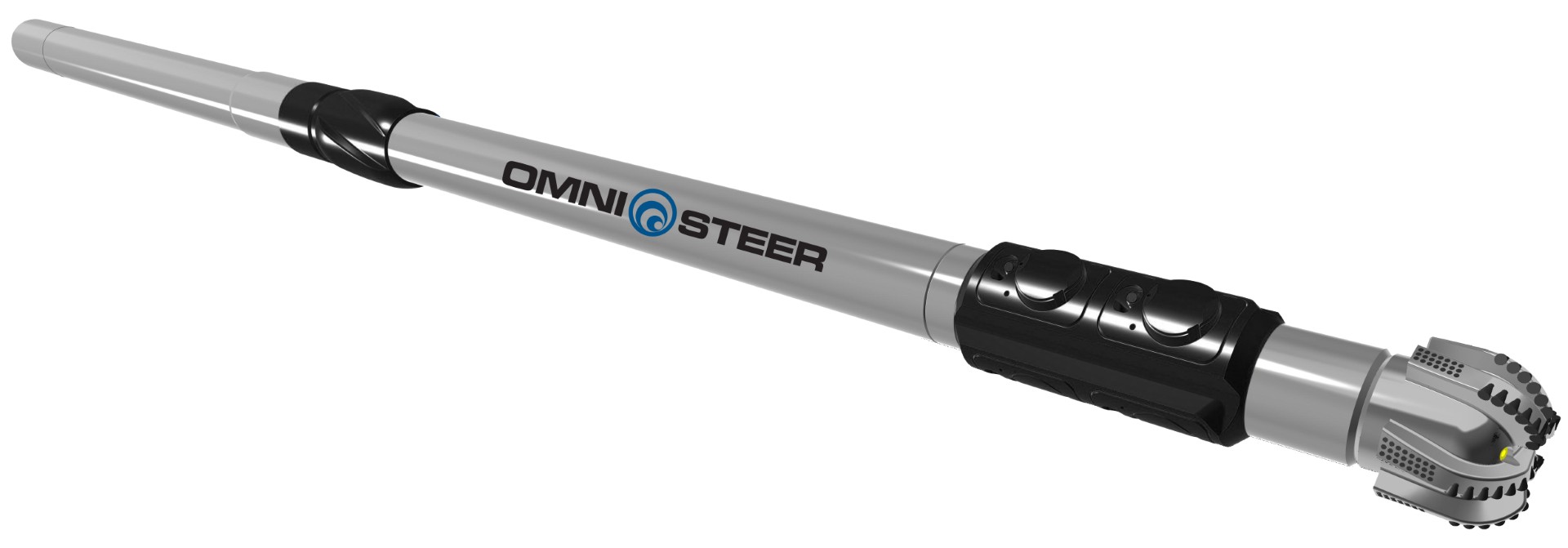
D-Tech’s OmniSteer RSS Commercialization: A New Era for Drilling Efficiency
The oil and gas industry continually seeks innovations that can unlock greater efficiency, reduce operational costs, and enhance production capabilities. In this pursuit, D-Tech Rotary Steerable’s full commercialization of its OmniSteer™ rotary steerable system (RSS) platform marks a significant milestone. Surpassing one million feet drilled across diverse basins, this achievement signals the maturity of a decade-long development effort. For investors, this isn’t merely a technical feat; it represents a tangible leap in drilling technology with profound implications for capital allocation, project economics, and the competitive landscape of upstream operations in an ever-evolving market.
The Operational Edge: How OmniSteer Drives Value for E&P
D-Tech’s OmniSteer platform is the culmination of over ten years of engineering refinement and rigorous field testing, integrating advanced digital control systems and robust mechanical design. Its unified system, connecting RSTConnect™ surface software with the downhole RSS tool, enables real-time calibration and performance analysis—a critical advantage in complex drilling environments. The platform boasts updated firmware and automated steering algorithms designed to significantly reduce downlink times, thereby accelerating drilling operations and improving directional control. Furthermore, D-Tech reports improved stick-slip mitigation and higher-quality downhole data, which translates directly into safer operations, fewer non-productive times, and a more predictable drilling curve.
From a mechanical perspective, the OmniSteer RSS features a streamlined architecture with fewer parts, upgraded hydraulics, and wear-resistant components. This design philosophy aims to extend service life and drastically lower maintenance requirements, delivering a compelling total cost of ownership proposition to operators. Its configurable nature allows deployment in challenging conditions, including high-dogleg, geothermal, and high-temperature environments, broadening its applicability across a wider range of global drilling projects. For investors, this translates into a technology that promises not just incremental gains, but a fundamental improvement in drilling economics, making capital expenditures more efficient and increasing the ultimate recovery from reservoirs.
Navigating Volatility: OmniSteer’s Relevance in Today’s Market Dynamics
The timing of OmniSteer’s full commercialization is particularly pertinent given the current market environment. As of today, Brent crude trades at $90.61, experiencing a significant decline of 8.83% within the day, with prices fluctuating broadly between $86.08 and $98.97. Similarly, WTI crude is priced at $83.11, down 8.84%, after an intraday range of $78.97 to $90.34. This sharp downturn comes after Brent had already shed 12.4% over the past two weeks, falling from $112.57 on March 27th to $98.57 yesterday. Such pronounced volatility underscores the critical need for operators to maximize efficiency and minimize costs across their portfolios.
In a market characterized by such price swings, technologies that enhance drilling speed, accuracy, and reduce downtime become indispensable. OmniSteer’s ability to improve directional control, mitigate stick-slip, and extend tool life directly impacts the breakeven costs of new wells. For exploration and production companies, this means projects that might be marginal at lower price points become more economically viable. Reduced operational expenses and faster well completion cycles translate to quicker returns on investment, a crucial factor when capital markets are scrutinizing every dollar spent. This commercialization offers a timely solution for operators striving to maintain profitability and capital discipline amidst a dynamic and often unpredictable commodity landscape.
Forward Momentum: Upcoming Catalysts and Global Adoption
The oil and gas industry is constantly responding to a confluence of geopolitical factors, supply-demand shifts, and technological advancements. Looking ahead, the market will closely watch several key events that could influence drilling activity and, consequently, the demand for advanced tools like OmniSteer. The upcoming OPEC+ Joint Ministerial Monitoring Committee (JMMC) meeting tomorrow, April 17th, followed by the full Ministerial meeting on Saturday, will set the tone for supply-side decisions, potentially impacting global crude prices and production quotas. Subsequent weekly API and EIA inventory reports on April 21st/22nd and April 28th/29th will offer fresh demand signals, while the Baker Hughes Rig Count on April 24th and May 1st will provide direct insight into North American drilling momentum.
Against this backdrop, the reported growing use of OmniSteer in North America, with additional uptake underway in South America, Europe, and the Middle East, suggests a broad and accelerating adoption curve. As these upcoming events unfold, the strategic advantage offered by highly efficient drilling technology will become even more apparent. Operators who can consistently deliver wells faster, more accurately, and at a lower cost per foot will be better positioned to capitalize on market opportunities, whether that means expanding production in response to favorable demand or optimizing existing assets in a constrained environment. The global expansion of OmniSteer indicates that operators worldwide are recognizing the competitive edge this technology provides.
Addressing Investor Concerns: Long-Term Value in a Shifting Landscape
Our proprietary reader intent data reveals that investors are keenly focused on the long-term outlook for crude, frequently asking about predictions for oil prices by the end of 2026 and the impact of OPEC+ production quotas. While predicting the exact price of oil for year-end 2026 is inherently challenging given today’s volatility and geopolitical complexities, one constant remains paramount: the relentless drive for operational efficiency and cost reduction across the industry. Technologies like D-Tech’s OmniSteer RSS directly address the cost side of the equation, improving margins regardless of where crude prices eventually settle.
For investors evaluating E&P companies or oilfield service providers, the ability to adopt and effectively utilize such innovations is a key differentiator. For instance, questions about specific company performance in April 2026, or broader inquiries into the impact of OPEC+ quotas, implicitly hinge on an operator’s ability to optimize its production. A rotary steerable system that reduces drilling time, enhances accuracy, and lowers maintenance directly translates into stronger financial performance, better capital allocation, and a more resilient business model. In an environment where every barrel needs to be profitable, D-Tech’s OmniSteer offers a pathway to maximizing return on investment in a world where supply and demand dynamics are in constant flux, providing a tangible answer to the industry’s perennial quest for efficiency and profitability.


