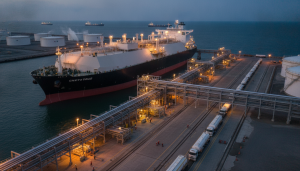
The unfolding crisis in Cuba, marked by severe jet fuel shortages and the subsequent cancellation of international flights, offers a compelling case study for energy investors monitoring the intricate dance between geopolitics, supply chains, and economic stability. While localized, this situation underscores how targeted sanctions can rapidly destabilize an economy heavily reliant on imported energy and tourism, creating ripple effects that savvy investors must understand. The challenges faced by Havana are not just a humanitarian concern; they are a clear demonstration of how political pressure, particularly from the United States, can directly impact energy flows and, by extension, investment landscapes in vulnerable regions.
Geopolitical Pressure Drives Energy Scarcity
Cuba’s current predicament stems directly from intensified U.S. pressure, particularly following military operations in Venezuela. The U.S. administration has effectively choked off Havana’s access to Venezuelan oil, a long-standing and critical supply lifeline. This aggressive stance, coupled with threats of tariffs on any nation supplying oil to Cuba, has created a significant deterrent for potential alternative suppliers. The result is a profound energy deficit, leading to unprecedented rationing measures across the island, including restrictions on fuel sales, shortened work weeks for state employees, and even the closure of some tourist facilities. This situation echoes the severe economic tests Cuba faced in the 1990s after the collapse of the Soviet Union, highlighting the extreme vulnerability of economies dependent on single-source energy provisions or subject to stringent international sanctions. For investors, this scenario serves as a stark reminder of how geopolitical maneuvering can rapidly transform stable energy supply into critical scarcity, a factor that must be weighed in any regional investment thesis.
Market Dynamics and Broader Price Implications
While the Cuban fuel crisis is severe locally, its direct impact on global energy benchmarks remains limited due to the relatively small scale of Cuba’s demand. However, this event occurs within a broader context of dynamic global oil markets. As of today, Brent Crude trades at $93.09, showing a 2.94% increase within a day range of $89.11 to $94.68. Similarly, WTI Crude stands at $89.55, up 2.44% for the day, with its range between $85.50 and $91.45. Gasoline prices also reflect this upward movement, currently at $3.13, marking a 2.96% rise. These daily gains come despite a notable downward trend for Brent over the past two weeks, which saw prices drop from $118.35 on March 31st to $94.86 on April 20th, a significant 19.8% decline. This volatility highlights the ongoing sensitivity of markets to a confluence of factors, from supply concerns to geopolitical tensions. While Cuba’s specific plight may not dictate global prices, it amplifies investor awareness regarding localized supply disruptions and the potential for broader market instability. The question of whether WTI is heading up or down, as many of our readers are asking, is thus influenced by both micro-events like Cuba’s shortage and macro-signals from major producers and economic indicators.
Economic Fallout and Investor Signals in Tourism
The tangible economic consequences of Cuba’s fuel shortage are already manifesting, most notably in its vital tourism sector. With international airlines, such as Air Canada, cancelling flights due to the inability to refuel, a critical revenue stream for the cash-strapped government is being severely impacted. Tourism represents a significant source of foreign currency for Cuba, making the flight cancellations a direct hit to the nation’s economic stability. The reported plan to shorten school days and working weeks further underscores the depth of the crisis, indicating a systemic struggle to maintain essential services. For investors evaluating emerging markets or sectors tied to international travel, the Cuban situation offers a cautionary tale. It illustrates how unforeseen geopolitical shifts and their resultant energy supply disruptions can swiftly undermine economic sectors, even those seemingly robust like a popular winter vacation destination. The resilience of local economies against external pressures, and the potential for rapid deterioration, become key considerations. This situation also prompts investors to consider broader questions about geopolitical risk premiums in their portfolios, particularly in regions where political stability and energy access are intertwined.
Forward Outlook: Navigating Geopolitical Headwinds and Upcoming Catalysts
Looking ahead, the Cuban crisis will likely persist as long as U.S. sanctions remain in effect and alternative supply routes are blocked. President Díaz-Canel’s statements, condemning the moves but also expressing openness to talks “without pressure or preconditions,” suggest a protracted standoff. For energy investors, while Cuba’s specific situation is contained, the broader theme of geopolitical influence on energy markets is paramount. Over the next two weeks, several key events will offer more insight into global supply and demand dynamics, potentially influencing broader market sentiment more than the localized Cuban shortage. The OPEC+ Joint Ministerial Monitoring Committee (JMMC) Meeting on April 21st will be closely watched for any signals regarding production policy. Subsequent EIA Weekly Petroleum Status Reports on April 22nd and April 29th, alongside API Weekly Crude Inventory data on April 28th and May 5th, will provide crucial updates on U.S. crude and product inventories. Furthermore, the Baker Hughes Rig Counts on April 24th and May 1st will indicate North American drilling activity, and the EIA Short-Term Energy Outlook on May 2nd will offer updated price forecasts and supply/demand projections. These scheduled events will collectively shape the global energy narrative, against which localized crises like Cuba’s serve as critical reminders of the inherent risks in a volatile, interconnected world. Understanding these upcoming catalysts is essential for investors seeking to predict the trajectory of oil prices and identify opportunities or mitigate risks through the end of 2026, a frequent query among our readership.