

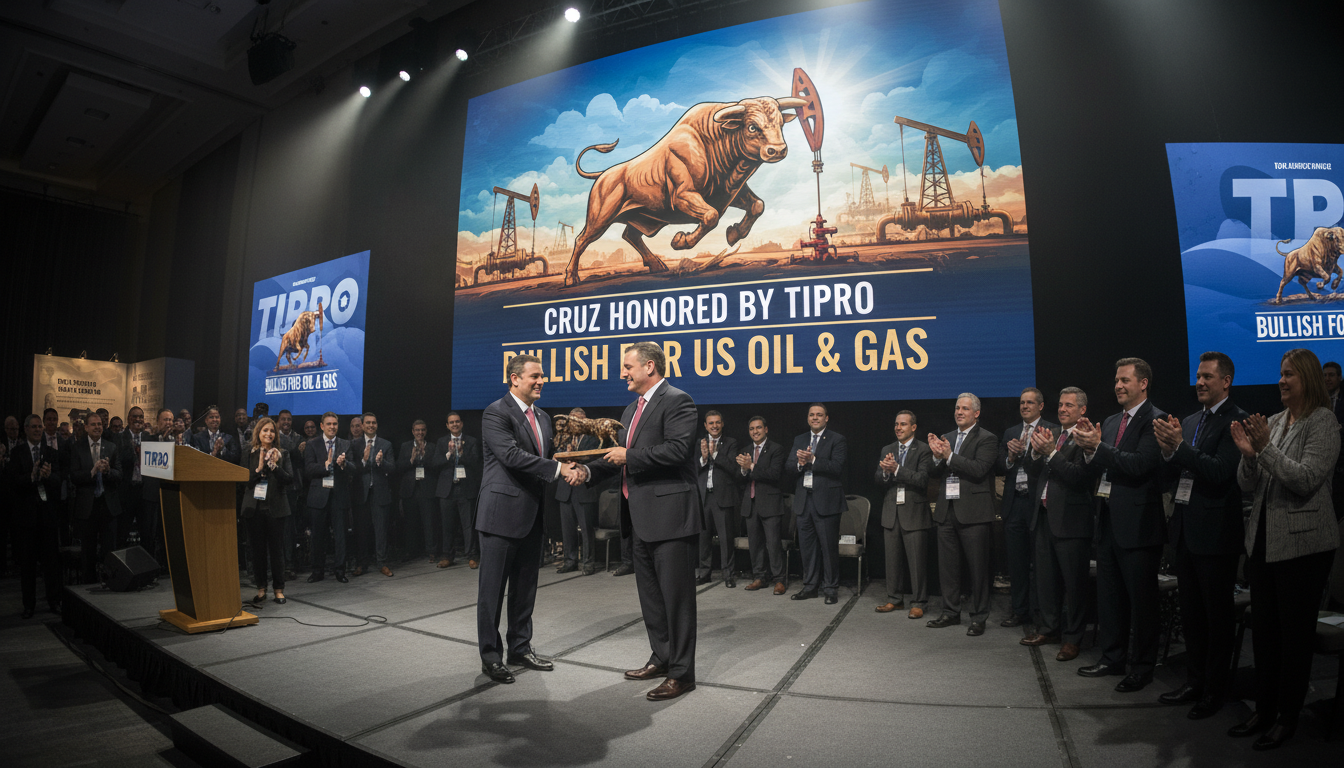
In a significant nod to legislative efforts shaping the nation’s energy landscape, U.S. Senator Ted Cruz recently accepted a prestigious honor from the Texas Independent Producers and Royalty Owners Association (TIPRO) at their annual convention in Houston. This acknowledgment highlights the profound influence of policy champions on domestic oil and gas operations, a dynamic that directly impacts investor confidence and strategic capital allocation across the sector. For those monitoring the trajectory of American energy independence, such industry recognitions offer crucial insights into the political alignment supporting hydrocarbon development and export growth.
Policy Impact on Investment and Market Reach
Senator Cruz was specifically bestowed with TIPRO’s coveted 2026 Hats Off Award, an accolade reserved for key figures demonstrating unwavering commitment to fostering a robust domestic oil and gas environment. His legislative agenda has consistently prioritized initiatives designed to bolster the industry’s operational freedom and market reach. Chief among these is his ardent support for expanding liquefied natural gas (LNG) exports, a policy thrust that directly opens new international markets for American natural gas. This expansion is not merely about volumes; it underpins substantial investment opportunities in upstream production, midstream infrastructure – including liquefaction plants and pipelines – and creates long-term revenue streams for U.S. energy companies. Investors keen on global energy arbitrage and diversified export portfolios closely monitor such advancements, recognizing their potential to enhance asset valuations and secure future dividends.
Beyond market expansion, Senator Cruz has been a vocal proponent of mitigating what many in the industry view as excessively burdensome federal regulations. The reduction of bureaucratic hurdles translates directly into lower compliance costs, accelerated project timelines, and increased operational efficiencies for producers. For independents and major operators alike, fewer regulatory roadblocks mean capital can be deployed more effectively into drilling, exploration, and infrastructure upgrades, rather than being diverted to navigate complex permitting processes. This push to streamline regulatory frameworks, particularly noted by TIPRO during the Biden Administration, directly impacts the bottom line, enhancing profitability margins and attracting further investment into the U.S. energy complex. Such legislative efforts safeguard job creation within the sector and, more broadly, ensure the foundational energy security of the United States.
Industry Perspectives and Strategic Alignment
Ed Longanecker, President of TIPRO, articulated the industry’s deep appreciation, stating that Senator Cruz’s leadership in Congress has been instrumental since his initial election to the U.S. Senate in 2012. Longanecker underscored Cruz’s consistent authorship of pivotal legislation aimed at fortifying America’s energy future and solidifying national energy independence. From an investment perspective, this translates into a more predictable and supportive operating environment, reducing policy-induced risks that can deter capital. Cruz’s dedication to making oil and natural gas issues a priority throughout his tenure sends a clear signal to markets: the U.S. remains committed to leveraging its vast hydrocarbon resources. Furthermore, Longanecker specifically highlighted the Senator’s vigorous defense of the industry against what he described as burdensome federal regulations and governmental overreach, particularly impactful during the current administration. Such interventions are crucial for protecting the viability of domestic energy production, stimulating job growth, and ensuring the nation’s strategic energy security – all factors meticulously weighed by prospective investors.
Senator Cruz’s Vision for Energy Dominance
Acknowledging the honor, Senator Cruz expressed his pride in standing alongside the dedicated individuals and companies that not only power the Texan economy but also underpin America’s drive for energy dominance. His remarks resonate deeply with investors who see the U.S. energy sector as a cornerstone of national prosperity and a significant player on the global stage. Policies that foster an environment conducive to robust production and strategic exports directly contribute to the nation’s economic strength, enhance its geopolitical leverage, and offer attractive opportunities for capital growth within the energy markets. The commitment to expand natural gas exports and develop vital LNG infrastructure, which Cruz has consistently championed, serves as a testament to this vision, promising sustained demand and infrastructure development for years to come.
The Broader Market Context and Investment Outlook
This significant industry recognition arrives at a pivotal moment, as U.S. policymakers continue to engage in a robust debate surrounding the optimal role of oil and gas in meeting burgeoning domestic demand while simultaneously striving to uphold global energy competitiveness. For investors, these discussions are not academic; they directly influence future policy directions, regulatory frameworks, and ultimately, the long-term profitability and sustainability of energy assets. Geopolitical tensions, coupled with an increasing global appetite for reliable and affordable energy, underscore the critical importance of a stable and predictable domestic supply. As the world navigates the complexities of energy transition, the foundational role of hydrocarbons, particularly natural gas as a bridge fuel and crude oil for essential industrial and transportation needs, remains undeniable. Therefore, legislative champions who advocate for pragmatic energy policies, like Senator Cruz, are seen by the investment community as vital architects of an environment where capital can be confidently deployed, ensuring both national prosperity and investor returns in the decades ahead.
