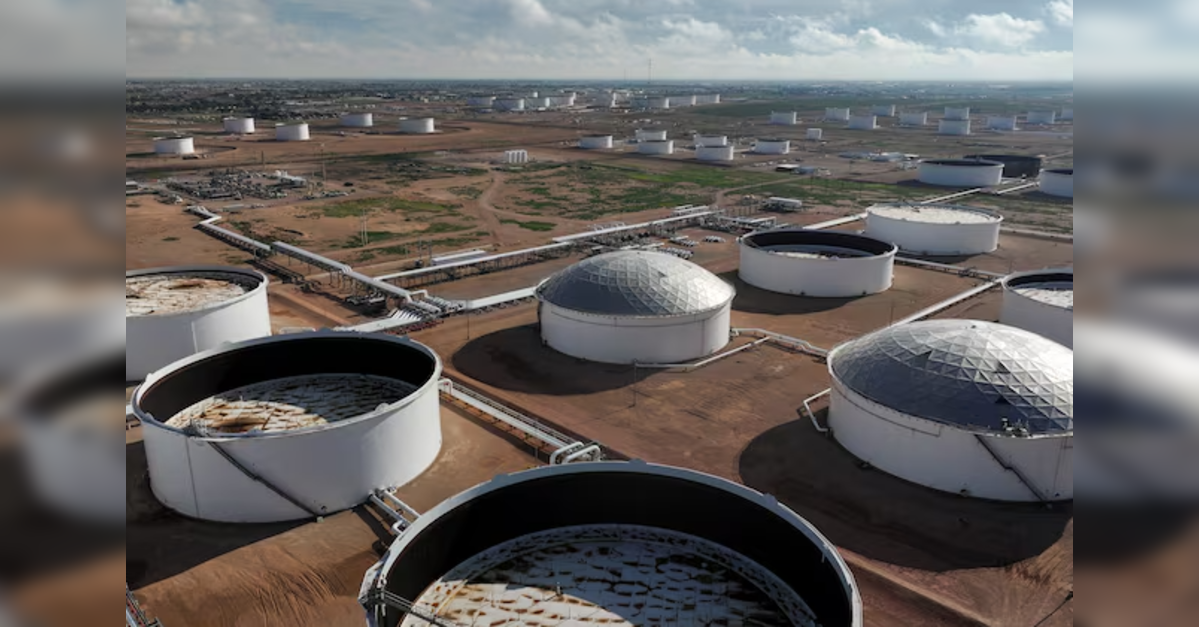
The global crude oil market experienced a significant re-pricing this week, characterized by a notable weekly decline in benchmark futures. While daily trading has seen pockets of bullish momentum, the overarching narrative has been the erosion of the geopolitical risk premium that had inflated prices in recent periods. Investors are now keenly assessing the balance between easing Middle Eastern tensions and robust underlying demand signals, navigating a landscape where stability could pave the way for a more fundamental market assessment rather than one dominated by immediate supply disruption fears.
Geopolitical De-escalation Deflates Risk Premium
A primary driver for the recent downward pressure on crude prices has been the pronounced de-escalation of tensions in the Middle East. News of a ceasefire between Iran and Israel prompted an immediate and sharp reaction in futures markets, with benchmarks hitting their lowest levels in over a week following the announcement. This development effectively began to peel back the geopolitical risk premium that had been baked into prices, a premium that investors had increasingly demanded amidst fears of broader regional conflict and potential supply chain disruptions. Further reinforcing this sentiment, statements from key regional leaders have signaled opportunities for peace, further assuaging market concerns about continued supply risks. This shift away from acute geopolitical anxiety has allowed market participants to redirect their focus toward the underlying supply-demand dynamics.
Navigating Demand Resilience Amidst Price Adjustments
Despite the recent weekly decline, the market is not without its demand-side strengths, creating a nuanced picture for investors. As of today, Brent crude trades at $95.58 per barrel, marking a 0.83% increase within a daily range of $91 to $96.89. Similarly, WTI crude sits at $91.75 per barrel, up 0.51% today, trading between $86.96 and $93.3. This intra-day resilience comes even after Brent experienced a nearly 9% drop over the past 14 days, falling from $102.22 on March 25 to $93.22 by April 14. These current prices demonstrate a rebound from the immediate post-ceasefire lows, but remain well below recent peaks, indicating a market grappling with contradictory signals. The onset of the US summer driving season, for instance, has clearly begun to stimulate fuel demand, leading to drawdowns in US crude and fuel inventories and a noticeable uptick in refining activity. This robust domestic demand, coupled with a weaker dollar index at a three-year low – making oil more affordable for international buyers – provides a fundamental floor for prices. Investors must weigh this genuine demand uptick against the broader repricing of risk.
Critical Events on the Horizon: OPEC+ and Inventory Insights
Looking ahead, the next two weeks are packed with critical events that will heavily influence crude price trajectories. Investors should mark their calendars for the upcoming OPEC+ Joint Ministerial Monitoring Committee (JMMC) meeting on April 18, followed by the full OPEC+ Ministerial Meeting on April 20. These gatherings will provide crucial insights into the bloc’s production strategy for the coming months. Will they maintain current output cuts, signaling continued supply discipline, or will they consider a gradual increase in response to perceived market stability and demand growth? The consensus from these meetings will be pivotal. Furthermore, the market will closely scrutinize the weekly inventory data from the American Petroleum Institute (API) on April 21 and April 28, followed by the official EIA Weekly Petroleum Status Reports on April 22 and April 29. These reports will offer timely data on US crude and product stock levels, refining utilization, and implied demand, providing key indicators of market tightness or surplus as the summer driving season gains momentum. Additionally, the Baker Hughes Rig Count reports on April 17 and April 24 will shed light on future US shale production trends, a significant factor in global supply forecasts.
Addressing Investor Concerns: Quarter-Ahead Forecasts and Global Demand Signals
Our proprietary reader intent data reveals a strong focus among investors on forward-looking price analysis, particularly requests for a “base-case Brent price forecast for next quarter” and the “consensus 2026 Brent forecast.” This highlights the current challenge of projecting prices in a market caught between easing geopolitical fears and strong underlying demand. Key factors influencing these forecasts include the aforementioned OPEC+ decisions, the rate of inventory draws, and the health of global economic engines. Investors are also asking about the operational status of “Chinese tea-pot refineries this quarter,” indicating a broader interest in Asian demand dynamics, which are crucial for global consumption patterns. The interplay of these elements will dictate the market’s ability to establish a new equilibrium. A sustained geopolitical calm could shift focus entirely to fundamentals, potentially allowing prices to settle into a range determined by global economic growth and supply management. Conversely, any renewed instability, however minor, risks re-introducing a risk premium and disrupting forecast models. Investors are clearly seeking clarity on these complex interactions to position their portfolios effectively.


