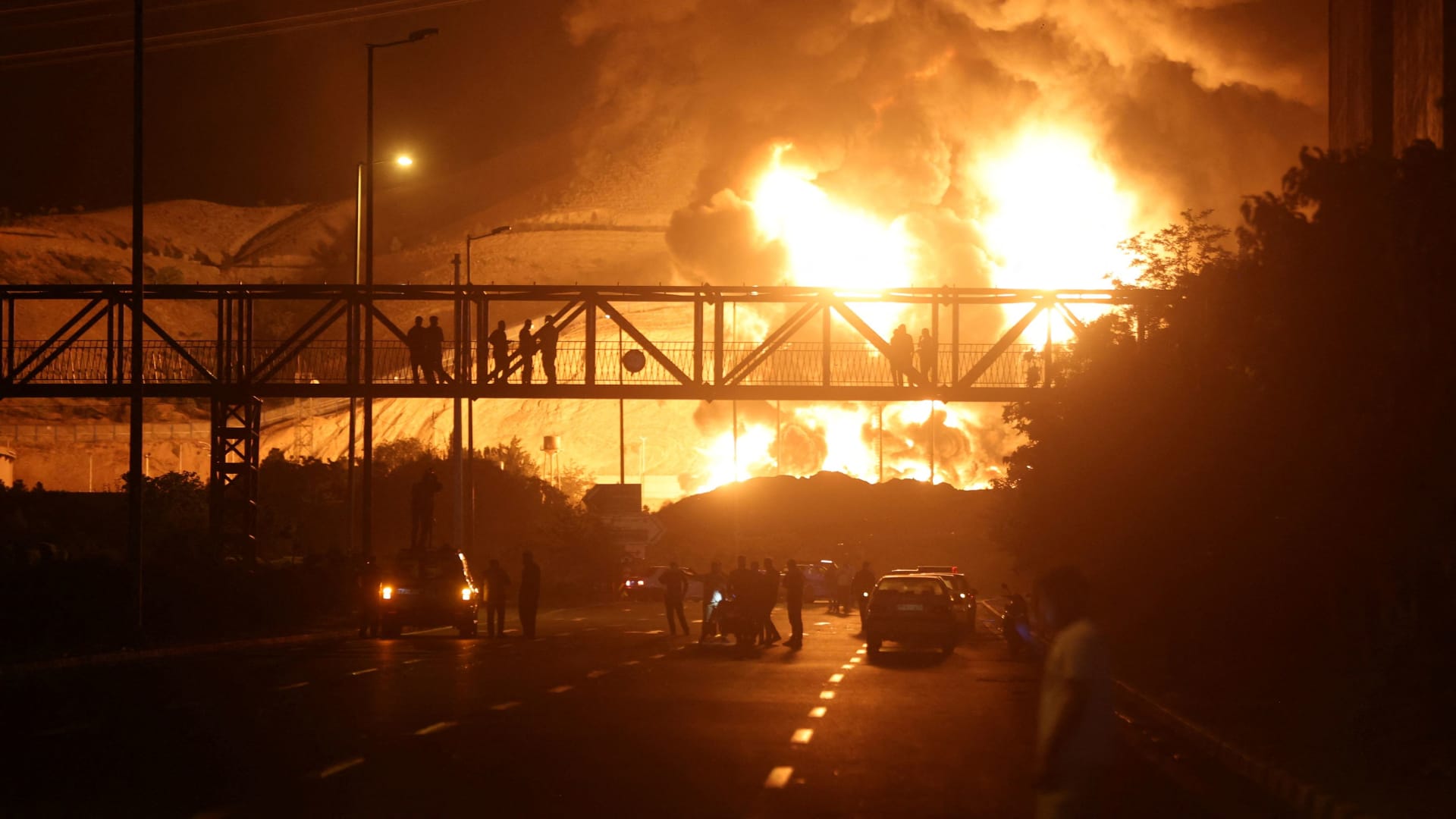
The geopolitical chessboard in the Middle East has once again sent shockwaves through global energy markets, forcing oil and gas investors to recalibrate their risk assessments and price forecasts. The recent direct engagement by the United States against Iranian targets has dramatically escalated tensions, casting a long shadow over an already volatile region critical to global oil supply. This decisive action has reignited fears of significant supply disruptions, pushing crude prices higher as the market grapples with the potential for further escalation and its profound implications for global energy flows.
Geopolitical Flashpoint and Immediate Market Response
The global oil market reacted sharply following Washington’s announcement of direct strikes against three Iranian nuclear sites in Fordo, Natanz, and Isfahan. This unprecedented move, marking a direct US entry into the Iran-Israel conflict, immediately triggered a flight to safety in crude futures. Initially, US crude oil futures surged by 3.1%, reaching $76.14 per barrel, while the global benchmark Brent similarly jumped 3.1% to $79.39 per barrel in the first trading session post-attacks. As of today, Brent crude trades at $94.84, showing a marginal gain of 0.05% within a daily range of $91 to $96.89. West Texas Intermediate (WTI) crude, meanwhile, stands at $91.22, down slightly by 0.07% after trading between $86.96 and $93.3 today. This current pricing reflects a market that has not only absorbed the initial shock but is now pricing in an elevated risk premium, particularly given the preceding two weeks saw Brent decline by approximately $9, or 8.8%, from $102.22 on March 25th to $93.22 on April 14th. The recent surge has largely erased those prior losses, underscoring the market’s sensitivity to supply-side geopolitical events.
Iran’s foreign minister has unequivocally stated that the Islamic Republic reserves “all options” to defend its sovereignty, signaling a readiness for countermeasures amidst ongoing exchanges with Israel. This rhetoric, coupled with the US’s direct intervention, ensures that the Middle East remains the primary driver of oil market sentiment for the foreseeable future, demanding constant vigilance from investors tracking the potential for broader regional conflict.
The Strait of Hormuz: A Supply Chokepoint Under Threat
Central to the escalating tensions is the perennial threat to the Strait of Hormuz, a narrow waterway through which an estimated 20 million barrels per day (bpd), or 20% of global oil consumption, transited in 2024. The strategic importance of this chokepoint cannot be overstated; any disruption would have catastrophic consequences for global supply. US Secretary of State Marco Rubio has issued a stark warning to Iran against any attempt to close the strait, labeling such a move as “economic suicide” for Tehran, albeit one that would inflict far greater pain on other economies and warrant a significant international response.
Despite Iranian state media reports indicating parliamentary backing for a closure, the ultimate decision rests with Iran’s national security council. Investors must closely monitor this situation, understanding that while a full closure is a low-probability, high-impact event, even minor disruptions or increased shipping insurance premiums due to heightened risk can significantly impact crude prices. Iran’s current production stands at 3.3 million bpd, with exports of 1.84 million bpd, predominantly to China. This reliance highlights Beijing’s critical stake in maintaining the free flow of oil through Hormuz, a fact the US has leveraged by urging China to use its influence to de-escalate the situation, given that approximately half of China’s waterborne crude imports originate from the Persian Gulf.
Regional Instability and Broader Supply Chain Vulnerabilities
The current geopolitical landscape extends beyond direct US-Iran confrontations, threatening broader regional stability and the integrity of global oil supply chains. Investors are rightly concerned about the potential for further destabilization of the Iranian regime itself, drawing parallels to the long-term impact on Libyan oil supplies following the 2011 ousting of Muammar Gaddafi. Such an outcome, while highly uncertain, would introduce an unpredictable element into global oil markets for years to come. Moreover, tensions are not confined to Iran; neighboring Iraq, OPEC’s second-largest producer, faces its own set of challenges. Pro-Tehran militias in Iraq have issued warnings against any targeting of Iran’s supreme leader, Ayatollah Ali Khamenei, indicating the potential for Iraqi oil infrastructure to become entangled in any wider conflict. Iran’s Revolutionary Guard has also explicitly warned that US bases in the region, far from being a strength, represent “their greatest vulnerability.” This rhetoric suggests a willingness to engage US assets regionally, further compounding supply risks. While fledgling diplomatic ties between Iran and Saudi Arabia offer a glimmer of hope for de-escalation, their fragility in the face of direct military conflict means investors should remain cautious about their ability to diffuse the immediate crisis.
Forward Outlook and Investor Price Projections
Our readers are keenly focused on constructing a base-case Brent price forecast for the next quarter and understanding the consensus 2026 Brent outlook. In this environment of elevated geopolitical risk, fundamental analysis must be heavily weighted with scenario planning. The immediate future for crude prices remains highly sensitive to developments in the Middle East. While current market pricing reflects a significant risk premium, sustained price direction will depend on actual supply disruptions, or lack thereof, and the broader demand picture.
Looking ahead, the energy calendar is packed with events that, while typically fundamental in nature, will now be scrutinized through a geopolitical lens. The upcoming OPEC+ Joint Ministerial Monitoring Committee (JMMC) meeting on April 18th, followed by the Full Ministerial Meeting on April 20th, will be critical. Any pronouncements on production quotas or market stability will carry amplified weight against the backdrop of Middle Eastern tensions. Similarly, the Baker Hughes Rig Count on April 17th and 24th, along with the API Weekly Crude Inventory reports on April 21st and 28th, and the EIA Weekly Petroleum Status Reports on April 22nd and 29th, will provide crucial insights into the supply-demand balance and market sentiment. Should these reports indicate tightening supply or robust demand, in conjunction with persistent geopolitical risk, crude prices could find sustained upward momentum. Conversely, signs of softening demand or increasing non-OPEC supply could cap gains, even amid regional volatility.
For the next quarter, our base-case scenario for Brent crude involves continued volatility, with a floor supported by geopolitical risk and a ceiling constrained by global economic growth concerns. A significant escalation that directly impacts the Strait of Hormuz or leads to widespread regional conflict could easily push Brent well into triple digits. Absent such a dramatic event, prices are likely to remain elevated, hovering around the current levels, as the market balances ongoing supply anxieties with underlying demand. Consensus 2026 Brent forecasts will need to incorporate this new, heightened risk profile, suggesting a higher baseline price expectation than previously projected before these latest escalations.