Energy Markets Plunge Amidst Fragile Ceasefire Hopes
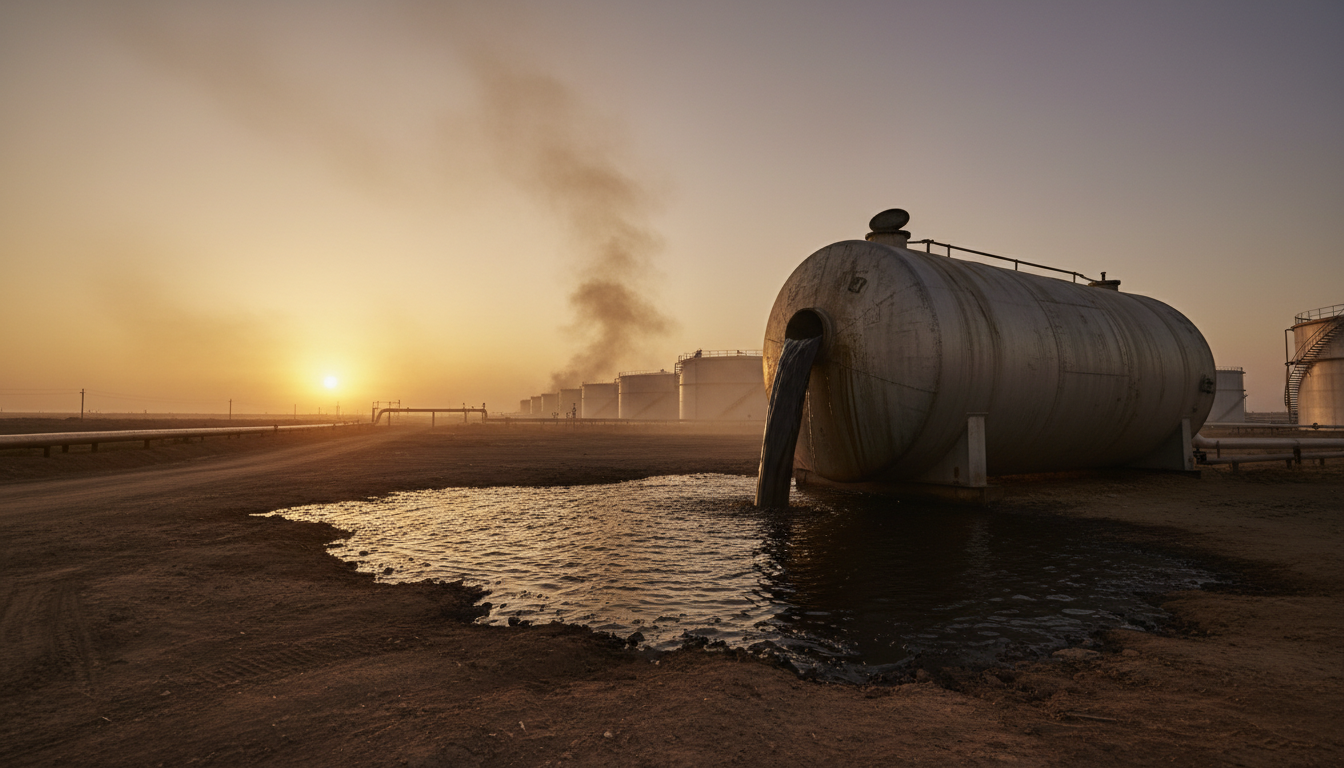
Global energy markets experienced a dramatic downturn following the announcement of a two-week ceasefire agreement between the United States and Iran. This significant development, aimed at de-escalating the six-week conflict and paving the way for direct US-Iran talks, sent crude oil and natural gas futures plummeting as traders recalibrated geopolitical risk premiums. Investors are now keenly assessing the durability of this truce against the backdrop of persistent regional instability and a severely disrupted global energy supply chain.
The immediate market reaction was swift and pronounced. Brent crude futures, a key international benchmark, witnessed a sharp 13% decline, settling below the $95 per barrel mark. West Texas Intermediate (WTI) futures mirrored this bearish sentiment, closing just behind Brent. European natural gas futures registered an even more precipitous drop, shedding as much as 20% and experiencing their most significant intraday decline in over two years. This sudden unwinding of risk premium highlights the market’s sensitivity to Middle East tensions and the potential for a return to more normalized supply flows.
Hormuz Bottleneck: A Critical Artery in Focus
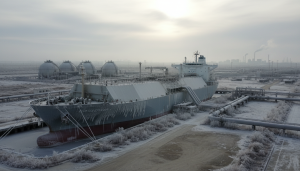
A central factor driving market speculation revolves around the Strait of Hormuz, a maritime chokepoint that serves as the conduit for approximately one-fifth of the world’s crude oil and liquefied natural gas (LNG) supplies. The near-complete halt of transit through this vital waterway has historically propelled real-world crude prices to unprecedented levels, forcing the global energy system to rapidly deplete strategic supply buffers to offset the severe disruption. Despite the ceasefire announcement, the Strait of Hormuz largely remains obstructed, with lingering concerns about its immediate reopening. Indeed, oil prices even managed to claw back some losses midweek after Iran’s semi-official Fars news agency reported a halt to oil tanker passage following alleged Israeli attacks in Lebanon, underscoring the delicate nature of the situation.
The complexities surrounding Hormuz’s full reopening extend beyond immediate cessation of hostilities. “It is highly unlikely that trade into the Gulf will simply resume,” cautioned Neil Roberts, head of marine and aviation at the Lloyd’s Market Association. He stressed that “the region remains at heightened risk with none of the underlying tensions resolved,” a sentiment resonating with shipping companies and physical commodity traders who demand concrete assurances before committing vessels and cargoes to the region. Over 800 vessels currently find themselves trapped by the conflict, a stark reminder of the logistical and insurance challenges that persist.
Persistent Instability and Dwindling Inventories
Despite rising hopes for a resolution, sporadic fighting continues across the region, including Israeli military actions in Lebanon and Iranian strikes on Gulf states. Disagreements between Tehran and the American-Israeli side persist regarding the ceasefire’s scope, particularly concerning Lebanon. Iran’s Parliament Speaker, Mohammad-Bagher Ghalibaf, publicly stated that three clauses of the ceasefire proposal have already been violated, signaling the precariousness of the agreement and the potential for rapid re-escalation.
Against this volatile backdrop, data from the US Energy Information Administration (EIA) underscored the rapid depletion of global energy stockpiles. EIA figures revealed significant drawdowns across all major oil product categories. Distillate stocks on the US Gulf Coast reached their lowest point since September 2024, while domestic gasoline inventories shrunk to their smallest in nearly 16 years. The world has increasingly relied on US supplies to compensate for disruptions emanating from the Middle East, making these dwindling reserves a critical concern for market stability.
The Path Forward: Negotiations, Sanctions, and a Slow Recovery
Investors are now balancing the prevailing uncertainty with signs of diplomatic progress. The White House confirmed Vice President JD Vance would lead the US delegation to Islamabad for the first round of talks, scheduled for Saturday morning local time. Further bolstering optimism, President Donald Trump indicated on his Truth Social network that the US is actively discussing sanctions relief with Tehran. Washington had previously waived certain restrictions on Iranian oil during the conflict to ensure market supply, and a comprehensive sanctions relief package could eventually introduce additional barrels to Western buyers, easing supply pressures. Trump also previously stated that the US would facilitate the clearance of traffic congestion in Hormuz.
However, the return of energy supplies will be gradual, even if Hormuz transit improves. Oil and gas fields have seen reduced output, while refineries have either scaled back production or ceased operations. Returning these facilities to normal operating levels could take weeks, or even longer. US government estimates project that over 9 million barrels per day of oil production from key Middle Eastern nations were expected to be shut in during April. Even if the conflict concludes by the end of the current month, the EIA, in a Tuesday outlook, does not foresee output reaching pre-conflict levels until late 2026. In Qatar, engineers are mobilizing to restart the giant Ras Laffan LNG complex, which went offline in early March following Iranian attacks. While some production could resume in days, a significant return to output remains contingent on unimpeded passage through Hormuz.
The Peril of Hormuz “Tolls” and Institutionalized Insecurity
A contentious element emerging in discussions surrounding Hormuz is the reported plan for Iran and Oman to levy fees on passing ships, as reported by the Associated Press. While Oman has stated that existing maritime agreements prohibit it from enforcing such tolls, the very discussion raises alarms among analysts. Societe Generale SA analysts, including Ben Hoff, articulated concerns that “normalising tolls monetises coercion, embeds leverage directly into global energy flows, and encourages repeat brinkmanship.” They argue that “far from stabilising the Strait, a toll regime risks institutionalising insecurity,” creating a precedent for future disruptions and adding an unpredictable layer of cost and risk for global shipping and energy transport. Janiv Shah, a vice president at Rystad Energy, echoed this sentiment, suggesting that the current situation represents “not a full reopening of the Strait of Hormuz, but rather a formalization of existing conditions, where passage remains contingent on coordination with Iran’s armed forces and subject to technical constraints.”
Investor Positioning and Market Volatility
The abrupt shift in market sentiment caught many investors by surprise, particularly in European gas markets where numerous participants had accumulated near-record net-bullish positions, leaving the market highly vulnerable to a downturn. In the oil sector, futures linked to Abu Dhabi’s flagship Murban crude experienced a sharp decline of up to 20%, marking its most significant drop since the contract’s inception in 2021. Furthermore, trend-following commodity trading advisers (CTAs) adjusted their positions, shifting to 91% long in WTI and Brent, the first time they haven’t been fully long since early March. These algorithmic traders, known for exacerbating price swings, had previously widened their stop-out levels to secure profits during extreme volatility, and their re-entry could amplify near-term market fluctuations.
Physical market participants are exercising extreme caution, awaiting unequivocal evidence that the ceasefire will hold before committing to cargoes from the Gulf. Shipowners, too, demand assurance of safe transit for existing vessels before deploying new tankers into the region. A.P. Moller-Maersk A/S, a leading container line, articulated this prudent stance, stating, “The ceasefire may create transit opportunities, but it does not yet provide full maritime certainty and we need to understand all potential conditions attached.”
The initial ceasefire announcement by President Trump came just 90 minutes before his ultimatum for Iran to reopen the strait or face a “massive bombardment,” underscoring the hair-trigger nature of the conflict’s de-escalation. Josh Gilbert, an analyst at eToro Ltd., aptly summarized the market’s reaction: “This was a market that had been starved of good news. It goes to show how much geopolitical risk was baked into crude, and how quickly it can unwind when there is a credible path to de-escalation.” While the recent market retreat reflects an unwinding of war premiums, the path to sustained stability in energy markets remains fraught with geopolitical and logistical challenges.
Current Crude Oil Price Snapshot
- West Texas Intermediate (WTI) for May delivery plummeted 14.37% to $96.72 per barrel at 3:27 p.m. in New York. The previous Wednesday settlement stood at $94.41.
- Brent crude for June settlement dropped 11.17% to $97.06 per barrel, compared to Wednesday’s settlement of $94.75.
- Despite these recent declines, crude oil prices continue to trade more than 25% higher than their levels at the close of February, highlighting the significant underlying gains accumulated during the conflict period.