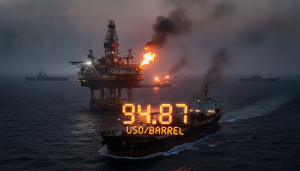
Global oil markets experienced a significant rebound, with benchmark crude prices firming up as renewed geopolitical friction cast a shadow over efforts to de-escalate tensions and reopen the critically important Strait of Hormuz. After a sharp decline earlier in the week driven by hopes of an imminent resolution, investor focus has swiftly returned to the perilous situation in the Middle East.
Oil Markets Rebound Amid Renewed Hormuz Tensions
International benchmark Brent crude climbed back to trade around the psychologically significant $100 per barrel mark. This recovery follows a more than 7% slump observed on Monday, illustrating the extreme sensitivity of energy prices to regional stability. The resurgence in prices directly correlates with reports of U.S. forces engaging targets near the strait, alongside claims from Iran’s Islamic Revolutionary Guard Corps (IRGC) that it intercepted and fired upon an F-35 fighter jet and multiple drones allegedly entering Iranian airspace. These hostile exchanges underscore the volatile environment surrounding the world’s most vital oil transit chokepoint.
The Strait of Hormuz, a narrow waterway connecting the Persian Gulf with the Arabian Sea, typically facilitates the passage of approximately one-fifth of the globe’s crude oil and liquefied natural gas (LNG) during peacetime. Its continued effective closure, stemming from blockades imposed by both the U.S. and Iran, represents an acute vulnerability for global energy supplies. The ongoing skirmishes complicate already fragile diplomatic efforts aimed at forging an interim agreement that could stabilize the region and restore free maritime navigation.
The Elusive Diplomatic Path and Market Volatility
Despite the recent uptick in tensions, high-stakes negotiations persist in an attempt to end a conflict that has profoundly disrupted global energy markets. U.S. Secretary of State Marco Rubio indicated on Tuesday that discussions regarding the precise language of an initial document would likely “take a few days” to conclude. Any failure to secure a breakthrough in these talks would inevitably prolong the current crisis, which has already contributed significantly to skyrocketing fuel prices worldwide, impacting consumers and industries alike.
Market analysts are closely monitoring these developments. Strategists at Macquarie Group, including Vikas Dwivedi, highlighted in a recent note that after crude prices retreated sharply on Monday amidst optimism for a deal, markets are now intensely scrutinizing vessel movements and the progress of restarting energy assets in the region. They cautioned that while “visibility to a durable end of the conflict may be significantly improved, the underlying situation remains far from resolved,” urging investors to maintain a cautious stance on oil market stability.
Meanwhile, West Texas Intermediate (WTI), the U.S. crude benchmark, hovered around $94 per barrel. It’s important to note that WTI prices did not settle on Monday due to the Memorial Day holiday, meaning its reported decline reflected the movement from Friday’s closing price. The overarching trend for oil prices shows a potential shift; after robust rallies in March and April, crude is currently on track for a decline in May. This suggests that the fragile ceasefire attempts and the persistent push to reopen Hormuz are, at times, overshadowing even compelling signs of rapidly depleting global stockpiles.
Sticking Points: The Hormuz Deal and Maritime Control
The proposed deal on the table outlines an extension of the current ceasefire for approximately two months. Under such an arrangement, Washington would agree to lift its existing blockade, while Tehran would commit to reopening the Strait of Hormuz for international shipping. However, significant sticking points continue to impede progress. A core dispute revolves around Tehran’s insistence on managing traffic through the critical chokepoint – a prerogative that the U.S., Arab states, and European nations adamantly maintain cannot be ceded, citing international maritime law and security concerns.
Adding another layer of complexity, reports from the Wall Street Journal indicate that the U.S. is renewing efforts to guide commercial ships through the strait. This initiative carries considerable risk, potentially provoking further ire from Iranian forces, especially following an earlier attempt that triggered a notable escalation in violence. Industry experts remain circumspect about the prospects of a swift resolution. Saul Kavonic, a senior energy analyst at MST Marquee, cautioned that it is “premature to consider a peace deal will be reached let alone adhered to,” pointing to a history of unfulfilled claims from both sides regarding negotiation success or the reopening of the strait over recent months.
Global Inventory Drawdowns and Regional Complications
The prolonged closure of the Strait of Hormuz has had tangible impacts on global energy balances. According to recent tallies from the International Energy Agency (IEA), global oil inventories have been drawing down at a record pace. This trend places a particular spotlight on the United States, where combined commercial and strategic petroleum holdings have been contracting at an unprecedented rate, highlighting the supply pressure even amidst price volatility.
Further complicating the geopolitical landscape, Israel announced on Monday its intention to intensify strikes against Iranian-backed Hezbollah targets in Lebanon. This development directly intersects with the U.S.-Iran negotiations, as Tehran has explicitly demanded an end to hostilities in Lebanon as a prerequisite for any broader deal with Washington. Investors must recognize that the interconnected nature of these regional conflicts means a resolution in one area is often contingent upon progress, or lack thereof, in another.
Investor Outlook: Navigating Uncertainty in Energy Markets
The fluidity of the Middle East geopolitical situation demands constant vigilance for those navigating the intricate global energy investment landscape. As long as the Strait of Hormuz remains a flashpoint and broader regional tensions persist, oil markets will continue to exhibit significant volatility. Investors should prepare for ongoing price swings driven by both diplomatic breakthroughs and renewed military posturing, requiring a keen understanding of both the geopolitical nuances and their direct implications for global crude supply and demand dynamics.