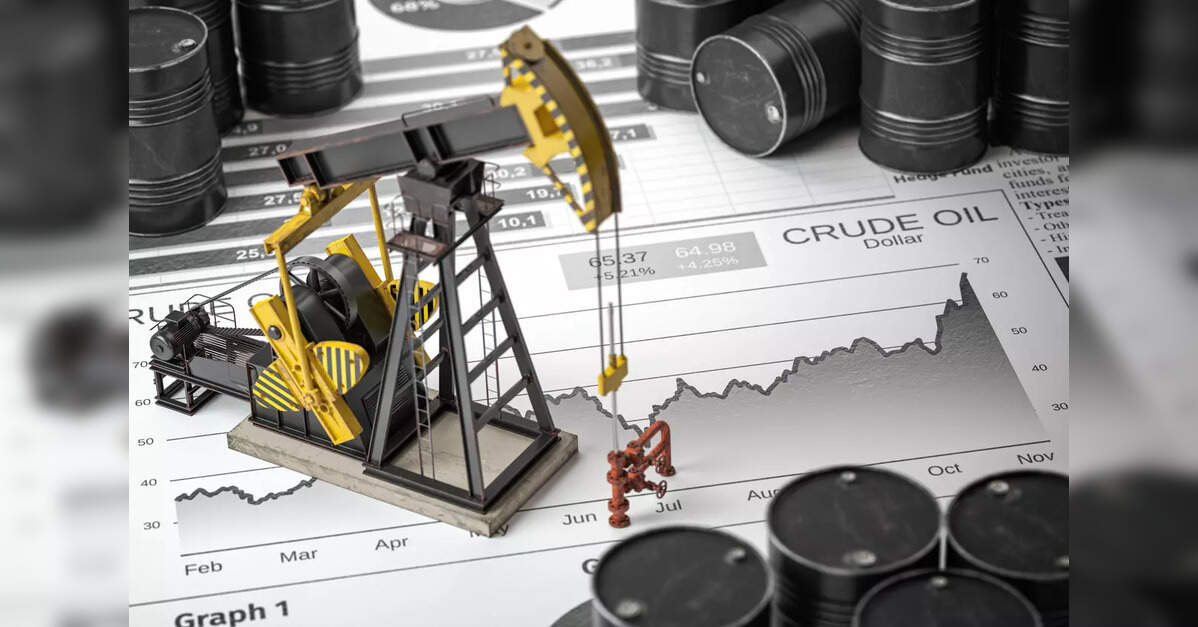
The global oil and gas market remains a crucible of geopolitical tension, supply-demand dynamics, and investor sentiment. While the headline “Crude Futures Dive on Russia-Ukraine Peace Hopes” accurately captured a market reaction earlier in the year, signaling the profound impact of potential de-escalation on perceived supply risks, today’s landscape for energy investors is considerably more nuanced. The promise of additional barrels returning to market, coupled with broader supply increases and demand concerns, created a significant bearish impulse in late 2025. However, as we stand in mid-April 2026, the market presents a complex interplay of factors that demand a fresh perspective, especially as we observe recent price movements and anticipate critical upcoming events. Understanding these shifts is paramount for investors navigating the volatile crude futures market.
Current Market Volatility Amidst Shifting Baselines
The market’s narrative has evolved significantly since the period when peace hopes drove crude futures lower. As of today, April 17, 2026, Brent Crude is trading at $91.87 per barrel, reflecting a substantial daily decline of 7.57% from its opening, with prices ranging from $86.08 to $98.97. Similarly, West Texas Intermediate (WTI) Crude stands at $84 per barrel, down 7.86% within a daily range of $78.97 to $90.34. This immediate volatility underscores that while the market once reacted to potential increases in supply due to geopolitical resolution, current pressures are driving prices down from a much higher baseline.
Indeed, our proprietary data reveals a stark contrast: the Brent contract, which was trading near $59.82 in December 2025 during the peak of the peace optimism, has since seen a robust recovery. However, this recovery has not been without its own corrections; the 14-day trend for Brent shows a decline from $112.57 on March 27 to $98.57 just yesterday, April 16, representing a $14 or 12.4% contraction before today’s significant drop. This indicates that while the geopolitical risk premium has fluctuated, the underlying forces driving this current downward pressure are distinct from the specific “peace deal” narrative of months prior, pointing instead to a re-evaluation of current supply/demand fundamentals at these elevated price points. Investors must recognize this shift: the market is now grappling with the implications of $90+ crude, and what factors might sustain or deflate it, rather than the sub-$60 environment of late 2025.
OPEC+’s Pivotal Role and Upcoming Supply Decisions
A key driver of both past and future crude oil price movements remains the coordinated efforts of the OPEC+ alliance. In late 2025, concerns about a potential supply glut intensified as the alliance restored idled output, complementing increased production from non-OPEC producers, particularly in the Americas. This dynamic contributed to the bearish sentiment then, and it remains a critical factor today. Our proprietary reader intent data highlights a common investor query: “What are OPEC+ current production quotas?” This question underscores the market’s intense focus on the group’s strategy.
The answers to these questions are imminent. The Joint Ministerial Monitoring Committee (JMMC) of OPEC+ convenes today, April 17, followed by the Full Ministerial Meeting tomorrow, April 18. These meetings are not mere formalities; they are critical junctures that will dictate the near-term supply trajectory for a significant portion of global crude. With current prices experiencing a sharp daily decline from already high levels, the alliance faces a complex decision. Will they maintain existing quotas to support prices, or will the pressure to address global inflation and potentially cool soaring energy costs lead to a reconsideration of output levels? Any decision to loosen production curbs, even slightly, could amplify the current bearish momentum, especially if global demand signals remain mixed. Conversely, a decision to hold steady or even signal future cuts could provide a floor for prices, though such a move might face political scrutiny. Investors should be prepared for significant market reactions post-OPEC+, as their pronouncements will directly influence the supply side of the oil equation for the coming months.
Demand Headwinds and the Investor’s Forward View
While supply-side dynamics are always under scrutiny, the demand outlook provides the other half of the investment equation, and here too, challenges persist. In late 2025, weaker Chinese economic data raised significant concerns about slowing energy demand from the world’s largest crude oil importer, acting as a further drag on prices. Today, these concerns have not entirely dissipated, though the geopolitical landscape has undoubtedly shifted. Lingering inflation, potential recessionary pressures in major economies, and the ongoing energy transition all contribute to a nuanced demand picture.
For many investors, the overarching question remains: “What do you predict the price of oil per barrel will be by end of 2026?” This common query from our proprietary reader intent data underscores the profound uncertainty in the market. Forecasting crude prices involves weighing a multitude of variables. On the one hand, a robust global economic recovery could ignite demand, pushing prices higher. On the other hand, sustained high energy prices themselves could choke economic growth, creating a self-correcting mechanism. The current environment, characterized by daily price swings and a recent 12.4% drop in Brent over two weeks (prior to today’s plunge), indicates a market struggling to find equilibrium. Furthermore, the trajectory of gasoline prices, currently at $2.95 per gallon and down 4.85% today, serves as a real-time indicator of consumer demand and refining margins, directly impacting the profitability of integrated oil companies. Investors must therefore look beyond the immediate headlines and analyze the underlying economic indicators, paying close attention to manufacturing PMIs, consumer spending data, and central bank policies, which will collectively shape the global thirst for crude through 2026.
Navigating the Complexities of Oil & Gas Investing
The significant volatility observed in crude futures, from the sub-$60 environment just months ago to today’s $90+ prices experiencing sharp daily corrections, highlights the inherent risks and opportunities in oil and gas investing. For investors asking about specific company performance, such as “How well do you think Repsol will end in April 2026?”, the answer is inextricably linked to these broader market movements. Companies with strong balance sheets, diversified operations, and efficient cost structures are better positioned to weather price fluctuations. Those with significant exposure to exploration and production (E&P) will see their fortunes rise and fall more directly with crude prices, while integrated majors may benefit from stability in refining and marketing segments, although gasoline price declines can pressure these margins.
The current market emphasizes the need for a disciplined, data-driven approach. Beyond tracking daily price movements, investors must analyze inventory reports (with API and EIA weekly data due April 21/22 and April 28/29), rig counts (Baker Hughes data due April 24 and May 1), and geopolitical developments with a critical eye. The interplay of supply management from OPEC+, the pace of non-OPEC production growth, and the resilience of global demand will define the investment landscape. As the market continues to price in evolving risks and opportunities, a thorough understanding of these interconnected forces will be the differentiator for successful oil and gas investment strategies throughout 2026 and beyond.


