

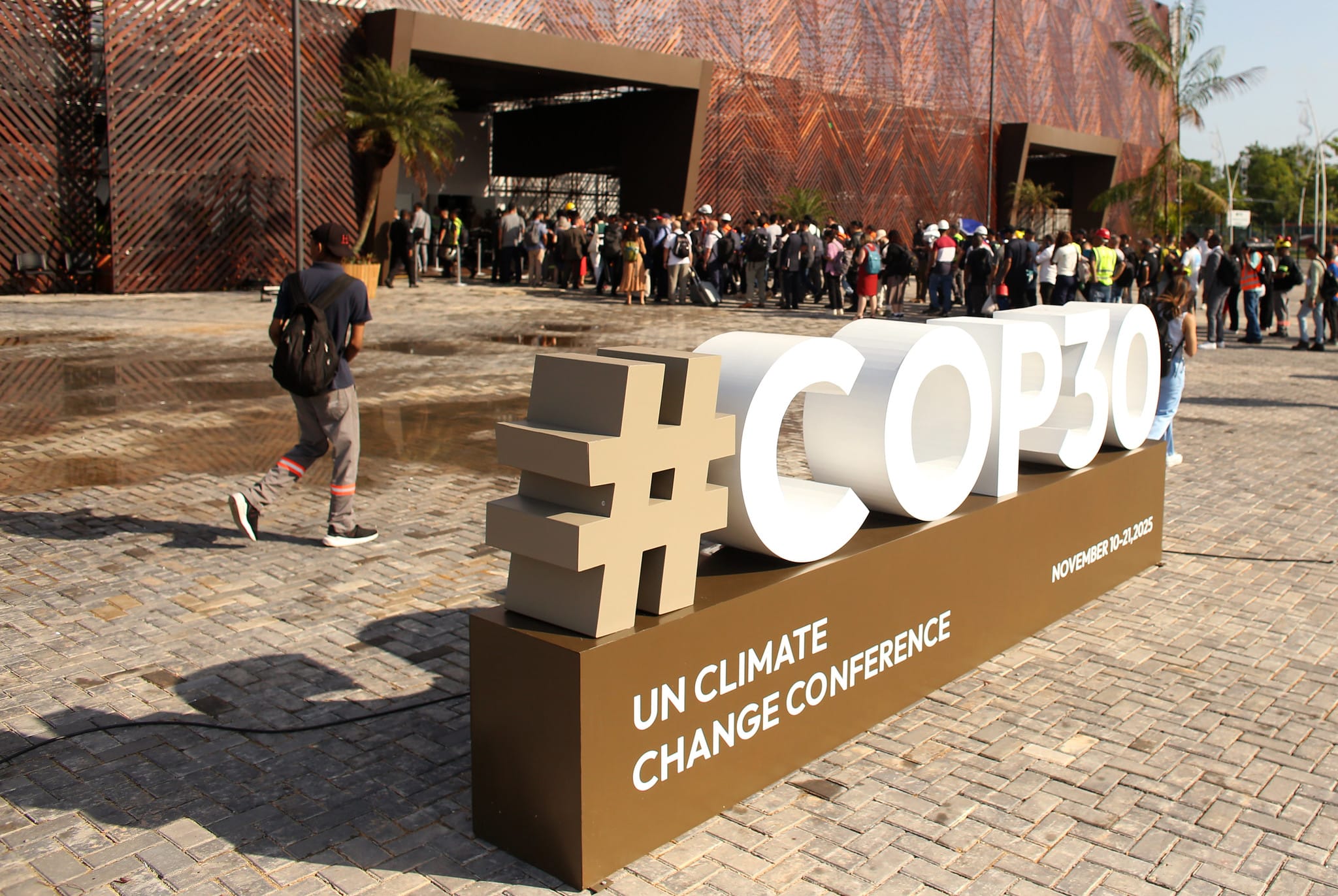
• Negotiators enter the midpoint of COP30 with core issues split into separate tracks, raising questions over whether a unified deal can still emerge.
• Indigenous leaders intensify pressure on Brazil’s presidency, challenging exclusion from key discussions despite government commitments to expand their role.
• The summit’s focus on implementing past pledges, rather than advancing new ones, sets a narrower path for progress on global adaptation, climate finance and emissions governance.
Indigenous Demands Take Centre Stage in Belém
COP30 reached its midpoint with negotiations strained not only by long-running disputes among governments but also by rising pressure from Indigenous communities demanding a stronger voice in decisions shaping the future of the Amazon.
On Friday morning, representatives from several Indigenous nations staged a sit-in at the main entrance of the conference venue. The action halted foot traffic and created a vivid contrast to the slow, procedural pace inside. The Munduruku people, whose territory spans nearly 24,000 square kilometres in northern Brazil, issued a statement warning that continued industrial expansion threatened both their land and the planet’s climate stability. Their message was direct: the Amazon is not an abstract carbon sink, but a home and a living system maintained by its ancestral stewards.
COP30 President Andre Correa do Lago met with the Indigenous delegation after the demonstration. The group questioned why they had been flown to Belém yet remained outside the negotiation rooms. According to participants, Correa do Lago promised additional conference passes. But responsibility for their broader demands — including land protection and stronger participation mechanisms — was redirected to Brazil’s federal leadership. Environment Minister Marina Silva noted that these grievances were ultimately matters for national policy, not the summit’s agenda.
The encounter nevertheless injected urgency into one of the most politically sensitive questions in global climate governance: how to align national development strategies with Indigenous rights, particularly in forest states tasked with deepening their climate contributions.
A Narrower Summit Agenda Heightens Tension
Inside the venue, negotiators confronted a deliberately constrained agenda. Brazil’s presidency structured COP30 around advancing implementation rather than crafting new commitments. Correa do Lago’s early procedural deal set aside contentious pillars such as climate finance obligations, the gap between current national climate plans and the Paris trajectory, trade disputes, and fossil-fuel phaseout language. Those items have been relegated to parallel discussions rather than the summit’s core text.
This approach has unsettled several delegations. Diplomats from Europe, small island states and parts of Latin America have voiced concern — publicly and privately — that narrowing the agenda reduces leverage at a moment when global emissions remain at record highs and adaptation needs are accelerating. Others view the design as pragmatic, arguing that an overloaded agenda in a politically volatile year would doom any deal.
The official negotiations focus on sharpening technical frameworks agreed at previous COPs. Key items include evolving metrics for adaptation, strengthening reporting structures, and clarifying how countries will measure resilience outcomes. These discussions, normally overshadowed by debates on fossil fuels and finance, now sit at the centre of the summit. But progress has been uneven, with several negotiators suggesting that even these technical areas are becoming politicised as wider disputes seep in.
RELATED ARTICLE: Schneider Electric Backs Brazil’s Industrial Decarbonization push at COP30
Fossil Fuels, Finance and the Politics of Expectation
Although fossil-fuel phaseout language is outside the main agenda, it remains an unavoidable undercurrent. Several governments, including members of the High Ambition Coalition, continue to push for a pathway that explicitly addresses oil and gas dependency. Others — particularly major producers — insist that any reference to phaseout be dealt with in long-term strategy documents, not a negotiated text.
Climate finance is following a similar pattern. The ongoing shortfall in fulfilling earlier finance pledges has cast a shadow over discussions, even though it is not formally on the negotiating table. Delegates from vulnerable economies argue that without clarity on future flows, adaptation discussions lack credibility.
For investors and corporate climate leaders watching from the sidelines, the summit’s narrowed scope presents mixed implications. Implementation reforms in adaptation and resilience accounting could shape future disclosure requirements and risk modelling. However, the absence of a unified track for fossil-fuel policy or finance commitments reduces the likelihood that COP30 will deliver a single statement shifting market expectations.
What the Outcome Means for Global Climate Governance
As COP30 edges toward its final week, the summit faces a familiar test: whether to deliver a coherent decision that carries political weight or settle for incremental technical progress. Brazil’s strategy aims to stabilise the process ahead of future COPs by demonstrating that implementation frameworks can advance even in a fractious geopolitical climate.
Yet the rising visibility of Indigenous demands, combined with disagreements over ambition and scope, suggests that any final text will influence more than the technical rules under negotiation. The choices made in Belém will feed directly into global debates about land stewardship, deforestation, and the role of fossil fuels in national development pathways.
Whatever deal emerges, the outcome will shape how governments, investors and regulators judge credibility in climate action over the next cycle — and how forest nations balance their political priorities with the expectations of a global audience navigating climate risk at unprecedented scale.
Follow ESG News on LinkedIn
