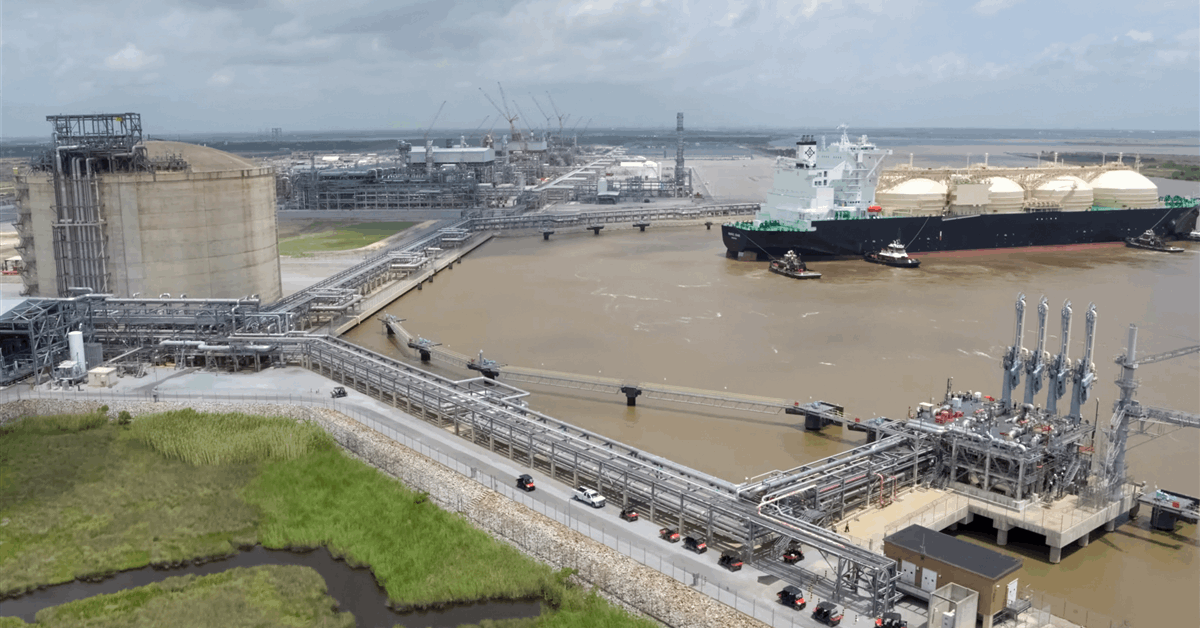
The global energy landscape continues its dynamic shift, with liquefied natural gas (LNG) exports from the United States playing an increasingly pivotal role in meeting global demand and ensuring energy security. A significant development on this front is the Monkey Island LNG project in Cameron Parish, Louisiana, which recently announced its selection of ConocoPhillips’ Optimized Cascade Process liquefaction technology. This strategic choice, coupled with the project’s ambitious “TrueCost LNG” model, signals a bold move to establish a highly efficient and transparent major export facility, poised to capitalize on robust international appetite for natural gas.
Optimizing U.S. LNG Exports: A Strategic Technology Choice
Monkey Island LNG’s decision to deploy ConocoPhillips’ Optimized Cascade Process is a testament to the technology’s reputation for operational excellence. Following an extensive evaluation, the developer prioritized key attributes such as high efficiency, quick restart capabilities, and a proven track record of performance exceeding nameplate capacity. These factors are critical for a project of this scale, designed to achieve an impressive 26 million tonnes per annum (MTPA) export capacity. The facility will feature five liquefaction trains, each capable of processing approximately 3.4 billion cubic feet per day of natural gas, translating to roughly 5 MTPA per train. Complementing this capacity, three LNG storage tanks, each holding 180,000 cubic meters, underscore the project’s commitment to robust and reliable supply.
The strategic location of the 246-acre site in Cameron Parish, Louisiana, offers unparalleled logistical advantages. Situated on a deepwater port along the Calcasieu Ship Channel, just two miles inland from the Gulf of Mexico, it provides direct marine access for global shipping. Furthermore, additional marine flexibility via the Cameron Loop on Monkey Island’s northern bank enhances both construction and operational logistics. Crucially, the project’s proximity to North America’s most extensive natural gas transportation networks, with direct connections to Henry Hub and the prolific Haynesville Shale basin, ensures a secure and cost-effective feedstock supply. This integrated approach, from gas sourcing to export, underpins Monkey Island LNG’s vision for “TrueCost LNG,” aiming to eliminate hidden fees and foster transparency across the entire LNG value chain.
Investor Focus: Navigating Volatile Markets Amidst Long-Term LNG Growth
While the long-term outlook for U.S. LNG exports remains compelling, investors are acutely aware of the broader energy market’s inherent volatility. As of today, Brent crude trades at $98.51, reflecting a 0.89% decline within the day’s range of $97.92-$98.58. Similarly, WTI crude stands at $90.18, down 1.09% from its opening, trading between $89.57 and $90.24. This recent softening extends a trend observed over the past two weeks, where Brent crude has shed approximately $14, or 12.4%, from $112.57 on March 27 to $98.57 on April 16. Even gasoline prices, currently stable at $3.09 per gallon, remain a point of consumer and investor interest.
Our proprietary market intelligence, derived from investor queries, highlights this focus on market fundamentals. A significant portion of investor interest centers on understanding current Brent crude prices and the underlying models powering these figures. Furthermore, questions regarding OPEC+ production quotas consistently rank high, underscoring the market’s sensitivity to supply-side decisions. While these concerns primarily impact crude oil, their ripple effect on overall energy sentiment, capital allocation, and the perception of geopolitical risk is undeniable. For a multi-billion-dollar LNG project, securing financing and demonstrating long-term viability against such a backdrop requires a robust strategy and confidence in sustained demand, which the Monkey Island LNG project aims to provide through its efficient technology and transparent cost model.
Upcoming Catalysts and the Path Forward for U.S. LNG
The coming weeks present several critical calendar events that could influence the broader energy market and, by extension, investor sentiment toward large-scale projects like Monkey Island LNG. The Joint Ministerial Monitoring Committee (JMMC) of OPEC+ is scheduled to meet on April 18, followed by the full OPEC+ Ministerial Meeting on April 20. Any announcements regarding production targets or supply adjustments from these meetings will directly impact crude oil prices and could indirectly affect natural gas price dynamics, especially as global energy markets remain interconnected. Investors will be closely watching for signals of continued supply discipline or potential shifts that could reshape market expectations.
Beyond OPEC+, key weekly data releases will provide fresh insights into U.S. supply and demand. The Baker Hughes Rig Count, scheduled for April 17 and April 24, offers a timely snapshot of drilling activity across North America, including the Haynesville Shale, a crucial gas source for Gulf Coast LNG facilities. Additionally, the API Weekly Crude Inventory reports on April 21 and April 28, followed by the EIA Weekly Petroleum Status Reports on April 22 and April 29, will detail crude and product inventory levels, providing a comprehensive picture of domestic market health. These data points collectively inform analysts and investors about the underlying strength of the energy sector, influencing investment decisions for projects moving towards Final Investment Decision (FID) in the dynamic U.S. LNG export arena.
The Competitive Edge: Location, Scale, and Supply Chain Synergy
The Monkey Island LNG project is strategically positioned to leverage several competitive advantages. Its locale in Cameron Parish, Louisiana, offers direct access to deepwater shipping channels and proximity to the Gulf of Mexico, streamlining logistics for global distribution. The additional marine access via the Cameron Loop provides operational flexibility that few sites can match. Furthermore, the project’s direct tie-in to North America’s most extensive natural gas transportation networks, including connectivity to Henry Hub and the prolific Haynesville Shale, guarantees a stable and competitive feedstock supply, crucial for maintaining low operational costs and ensuring reliable exports.
The selection of McDermott International as the engineering, procurement, and construction (EPC) partner further solidifies the project’s execution strategy. McDermott’s extensive experience in large-scale energy infrastructure projects provides confidence in the timely and efficient delivery of the 26 MTPA facility. Combined with ConocoPhillips’ proven liquefaction technology and the ambitious “TrueCost LNG” model aiming for radical transparency and cost efficiency, Monkey Island LNG is building a robust framework designed for long-term success. This integrated approach, focusing on advanced technology, strategic location, reliable supply, and transparent costing, positions the project as a significant contender in the expanding global LNG market.


