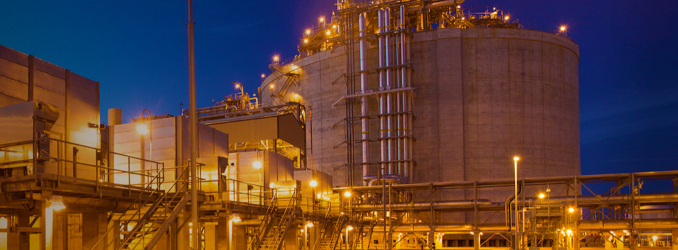
In a significant move reinforcing its long-term liquefied natural gas (LNG) strategy, ConocoPhillips (COP) has secured a substantial sales and purchase agreement (SPA) with Sempra Infrastructure. This latest deal commits ConocoPhillips to purchase 4 million tonnes per annum (MMtpa) of LNG from the Port Arthur LNG Phase 2 project over a 20-year term on a free-on-board (FOB) basis. This builds upon an earlier 2022 agreement for Phase 1, where ConocoPhillips secured 5 MMtpa of offtake and a 30% equity stake, with Phase 1 anticipated to commence operations in 2027. While a final investment decision (FID) for Phase 2 remains pending, this expansion of their partnership underscores a calculated push by ConocoPhillips to solidify its position in global LNG markets, offering investors a clearer view into the company’s strategic diversification amidst a dynamic energy landscape.
ConocoPhillips’ Calculated Expansion in Global LNG
ConocoPhillips’ commitment to Port Arthur LNG Phase 2 signals a clear intent to scale its global LNG portfolio and establish a robust, flexible supply network. The 4 MMtpa offtake from Phase 2, combined with the 5 MMtpa from Phase 1, positions ConocoPhillips as a major player in the burgeoning U.S. LNG export market. This strategy is not merely about volume; it’s about establishing long-term revenue visibility and leveraging the growing global demand for natural gas, particularly in regions prioritizing energy security and cleaner burning fuels. The distinction between the two phases is also noteworthy for investors: an equity stake in Phase 1 suggests a deeper capital commitment and operational involvement, whereas the Phase 2 agreement is an offtake-only arrangement. This approach allows ConocoPhillips to expand its market access and supply capabilities with potentially less direct capital expenditure and operational risk for the second phase, optimizing its capital allocation while still securing critical supply. The company’s CEO, Ryan Lance, emphasized that this SPA “advances our global LNG portfolio strategy,” directly addressing the need to meet increasing energy demand worldwide.
Navigating Market Headwinds: LNG as a Strategic Anchor Amidst Crude Volatility
ConocoPhillips’ long-term LNG strategy takes on heightened significance when viewed against the backdrop of current energy market volatility. As of today, Brent crude trades at $90.38 per barrel, a notable decline of 9.07% within the day, while WTI sits at $82.59, down 9.41%. This sharp downturn follows a broader trend, with Brent having shed over $20 per barrel, or 18.5%, since March 30th. Such significant price swings naturally raise questions among investors, with our proprietary data showing many are asking about crude oil price predictions for the end of 2026. This volatility in the upstream crude market underscores the value of diversified, long-term assets. LNG sales agreements, especially those with fixed-term durations like ConocoPhillips’ 20-year commitment, can provide a more predictable revenue stream compared to the often-turbulent spot market for crude. While global gas prices are also subject to market forces, the structural demand for LNG, driven by energy transition and security concerns, offers a compelling counter-cyclical or stabilizing force within a diversified energy portfolio. For investors seeking resilience against the inherent cyclicality of oil, ConocoPhillips’ strategic pivot towards LNG offers a distinct investment thesis.
Upcoming Catalysts and Investor Focus for Q2 2026
The strategic moves by energy majors like ConocoPhillips are set against a landscape of critical upcoming market events that will undoubtedly influence investor sentiment and commodity prices. Our first-party intent data reveals that investors are keenly focused on broader market stability, with many asking about oil price predictions for year-end 2026 and, critically, inquiring about OPEC+ current production quotas. The immediate focus shifts to the upcoming OPEC+ Joint Ministerial Monitoring Committee (JMMC) meeting on April 18th, followed by the Full Ministerial meeting on April 19th. These gatherings are paramount; investors will be scrutinizing any signals regarding potential adjustments to supply, which could significantly impact crude benchmarks and, by extension, the broader energy sector’s valuation. Beyond OPEC+, the market will closely monitor the API Weekly Crude Inventory reports on April 21st and 28th, along with the EIA Weekly Petroleum Status Reports on April 22nd and 29th, which provide crucial insights into U.S. supply-demand dynamics. Furthermore, the Baker Hughes Rig Count on April 24th and May 1st will offer an indication of North American production trends. For ConocoPhillips, these market events, particularly those impacting natural gas prices and global energy policy, could influence the final investment decision timing and market reception for Port Arthur LNG Phase 2, making the next few weeks critical for understanding the evolving investment landscape.
The Geopolitical Imperative: U.S. LNG and Global Energy Security
The expansion of U.S. LNG export capacity, as exemplified by the Port Arthur project, is not solely an economic play but also a geopolitical imperative. Jeffrey W. Martin, chairman and CEO of Sempra, highlighted the growing role of U.S. LNG in meeting the energy security needs of America’s allies. This sentiment resonates deeply in a world grappling with geopolitical instability and the ongoing drive for diversification away from traditional energy sources. For global markets, particularly in Europe and Asia, reliable access to LNG is a cornerstone of national energy strategies. Long-term SPAs like the one signed by ConocoPhillips provide stability for both the producer (Sempra, by de-risking project financing) and the end-users (via ConocoPhillips’ distribution network), ensuring steady supply flows that are critical for power generation, industrial consumption, and residential heating. This strategic positioning reinforces the U.S. as a critical energy supplier, transforming its abundant natural gas resources into a powerful tool for economic influence and international stability, a factor that should not be underestimated by investors evaluating the long-term prospects of companies deeply invested in LNG export infrastructure.
ConocoPhillips’ latest commitment to Port Arthur LNG Phase 2 is a calculated, forward-looking maneuver. By securing significant long-term LNG offtake, the company is not only expanding its portfolio but also hedging against crude market volatility, capitalizing on global energy security demands, and positioning itself for sustained growth in the evolving energy mix. Investors should view this as a clear signal of ConocoPhillips’ strategic intent to be a dominant force in the global LNG market, offering a blend of long-term stability and growth potential in a sector critical to the world’s energy future.