

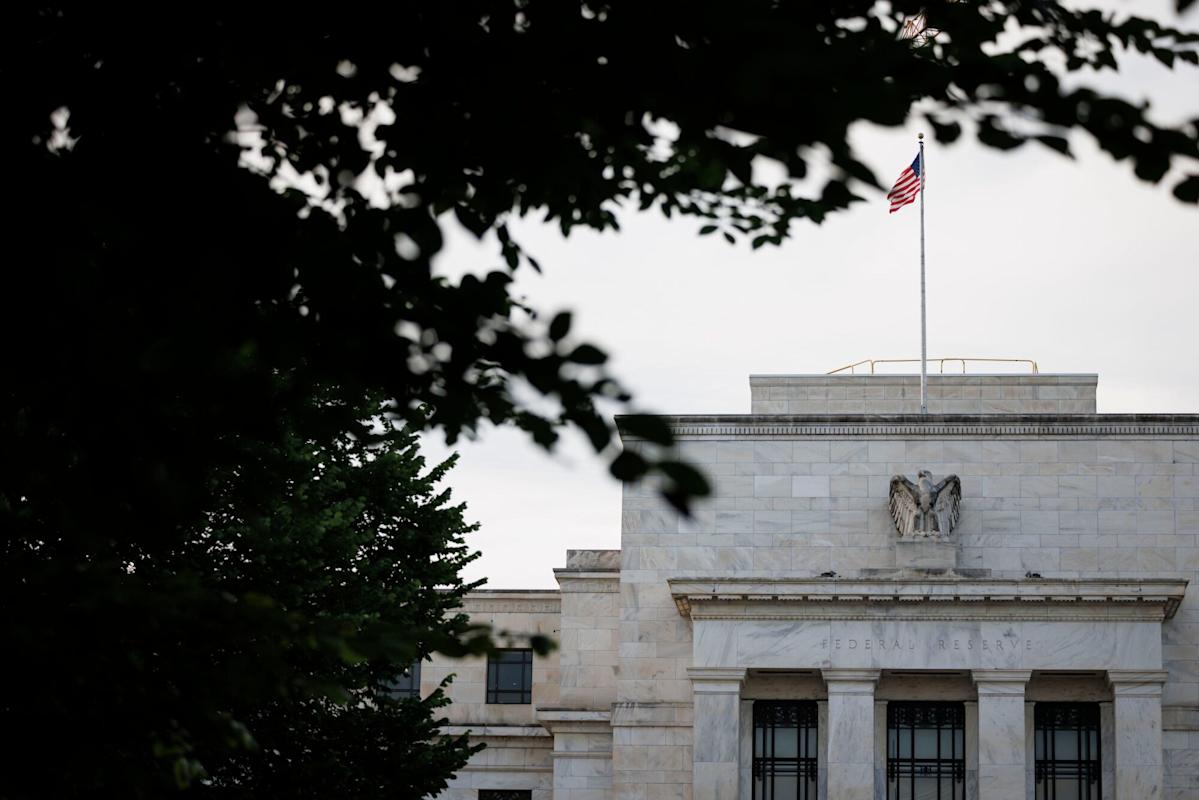
Investors in the dynamic oil and gas sector are closely monitoring shifting signals from the Federal Reserve, as a recent de-escalation in the US-China trade dispute prompts a significant recalibration of interest rate cut expectations for 2025. This development, marked by an agreement to reduce tariffs and moderate trade hostilities, has injected fresh optimism into the global economic outlook, consequently diminishing the perceived urgency for aggressive monetary easing by the US central bank.
The immediate fallout from this renewed trade détente has been a noticeable pullback in market prognostications for the Fed’s easing cycle. Swaps tied to upcoming central bank meetings now indicate a consensus for only 56 basis points (bps) of rate reductions by December, a notable decrease from the approximately 75 bps anticipated just last week. While the market still largely foresees the initial quarter-point rate cut materializing in September, the overall trajectory points towards a “higher-for-longer” interest rate environment than previously imagined.
Treasury Yields Reflect Policy Shift
The bond market, a critical barometer for future economic conditions and borrowing costs, immediately reacted to this policy pivot. On Monday, the policy-sensitive two-year Treasury yield surged by as much as 12 basis points, pushing back above the crucial 4% threshold, where it largely remained throughout New York trading. This movement underscores a broader trend, with the two-year yield having climbed from a low of 3.55% over the past week, and the five-year note yield ascending to 4.11% from roughly 3.85%.
For energy companies, particularly those reliant on debt financing for capital expenditures and expansion projects, rising Treasury yields translate directly into higher borrowing costs. This can impact the viability of new drilling ventures, infrastructure development, and M&A activity across the exploration and production (E&P) landscape. Investors must weigh these increased financing expenses against the potential for robust demand stimulated by a stronger economic backdrop.
Economic Resilience Dims Easing Hopes
The prevailing sentiment behind this revised outlook is the belief that a moderated trade war will bolster economic growth, thereby reducing the necessity for the Fed to stimulate the economy through lower rates. This narrative is further reinforced by persistent strength in the labor market and the stubborn prospect of sticky inflation, factors that continue to provide the central bank with reason to maintain a cautious, “wait-and-see” approach, as advocated by Fed Chair Jerome Powell. Powell has consistently emphasized the need to assess how external factors, such as tariffs, might influence inflation and overall economic expansion.
Only a month ago, the bond market had been pricing in a more aggressive easing path, anticipating four quarter-point rate cuts with the cycle commencing as early as June. This earlier forecast was largely driven by anxieties that an escalating trade war could derail the US economy. However, current market expectations are now aligning more closely with the Fed officials’ own projections from March, which indicated just two cuts for the year, reflecting a more resilient economic picture.
Risk-On Sentiment and Market Dynamics
Ed Al-Hussainy, a rates strategist at Columbia Threadneedle Investment, succinctly captured the prevailing market mood, stating, “Markets are in the overshooting business and right now the money in motion is flowing to risk.” This shift towards risk assets, fueled by renewed economic confidence, has consequently diminished the allure of safer havens like Treasuries. Al-Hussainy’s firm has expressed a preference for “selling the front-end” of the yield curve, suggesting that for the two-year yield to reach attractively cheaper levels, the market would need to price in fewer than two cuts for the current year.
This “risk-on” environment is generally favorable for commodity markets, including crude oil and natural gas. A stronger global economy, less hampered by trade friction, typically translates to higher industrial activity, increased transportation needs, and greater overall energy demand. For oil and gas investors, this could mean upward pressure on commodity prices, potentially offsetting some of the headwinds from higher financing costs.
Divergent Views and the “No Cut” Scenario
Despite the prevailing market consensus, Wall Street economists remain divided on the precise trajectory of Fed policy, with predictions ranging from no cuts at all to as much as 100 basis points of easing this year. Many prominent financial institutions forecast either two or three cuts, with an anticipated start date in July or September. Notably, economists at Citigroup Inc. revised their prediction for the next rate cut from June to July following the announcement that the US would temporarily reduce its 145% tariff rate on Chinese goods to 30% for 90 days. Citi now projects an aggressive 125 basis points of cuts across each meeting between July and January.
Interestingly, a contrarian wager predicting no interest rate cuts this year has gained significant traction in the rates options market. Open interest in a specific put option reflecting this outlook has surpassed 275,000 contracts, according to CME data. This growing interest highlights a segment of the market preparing for a scenario where robust economic data and persistent inflationary pressures could compel the Fed to hold rates steady throughout 2025.
Implications for Energy Sector Investors
For investors focused on the energy sector, these evolving monetary policy expectations carry profound implications. A “higher-for-longer” interest rate environment means that the cost of capital for exploration, production, and infrastructure projects will remain elevated. This could lead to a more disciplined approach to capital expenditure (CAPEX) among E&P companies, potentially favoring those with stronger balance sheets or lower lifting costs. However, the underlying driver – a strengthening global economy unburdened by an escalating trade war – paints a positive picture for energy demand.
Improved global trade relations and stronger economic growth typically translate into increased industrial output, higher consumer spending, and greater travel, all of which are significant drivers of demand for crude oil, refined products, and natural gas. While the immediate financing environment might be tighter, the demand side of the equation appears more robust. Energy investors should therefore assess companies not only on their operational efficiencies and cost structures but also on their exposure to global demand trends and their resilience to fluctuating interest rates.
The market’s rapid repricing of Fed expectations underscores the intricate interplay between global trade dynamics, inflation, economic growth, and monetary policy. As the US and China navigate a path towards reduced trade friction, the ripple effects are reshaping investment landscapes, particularly for capital-intensive sectors like oil and gas. Vigilance and a nuanced understanding of these macroeconomic currents will be paramount for energy investors seeking to optimize their portfolios in the coming months.
