

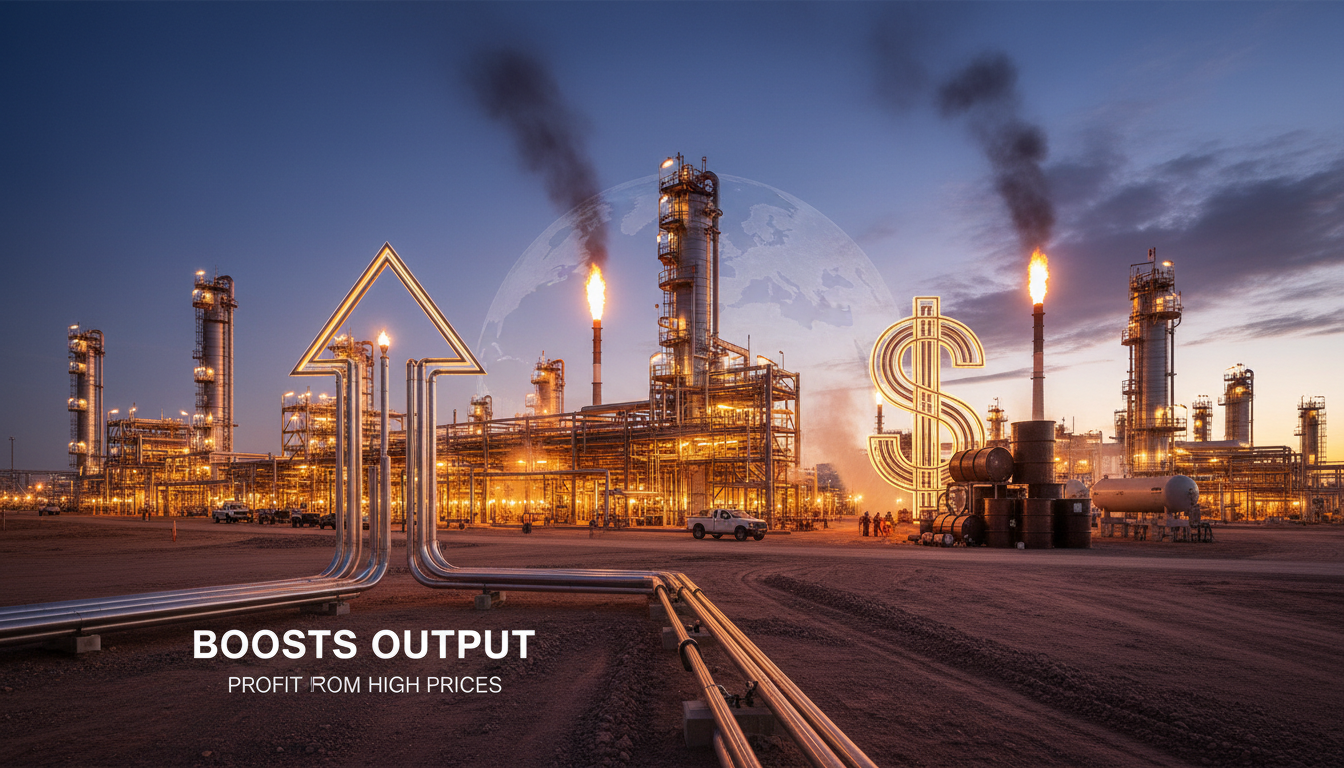
Continental Resources Pivots to Growth Amid Soaring Oil Prices and Geopolitical Tensions
Oklahoma City, OK – The global energy landscape has dramatically shifted, presenting both challenges and opportunities, particularly for U.S. shale producers. In a significant move signaling a response to current market realities, Continental Resources Inc., the privately held exploration and production giant founded by billionaire wildcatter Harold Hamm, has announced plans to boost its crude output. This strategic pivot comes as escalating geopolitical tensions, specifically the ongoing conflict in Iran, have propelled global crude oil prices to their highest levels in four years.
Doug Lawler, Chief Executive Officer of Continental Resources, confirmed the company’s revised strategy in a statement, asserting, “Continental is increasing our capital budget, which will increase production.” This declaration marks Continental as the first prominent U.S. oil producer to publicly commit to ramping up production in direct response to the market upheaval caused by the Iran war. The conflict has severely disrupted supply chains originating from the critical Persian Gulf region, sending crude futures skyrocketing by an astonishing 50% over a mere four-week period, pushing prices well beyond the $100 per barrel threshold.
Geopolitical Shifts Drive Unprecedented Market Volatility
The decision by Continental Resources underscores the profound impact of global events on the energy sector. Prior to the outbreak of hostilities, the market was grappling with an entirely different set of concerns. Fears of an impending global crude glut dominated discussions, driving oil prices down to approximately $60 per barrel and even lower. This bearish sentiment threatened the profit margins and sustainability of numerous shale oil companies across the United States, forcing many to consider significant cuts to their operational expenditures and future growth plans.
However, the rapid escalation of the conflict has fundamentally reshaped market dynamics. The uncertainty surrounding Persian Gulf supplies has created an immediate supply deficit perception, triggering a ferocious bull run in crude prices. Just recently, U.S. crude futures surged by an additional 11% on Friday, climbing above $110 per barrel, following an assertive pledge from U.S. President Donald Trump to escalate war efforts in Iran in the coming weeks. This demonstrates the immediate and sharp reactivity of energy markets to geopolitical rhetoric and actions, creating a high-stakes environment for oil and gas investors.
Continental’s Strategic Footprint and Production Capacity
While CEO Doug Lawler did not specify the exact magnitude of the planned production increase, Continental Resources possesses a robust and diversified operational footprint, providing it with significant capacity to execute on its revised strategy. Headquartered in Oklahoma City, the company maintains extensive operations across several key North American basins, including North Dakota, Oklahoma, Wyoming, and Texas. Furthermore, Continental has recently expanded its international presence, venturing into Argentina’s highly prospective Vaca Muerta shale patch, signaling its long-term growth ambitions.
The company’s ability to respond dynamically to market shifts is supported by its proven production capabilities. In the fourth quarter of 2025, Continental reported an impressive output of 475,000 barrels of oil equivalent per day (boe/d). A significant portion of this production, approximately 43%, originated from the prolific Bakken field in North Dakota, a region where Continental has long been a dominant player. Additionally, 23% of its total output came from the Permian Basin of Texas and New Mexico, another powerhouse of U.S. shale production. This established infrastructure and expertise position Continental favorably to accelerate production as market conditions dictate.
Reversing Course: Capital Spending and Future Outlook
Continental’s revised capital allocation stands in stark contrast to its pre-war financial planning. Before the current geopolitical crisis unfolded, the company had projected a capital spending budget of $2.5 billion for 2026. This figure represented a substantial 20% reduction when compared to its expenditures in 2025, reflecting the prevailing cautious sentiment in the industry amidst lower price environments and concerns over profitability. The decision to now increase this budget underscores a profound shift in strategic priorities, moving from cost-cutting and capital discipline to aggressive growth in response to a supercharged pricing environment.
This move is particularly noteworthy given Harold Hamm’s influential position within the U.S. oil industry and his vocal support for the current U.S. administration. Hamm’s alignment with President Trump may suggest a broader confidence in the administration’s energy policies and its stance on global energy security. For investors, Continental’s bold stance could serve as an early indicator of a wider trend among U.S. independent producers, particularly if sustained high crude prices provide the necessary economic incentives and certainty for increased capital deployment.
Implications for Oil and Gas Investors
Continental Resources’ decision to ramp up production offers a critical insight into the current investment climate within the oil and gas sector. With crude prices surging and geopolitical tensions showing no signs of abating, companies with robust asset bases and the agility to swiftly adjust their capital programs stand to capitalize on these elevated prices. Investors closely monitoring the energy market will watch for similar announcements from other key U.S. shale players, as a coordinated increase in domestic production could begin to temper future price spikes, though significant supply disruptions from the Persian Gulf would likely maintain upward pressure.
The contrast between the pre-war landscape of potential gluts and depressed prices, and the current environment of tight supplies and escalating costs, highlights the inherent volatility and geopolitical risk embedded in oil and gas investing. Continental’s proactive expansion signals confidence not only in sustained high prices but also in its operational capability to deliver additional barrels to a hungry market. This narrative reinforces the importance of monitoring global events alongside fundamental supply and demand metrics when evaluating opportunities in the dynamic energy investment space.
