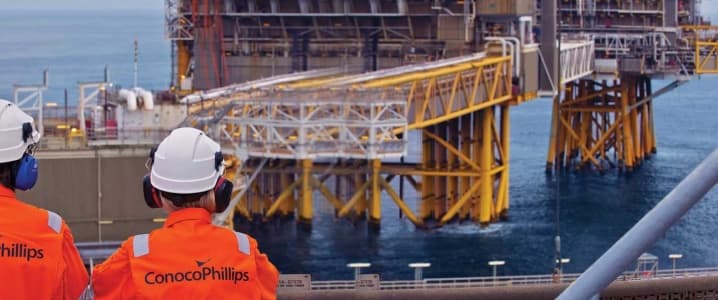
The recent announcement by ConocoPhillips regarding plans to reduce its workforce by 20% to 25% marks a significant development for the oil and gas supermajor, underscoring a persistent industry drive for efficiency amidst a volatile global energy landscape. While the majority of these reductions are slated for this year, following the company’s $17 billion acquisition of Marathon Oil Corp. in November, investors must look beyond the immediate headlines. This move, coupled with broader market trends and critical upcoming events, offers a lens into the strategic imperatives shaping the sector and what investors should consider for their portfolios in the coming months.
Strategic Synergies and the Quest for Efficiency
ConocoPhillips’ decision to implement substantial staff reductions, affecting both employees and contractors, is a direct manifestation of its post-acquisition integration strategy. The company had previously projected $500 million in cost and capital savings within the first year following the Marathon Oil Corp. takeover. Such workforce adjustments are a common, albeit difficult, step in realizing these anticipated synergies, particularly in a capital-intensive industry grappling with fluctuating commodity prices and investor demands for leaner operations. While a company spokesman noted the ongoing pursuit of efficiency, the scale of these cuts – up to a quarter of its workforce – signals a deep commitment to optimizing its operational footprint and maximizing shareholder value from the combined entity. Investors frequently view such decisive actions as a positive signal for long-term financial health, provided the integration is managed effectively and does not compromise core operational capabilities or future growth prospects.
Market Headwinds and Crude Price Volatility
The immediate market reaction to ConocoPhillips’ news was compounded by a broader downturn in energy markets. As of today, Brent Crude trades at $90.38, experiencing a significant single-day decline of 9.07%, with its price ranging from $86.08 to $98.97. Similarly, WTI Crude has fallen to $82.59, down 9.41% within a daily range of $78.97 to $90.34. The company’s shares reflected this negative sentiment, dropping 4.6% on the day of the announcement. This daily volatility is not an isolated event; a broader trend shows Brent crude prices have plummeted from $112.78 on March 30 to $91.87 on April 17, representing an 18.5% decrease in just two weeks. This sustained downward pressure on crude prices highlights the challenging environment in which energy companies are operating. Investors are keenly aware that even well-executed strategic moves, like cost-cutting and M&A integration, can be overshadowed by macroeconomic factors and shifts in global supply-demand dynamics. The current market snapshot emphasizes the critical need for operational resilience and cost control to weather these significant price fluctuations.
Investor Concerns: Oil Price Outlook and Production Quotas
Our proprietary data indicates that investors are intensely focused on the future trajectory of oil prices, with a recurring question being, “What do you predict the price of oil per barrel will be by end of 2026?” This long-term price uncertainty directly influences strategic decisions by producers like ConocoPhillips. Their aggressive pursuit of cost savings through workforce reductions can be interpreted as a proactive measure to ensure profitability even in a lower-price environment, hedging against potential downside risks. Furthermore, inquiries about “What are OPEC+ current production quotas?” underscore the market’s reliance on major producers’ collective actions to stabilize prices. The delicate balance between global supply, driven by OPEC+ decisions and increasing non-OPEC output, and demand, influenced by economic growth and geopolitical stability, remains a top concern. Companies that can demonstrate robust cost structures and efficient operations are better positioned to navigate this inherent market volatility, making ConocoPhillips’ recent actions particularly relevant to investors evaluating long-term portfolio strength in the energy sector.
Navigating Upcoming Catalysts: A Forward-Looking Perspective
The coming weeks present several pivotal events that will undoubtedly shape the near-term outlook for crude prices and, by extension, the broader investment landscape for oil and gas. Investors closely watching ConocoPhillips’ long-term strategy and the implications of its efficiency drives will be keenly observing the OPEC+ Joint Ministerial Monitoring Committee (JMMC) meeting on April 18, followed by the Full Ministerial OPEC+ Meeting on April 19. These gatherings are critical for assessing potential shifts in production quotas, which could significantly impact global supply and price stability. Beyond OPEC+, the market will process the API Weekly Crude Inventory report on April 21 and the EIA Weekly Petroleum Status Report on April 22, offering crucial insights into U.S. demand and inventory levels. Another API and EIA report cycle follows on April 28 and 29, maintaining a steady stream of data. Furthermore, the Baker Hughes Rig Count reports on April 24 and May 1 will provide an indication of future drilling activity and potential supply growth. For investors in companies like ConocoPhillips, these upcoming events are not just data points; they are potential catalysts that could either validate current market sentiment or trigger significant shifts, demanding agile portfolio management and a deep understanding of their potential ramifications.