After decades in the shadows, nuclear energy is rapidly re-emerging as a pivotal force in the global energy landscape, spearheading a significant shift in investment focus. The resurgence isn’t driven by the colossal, traditional reactors of old, but rather by the innovative design of Small Modular Reactors (SMRs). Once viewed as a speculative niche, SMRs are now taking center stage in a geopolitical and energy transition pivot. Their inherent advantages – scalability, flexible siting, and the promise of dedicated, carbon-free baseload power – are proving indispensable in an era grappling with unprecedented AI energy demand surges and the urgent imperative for industrial decarbonization. This critical shift from ambitious blueprints to billion-dollar commercial ventures is firmly underway, presenting compelling opportunities for astute investors.
SMRs: De-Risking the Path to Gigawatt-Scale Deployment
The investment thesis for SMRs is maturing at an accelerated pace, moving from theoretical potential to tangible, bankable assets. NuScale Power stands as a bellwether in this transformation, demonstrating how disciplined financing can unlock significant deployment. A landmark collaboration announced in early September 2025 with the Tennessee Valley Authority (TVA) and ENTRA1 Energy exemplifies this, committing to deploy up to 6 gigawatts of NuScale’s SMR technology within the TVA service region. This represents the largest SMR commitment in U.S. history and provides a crucial blueprint for future projects.
Crucially, the financial structure of this deal is as impactful as its sheer scale. Rather than burdening TVA with the full “first-of-a-kind” financial and regulatory risks, ENTRA1 is set to finance, own, and operate these cutting-edge facilities, selling power back to TVA through a long-term Power Purchase Agreement (PPA). This off-balance-sheet approach is a game-changer, designed to attract institutional investment and transition SMRs from demonstration projects into a fully bankable, utility-scale asset class. For investors, this model significantly de-risks entry into the advanced nuclear sector, providing a clearer path to predictable returns in an energy market increasingly valuing stability and clean power generation.
Beyond Electricity: Molten Salt Reactors Target Industrial Heat
The SMR investment narrative extends far beyond simply generating electricity for the grid. A significant and often overlooked opportunity lies in addressing industrial heat demand, a sector that consumes approximately 20% of global energy and remains heavily reliant on fossil fuels. Terrestrial Energy is strategically targeting this market with its Integral Molten Salt Reactor (IMSR), a Generation IV design that uniquely uses molten salt as both coolant and fuel. The IMSR’s high operating temperatures make it exceptionally well-suited for producing clean hydrogen, synthetic fuels, and other critical industrial feedstocks, offering a pathway to decarbonize hard-to-abate industrial processes.
This niche focus, combined with a clear capital strategy, positions Terrestrial Energy as a compelling play. In October 2025, the company completed its SPAC merger with HCM II Acquisition Corp., successfully raising approximately $293 million in total proceeds. Now trading publicly under the ticker IMSR, Terrestrial Energy is uniquely focused on the U.S. market for its initial commercial deployment. Our first-party intent data indicates that investors are keenly seeking diversification beyond traditional oil and gas, with many asking about the long-term viability of new energy technologies and how to position portfolios against volatile commodity markets. Companies like Terrestrial Energy offer a direct answer to this demand for innovative, high-growth clean energy plays.
Navigating Volatility: SMRs as a Hedge in a Shifting Energy Market
The broader energy market continues to exhibit significant volatility, underscoring the appeal of stable, long-term energy solutions like SMRs. As of today, Brent Crude trades at $90.38, reflecting a substantial -9.07% drop within the day’s range of $86.08-$98.97. Similarly, WTI Crude stands at $82.59, down -9.41% within its daily range of $78.97-$90.34. Gasoline prices have also followed suit, currently at $2.93, a -5.18% decline from a daily high of $3.10. This current market snapshot is part of a larger trend: Brent crude has fallen nearly 20% in the last two weeks alone, from $112.78 on March 30, 2026, to its current $90.38.
This sharp decline and inherent unpredictability in traditional fuel markets highlight the strategic advantage of SMRs. While investors continue to ask about the future trajectory of oil prices – “what do you predict the price of oil per barrel will be by end of 2026?” is a common query – the consistent, carbon-free baseload power offered by nuclear solutions provides a hedge against commodity price swings. The stable cost structure and long operational lifespans of SMRs make them increasingly attractive for utilities and industrial players seeking energy security and predictable operational expenditures in an otherwise turbulent energy landscape. This divergence in market characteristics makes SMRs a powerful diversification tool for energy portfolios.
The Forward Gaze: Upcoming Catalysts and Corporate Demand
The coming weeks present a series of key energy events that will continue to shape the traditional energy market, indirectly reinforcing the long-term appeal of nuclear innovation. Investors will closely watch the OPEC+ JMMC Meeting on April 19, 2026, followed by the full OPEC+ Ministerial Meeting on April 20, 2026. Decisions around production quotas will inevitably influence crude price stability, with any cuts potentially supporting prices, while increased output could exacerbate current downward trends. Furthermore, the API and EIA Weekly Crude Inventory reports (April 21, 22, 28, 29) and the Baker Hughes Rig Count (April 24, May 1) will provide vital insights into U.S. supply-demand dynamics.
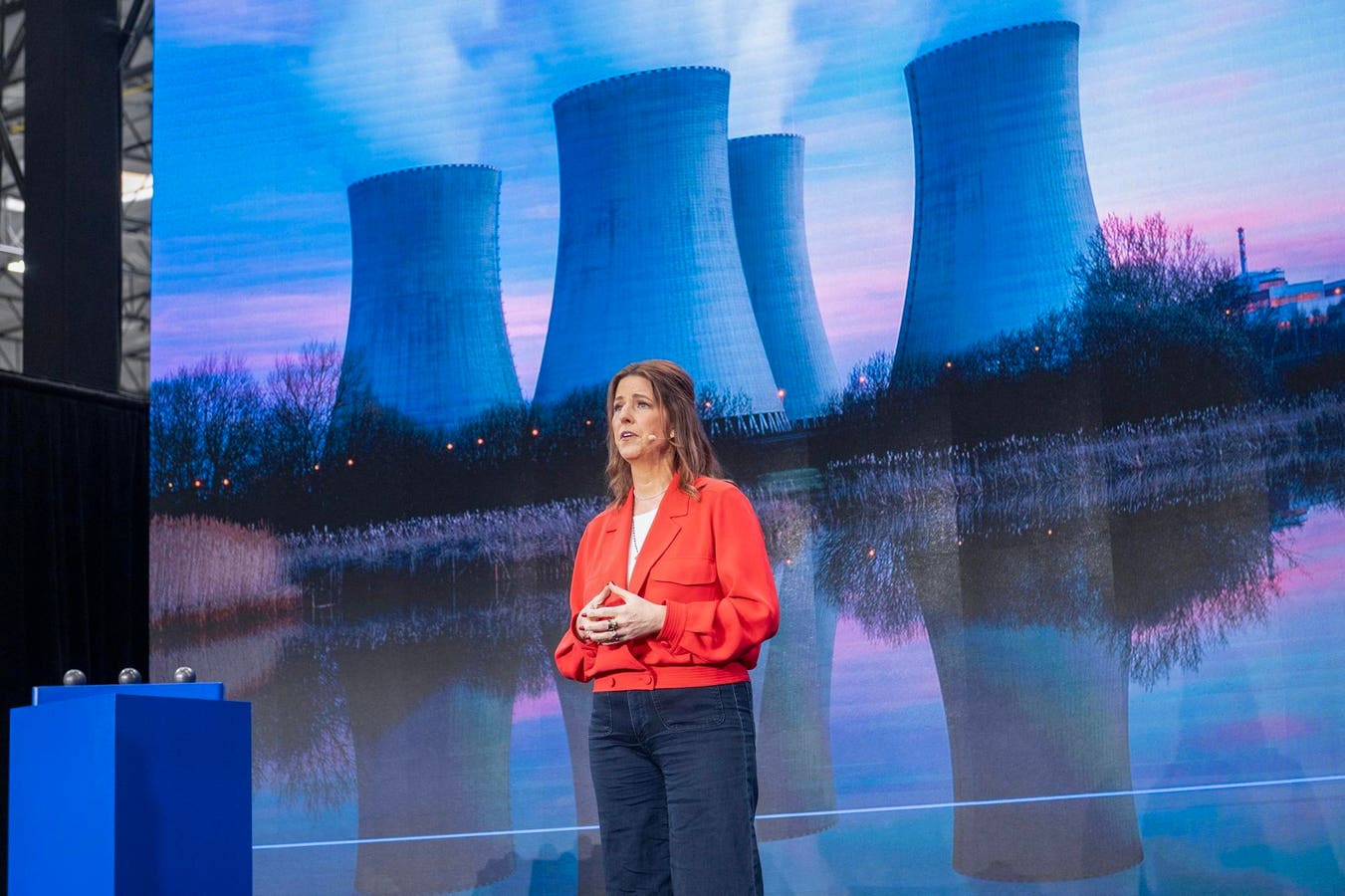
Amidst this traditional energy backdrop, the accelerating commercial nuclear race continues. The presence of major corporations like Amazon, with Chief Sustainability Officer Kara Hurst introducing TRISO-X Pebbles for SMRs in October 2025, underscores the burgeoning corporate demand for reliable, carbon-free power. This isn’t merely a sustainability play; it’s a strategic response to the escalating energy requirements of data centers and advanced computing, driven by AI. Future partnerships and investment announcements from tech giants seeking dedicated, resilient power sources will act as powerful catalysts for SMR developers. The contrast between the short-term volatility of crude markets and the long-term, stable, decarbonized future offered by advanced nuclear technologies positions SMRs as a critical investment for the coming decade.