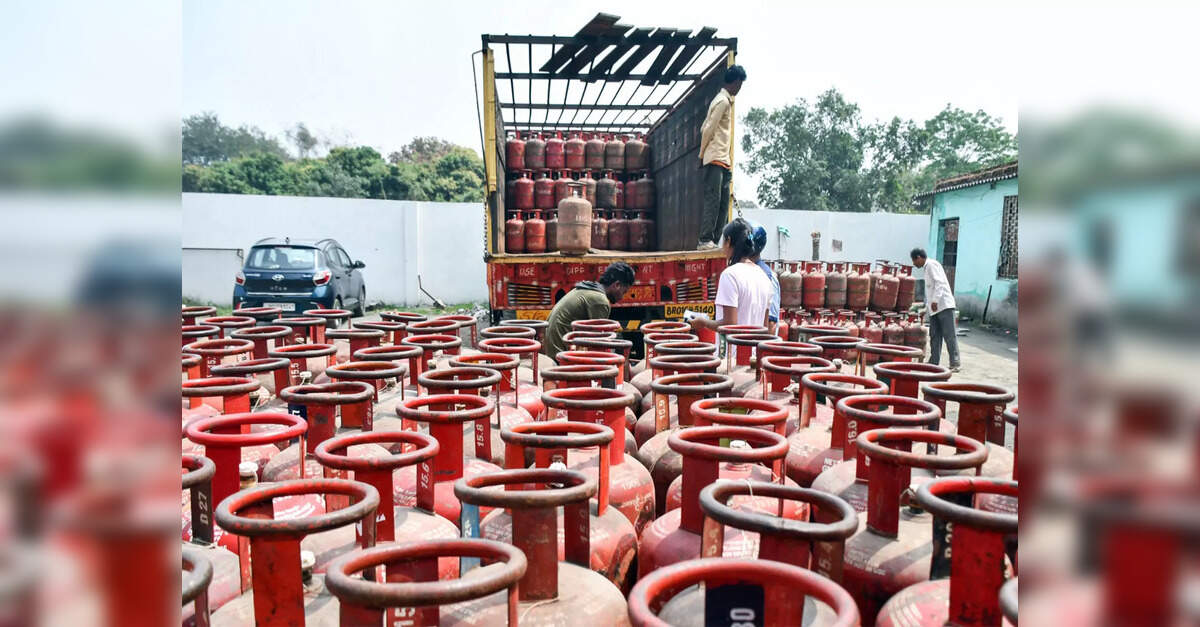
The Indian energy market is buzzing with renewed activity following the Ministry of Petroleum and Natural Gas’s announcement that commercial LPG cylinder distribution has resumed for select industries across various states. This decision, emerging from extensive discussions, marks a significant turning point, particularly for sectors like hospitality that have grappled with gas shortages and supply disruptions. For oil and gas investors, this isn’t just a regulatory update; it’s a clear signal of resurging industrial demand in one of the world’s largest and fastest-growing economies, presenting both immediate opportunities and strategic long-term considerations amidst a complex global energy landscape.
Commercial Demand Ignites: A Deeper Look at India’s Energy Appetite
The resumption of commercial LPG supply is a powerful indicator of pent-up demand within the Indian industrial sector. The immediate impact is evident in the sharp increase in booking figures, which jumped from an average of 7.5-7.6 million to nearly 8.8 million almost overnight. This surge underscores the critical role LPG plays in commercial operations and the scale of the relief this decision brings to businesses. For investors, this translates directly into higher sales volumes for Oil Marketing Companies (OMCs) involved in LPG distribution. While the government acknowledges that LPG supply remains a “matter of concern” due to prevailing geopolitical situations, this move prioritizes economic revival, balancing supply chain anxieties with the imperative to support industrial activity. India’s energy consumption trajectory is consistently upward, and this restart for commercial LPG adds another layer to that growth narrative, reinforcing the nation’s position as a key driver of global energy demand.
Navigating Global Supply Chains Amidst Geopolitical Realities
Despite the positive step of resuming commercial LPG, the Ministry’s candid admission that supply remains a “matter of concern” in light of geopolitical tensions cannot be overlooked by discerning investors. This highlights the delicate balance India maintains between domestic energy security and reliance on international markets. While the nation boasts “sufficient supply of crude” and its refineries operate at “full capacity” to produce petrol and diesel, making it self-reliant in these key transport fuels, LPG often presents a different supply dynamic. The government’s call to reduce “panic booking” further illustrates underlying anxieties regarding consistent availability, even as it reassures that no stockouts have been reported. This situation underscores the importance for investors to monitor not just domestic demand signals but also the stability of international supply routes and commodity prices, which directly influence the input costs for LPG. The resilience of India’s crude supply chain, however, provides a robust foundation for its overall energy security.
Market Signals and Forward Outlook for Energy Investors
The broader energy market currently reflects a degree of caution. As of today, Brent crude trades at $92.96 per barrel, showing a marginal dip of 0.3% within a day range of $92.57-$94.21. Similarly, WTI crude sits at $89.36, down 0.35%. Gasoline prices are also slightly softer at $3.11. This recent price action contrasts with the 14-day trend for Brent, which has seen a decline from $101.16 on April 1st to $94.09 on April 21st, a notable drop of over 7%. While these movements reflect a multitude of global factors, the re-ignition of commercial LPG demand in India could serve as a demand-side counterweight, potentially offering some support to overall energy prices going forward. Looking ahead, investors should closely monitor upcoming data releases. The EIA Weekly Petroleum Status Reports on April 22nd and April 29th will provide crucial insights into U.S. inventory levels and demand trends. Similarly, the Baker Hughes Rig Count on April 24th and May 1st will indicate North American production activity. Perhaps most critically, the EIA Short-Term Energy Outlook on May 2nd will offer updated projections for global supply and demand, which will be essential for assessing how strong demand signals from economies like India are being factored into the broader market forecast. These events will provide a clearer picture of whether the Indian demand surge can significantly impact the current price consolidation.
Addressing Investor Questions: Demand Trajectory and Diversification
Our proprietary reader intent data shows that investors are keenly focused on the direction of crude prices, with questions like “is WTI going up or down” and predictions for “oil per barrel by end of 2026” dominating discussions. The resumption of commercial LPG in India, coupled with the government’s strategic guidance, offers vital clues for these forward-looking analyses. The Ministry’s advice for commercial consumers facing LPG disruptions to transition to Piped Natural Gas (PNG) connections, and GAIL’s proactive engagement with CGD operators to expedite these connections, signals a clear governmental push towards natural gas infrastructure. For investors, this represents a significant long-term trend: a strategic diversification in India’s commercial energy mix. This emphasis on PNG not only addresses LPG supply vulnerabilities but also aligns with broader environmental objectives. Companies involved in natural gas infrastructure, distribution, and city gas networks (CGD) stand to benefit significantly from this directive. This shift suggests that while overall energy demand will undoubtedly grow, the composition of that demand, particularly in the commercial sector, may increasingly favor natural gas, influencing the long-term investment landscape for different segments of the oil and gas sector.


