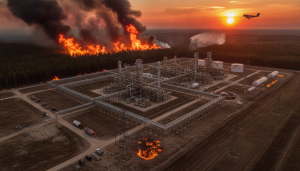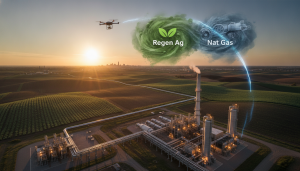
The latest atmospheric data from 2024 delivers a stark message to energy investors: global carbon dioxide concentrations surged to a record 424 parts per million (ppm), marking the largest single-year increase since modern measurements began in 1957. This alarming jump of 3.5 ppm in a single year not only deepens the global climate challenge but also signals an accelerated timeline for more stringent carbon pricing mechanisms and intensified regulatory pressure on the fossil fuel industry. For investors navigating the volatile oil and gas markets, this record CO2 rise isn’t just an environmental headline; it’s a critical indicator of future policy risks and investment opportunities within the evolving energy transition.
The Alarming Atmospheric Reality and Market Reaction
The World Meteorological Organization’s data for 2024 confirms a concerning trend: atmospheric CO2 levels are climbing faster than ever, driven by persistent fossil fuel burning, a surge in wildfires, and critically, the potential weakening of natural carbon sinks. Scientists are increasingly worried that oceans and terrestrial ecosystems, which historically absorb about half of all CO2 emissions, are becoming less effective. The “unprecedented failure of the land sink” observed in 2023 and 2024, exacerbated by El Niño conditions and a global average temperature rise of approximately 1.3 degrees Celsius, suggests a compounding effect that could accelerate warming even further. Dr. Oksana Tarasova, a WMO senior scientific officer, highlighted the concern that “terrestrial and ocean CO2 sinks are becoming less effective, which will increase the amount of CO2 that stays in the atmosphere, thereby accelerating global warming.”
This long-term climate reality is set against a backdrop of immediate market volatility. As of today, Brent crude trades at $90.38 per barrel, reflecting a significant 9.07% drop, while WTI crude sits at $82.59, down 9.41%. Gasoline prices have also followed suit, currently at $2.93, a 5.18% decrease. This sharp downturn is not an isolated event; it continues a broader trend that has seen Brent crude plummet nearly 20% over the past two weeks, falling from $112.78 on March 30 to its current level. While geopolitical developments and short-term supply-demand dynamics often drive such dramatic price swings, the escalating CO2 data underscores a persistent, long-term structural headwind for fossil fuel demand. Investors must look beyond daily fluctuations to the foundational shifts these climate indicators imply for carbon costs and future energy policy.
Policy Pressure Mounts: The View from Upcoming Events
The record CO2 increase will undoubtedly amplify calls for more aggressive climate action, placing immediate and indirect pressure on key industry stakeholders. OilMarketCap’s calendar of upcoming energy events highlights critical junctures for market observation. The OPEC+ Joint Ministerial Monitoring Committee (JMMC) Meeting on April 19, followed by the full OPEC+ Ministerial Meeting on April 20, are primarily focused on production quotas and market stability. However, the backdrop of escalating climate data may subtly influence discussions, as member nations grapple with the dual challenge of maximizing revenue while navigating increasing global pressure to curb emissions. While specific carbon policy isn’t on the official agenda, the context of a rapidly warming planet and weakening natural carbon sinks will be undeniable.
Further insights into market fundamentals will come from the API Weekly Crude Inventory reports on April 21 and 28, and the EIA Weekly Petroleum Status Reports on April 22 and 29. These reports will provide crucial data on U.S. crude and product inventories, offering a snapshot of demand health. Similarly, the Baker Hughes Rig Count on April 24 and May 1 will indicate drilling activity and future supply trends. While these events typically drive short-term price movements, investors should interpret them through the lens of accelerating decarbonization efforts. The sustained high levels of CO2 reinforce the narrative that the “transition away” from fossil fuels, while complex and gradual, is an undeniable force that will increasingly shape long-term supply and demand dynamics, potentially rendering new investments in high-carbon projects less viable.
Investor Concerns: Navigating the Carbon Crossroads
Our proprietary reader intent data reveals a keen investor interest in the future trajectory of oil prices and the strategies of major energy players. A frequently asked question this week is, “What do you predict the price of oil per barrel will be by end of 2026?” The record CO2 data is a powerful input into this complex equation. While traditional supply-demand forecasts remain essential, the growing certainty of stricter carbon pricing introduces a significant variable. Governments worldwide, having pledged in 2023 to “transition away” from fossil fuels, will find their resolve strengthened by these new atmospheric readings. This means increased likelihood of carbon taxes, cap-and-trade schemes, and other mechanisms designed to make carbon-intensive activities more expensive.
Another question, “How well do you think Repsol will end in April 2026?” underscores investor focus on individual company resilience. Integrated energy companies like Repsol are already navigating the energy transition by diversifying into renewables and low-carbon solutions. Their future performance will increasingly hinge not just on crude oil prices, but on their ability to adapt to a carbon-constrained future, effectively manage their emissions, and pivot their portfolios. Investors are also seeking granular data, asking “What are OPEC+ current production quotas?” and querying the data sources powering our insights. This demand for robust, real-time data highlights the market’s need to model increasingly complex scenarios where geopolitical supply decisions intersect with the long-term, undeniable imperative of decarbonization.
Investment Implications: Adapting to a Carbon-Constrained Future
The record CO2 increase, particularly the concerning evidence of weakening natural carbon sinks, necessitates a re-evaluation of long-term investment strategies in the oil and gas sector. The planet’s inability to naturally absorb as much CO2 means that every ton emitted will have a more pronounced and lasting impact on the atmosphere, strengthening the economic case for carbon capture, utilization, and storage (CCUS) technologies. For investors, this translates into identifying companies that are not only acknowledging but actively investing in these solutions, as well as those developing low-carbon fuels and renewable energy alternatives.
Companies that fail to integrate robust decarbonization strategies will face escalating regulatory risks, potential carbon liabilities, and increasing investor scrutiny. The “transition away” from fossil fuels, despite its incremental pace, gains renewed urgency with each new data point confirming the deepening climate crisis. Investors should prioritize companies with clear pathways to reduce Scope 1, 2, and increasingly, Scope 3 emissions, and those with diversified portfolios resilient to future carbon pricing shocks. The market will increasingly reward those energy companies that can demonstrate a credible and accelerated path towards a net-zero future, making carbon management a core metric for long-term value creation in the oil and gas investment landscape.