

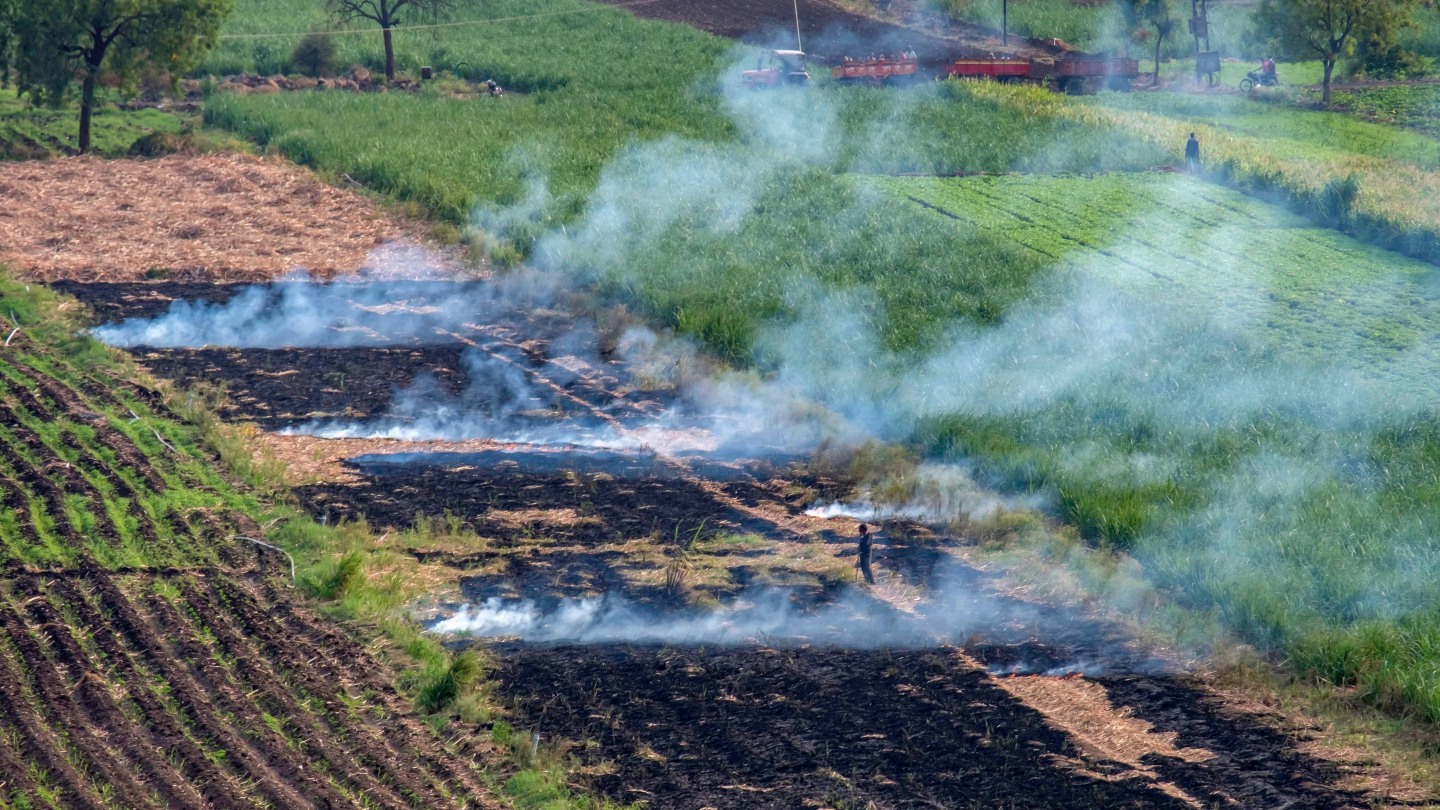
$32.2 million investment backs a commercial waste-to-biogas facility in Uttar Pradesh converting 94,000 tonnes of agricultural waste annually into renewable gas and organic fertiliser.
Project expected to avoid more than 100,000 tCO₂e each year while improving air quality for more than 700,000 residents across 640 villages.
Biogas will supply India’s gas network under long-term agreements with GAIL India and Hindustan Petroleum, strengthening energy security while reducing reliance on imported fossil gas.
EU-Backed Climate Fund Deploys Capital Into India’s Biogas Infrastructure
Climate Fund Managers has committed $32.2 million to finance the construction of a commercial-scale waste-to-biogas facility in northern India, targeting one of the country’s most persistent environmental challenges: agricultural residue burning.
The investment comes from the EU-supported Climate Investor Two Construction Equity Fund and will support Akaia Green Fuels, a project designed to convert agricultural and organic waste into compressed biogas and organic fertiliser.
The initiative reflects deepening climate cooperation between the European Union and India, a partnership reinforced during the 16th India–EU Summit. European financing institutions are increasingly channeling capital toward projects that accelerate industrial decarbonisation, expand renewable energy capacity, and scale emerging solutions such as green hydrogen and bioenergy.
Once operational, the facility will process approximately 94,000 tonnes of agricultural and organic waste each year, including paddy straw, sugar mill press mud and livestock manure.
Turning Agricultural Waste Into Clean Energy
India is one of the world’s largest producers of rice and sugarcane, generating vast volumes of crop residues across northern states. A significant share of this material is burned in open fields, contributing to severe seasonal smog and worsening regional air pollution.
The Akaia Green Fuels project addresses the issue directly by converting waste biomass into renewable energy using anaerobic digestion technology.
Each year, the plant is expected to produce around 20 tonnes per day of compressed biogas alongside roughly 123 tonnes per day of fermented organic manure. The fuel will be injected into India’s city gas distribution network through long-term offtake agreements with the country’s largest gas utility, GAIL India, and state-owned oil and gas company Hindustan Petroleum Corporation Limited.
By replacing imported fossil gas with domestically produced renewable gas, the project supports India’s broader energy security strategy while cutting greenhouse gas emissions.
Climate Fund Managers estimates the facility will prevent more than 100,000 tonnes of carbon dioxide equivalent emissions annually while improving air quality for more than 700,000 people across roughly 640 villages.
Blended Finance Model Targets Scalable Climate Infrastructure
The construction investment builds on $3.3 million in early-stage development financing provided in 2023 through Climate Investor Two’s Development Fund.
That initial funding supported key pre-construction milestones, including land acquisition, pipeline access, feedstock supply agreements, gas offtake contracts, and technical and financial structuring aligned with international standards.
Construction began in February 2026, with commercial operations expected to start in the first half of 2027.
Jirong Lim, Investment Director at Climate Fund Managers, said:
“Agricultural residue burning remains one of the most persistent environmental challenges in northern India. Projects like Akaia Green Fuels show how this waste can be transformed into clean energy, organic fertiliser and new income streams for farmers, while delivering meaningful improvements in air quality and emissions. By producing biogas that feeds directly into the gas network, the project supports India’s national objective to reduce reliance on imported natural gas while diversifying the energy mix and improving energy security. Climate Fund Managers’ blended finance approach enables solutions like this to be delivered at commercial scale and replicated across the country.”
RELATED ARTICLE: Climate Fund Managers Launch €150 Million Energy Transition Fund for Emerging Markets
Rural Income And Supply Chains At The Center Of The Model
The project also aims to create economic value across agricultural communities. Farmers will be able to sell crop residues that would otherwise be burned, creating additional income streams while supporting soil health through the use of organic fertilisers generated by the biogas process.
The development is expected to generate approximately 480 construction jobs and around 110 permanent operations and maintenance positions once the facility begins operating. Additional employment opportunities will emerge across biomass supply chains and transport logistics.
Rajkumar Roy, Project Co-Sponsor, said:
“This project turns an everyday problem for farmers and sugar mills into a long-term opportunity. By securing feedstock, offtake and high technical standards from the outset, we are building a robust, scalable model for compressed biogas infrastructure in India. Beyond clean energy, the project delivers tangible benefits for rural communities through additional income, better air quality and access to affordable organic fertiliser.”
Engineering Oversight And Community Investment
The project will be delivered by GPS Renewables under a fixed-price engineering, procurement and construction contract along with a multi-year operations and maintenance agreement.
Independent European engineering firms Fichtner and TÜV will oversee technical compliance to ensure the facility meets international engineering, environmental and safety standards.
Mainak Chakraborty, Co-Founder of GPS Renewables, said:
“We are delighted to welcome Climate Fund Managers into India’s CBG sector through their investment in Akaia Green Fuels. Their commitment underscores the maturity and scalability of CBG as a climate and energy solution for India, and we look forward to working together to set new standards for project quality, governance and impact.”
A community development program is also planned for 2026 following an independent needs assessment. Early initiatives already underway include funding medical check-ups and providing medication through collaboration with a nearby hospital.
For investors and policymakers, the project illustrates how blended finance structures can mobilize capital toward infrastructure that tackles pollution, energy security and rural development simultaneously. As India expands its bioenergy strategy, projects like Akaia Green Fuels offer a blueprint for turning agricultural waste into scalable climate infrastructure with measurable environmental and economic returns.
Follow ESG News on LinkedIn
