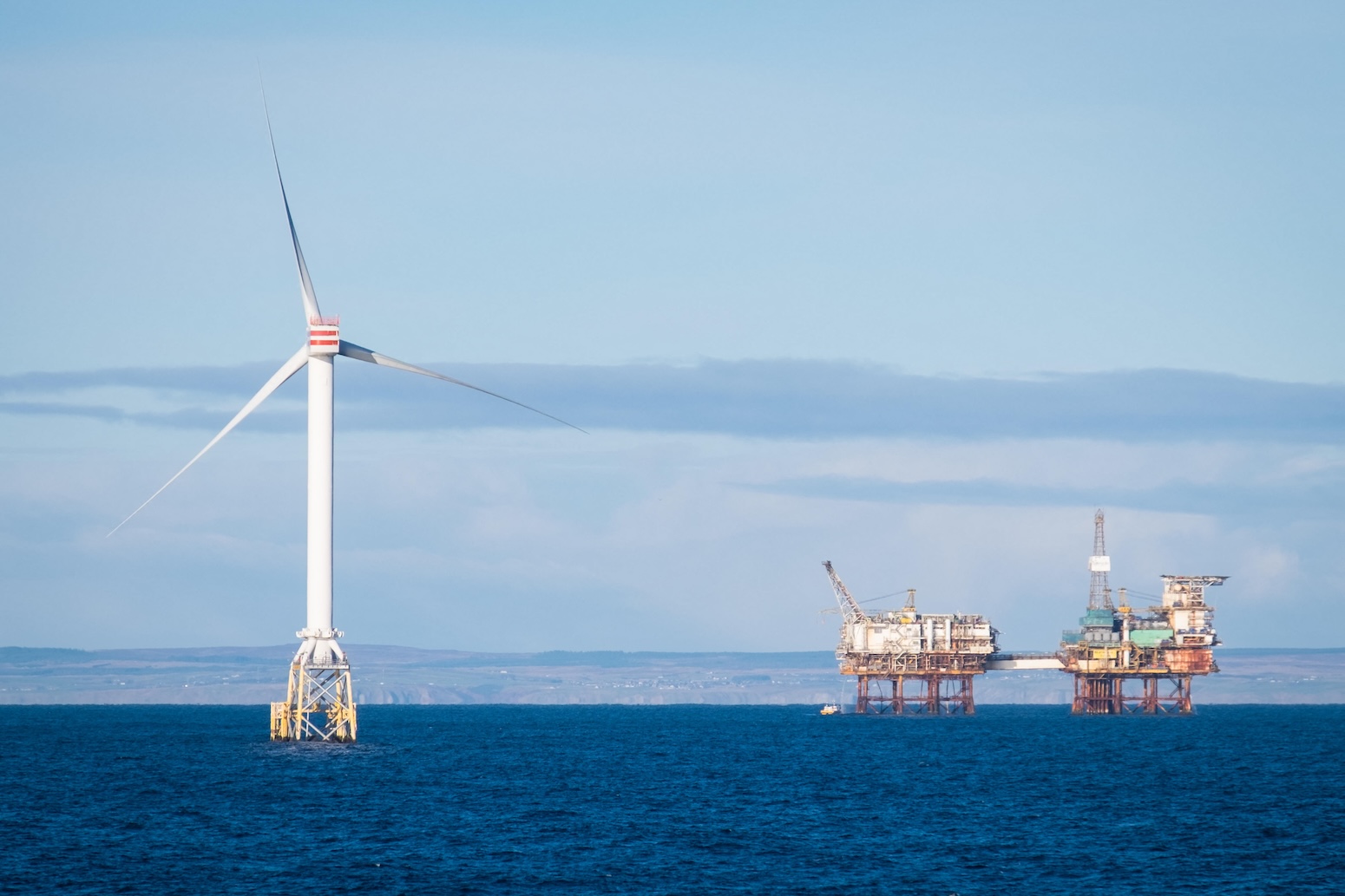
The global energy landscape continues to be shaped by geopolitical uncertainties, with recent volatility in major oil-and-gas producing regions reigniting calls for enhanced energy security in nations like the UK. While some commentators advocate for an expansion of domestic fossil fuel production, a closer examination of the underlying data reveals a compelling narrative: the ongoing expansion of clean energy technologies is proving far more impactful in insulating the UK from volatile gas imports than any renewed push for North Sea drilling. For investors navigating this complex transition, understanding these fundamental shifts is crucial for identifying long-term value and mitigating risk.
The Diminishing Returns of North Sea Hydrocarbon Exploration
The narrative surrounding the North Sea as a bastion of UK energy independence often overlooks its undeniable long-term decline. Despite renewed calls for new licensing rounds, the basin’s structural challenges present a formidable hurdle to significantly boosting domestic supply. Our analysis, drawing from official government data, confirms that UK gas production from the North Sea is projected to plummet by 99% by 2050 compared to 2025 levels. Crucially, even with the issuance of new licenses, this decline is only marginally mitigated, slowing to a 97% reduction. Oil production faces a similar trajectory.
This reality comes into sharp focus against the backdrop of current market conditions. As of today, Brent crude trades at $92.86, reflecting a -0.41% shift within a daily range of $92.57-$94.21. WTI crude follows a similar pattern at $89.29, down -0.42%. This persistent volatility, with Brent having already shed over 7% in the last two weeks alone (from $101.16 on April 1st to $94.09 on April 21st), underscores the urgent need for robust, long-term energy security solutions, not incremental and time-delayed adjustments to a declining basin. For investors, this suggests that capital allocated to new, high-cost North Sea projects carries significant long-term risk, especially given the lengthy development timelines for any potential discoveries, which would only begin yielding gas years into the UK’s broader decarbonization journey.
Clean Energy’s Concrete Impact on UK Import Dependence
In stark contrast to the marginal gains from new North Sea drilling, the rapid deployment of renewables and low-carbon technologies is already delivering substantial and measurable reductions in the UK’s reliance on gas imports. The latest UK renewable-energy auction, for instance, secured approximately 15 gigawatts (GW) of new wind and solar power capacity. This single auction round alone is projected to avoid the need to import 78 “Q-Flex” tankers of liquified natural gas (LNG) each year by 2030. At historical prices of 126p per therm as of March 11th, this avoided gas would represent a significant saving of roughly £4 billion annually.
To put this into perspective for investors, the import avoidance achieved by these 15 GW of new renewables is nearly six times greater than the additional domestic gas production expected in 2030 if new North Sea licenses are issued. This highlights a clear strategic advantage for clean energy investments in the UK. Furthermore, this is not a one-off event; another significant renewable energy auction is anticipated in late 2026, promising to further accelerate this trend. Beyond utility-scale renewables, other measures like replacing millions of gas boilers with heat pumps and even widespread behavioral changes, such as optimizing boiler flow temperatures, offer additional, highly effective avenues for curbing gas demand and import reliance.
Investor Focus: Navigating the UK’s Energy Transition Landscape
Our proprietary reader intent data reveals a keen investor focus on market direction and long-term outlooks, with common queries like “is WTI going up or down?” and “what do you predict the price of oil per barrel will be by end of 2026?” These questions underscore a desire for clarity amidst market fluctuations and a need to understand where to position capital for future growth. In the context of UK energy security, this analysis provides crucial insight: while global oil and gas prices remain a dominant factor for many energy portfolios, the specific investment thesis for UK domestic supply is increasingly favoring the clean energy sector.
Investors should carefully scrutinize proposals for new North Sea oil and gas projects. While they may offer short-term political appeal, their long-term economic viability and impact on true energy security are demonstrably limited compared to the scalable and rapid deployment of renewables. Companies actively involved in renewable energy development, grid infrastructure, and energy efficiency solutions are poised to capture a significantly larger share of the UK’s energy investment pipeline. The declining trajectory of the North Sea basin is a structural reality, making clean energy the more compelling and sustainable investment theme for those focused on the UK’s domestic energy market.
Forward Outlook: Key Data and Strategic Implications
As investors continue to weigh these strategic shifts, a series of upcoming events will offer further insight into broader energy market dynamics, influencing the backdrop against which the UK’s energy transition unfolds. This week, the EIA Weekly Petroleum Status Report on April 22nd will provide crucial data on US crude oil and product inventories, followed by the Baker Hughes Rig Count on April 24th, signaling future drilling activity. The API Weekly Crude Inventory report on April 28th and another EIA Weekly Petroleum Status Report on April 29th will continue to inform short-term supply-demand balances.
Looking further ahead, the Baker Hughes Rig Count on May 1st and, critically, the EIA Short-Term Energy Outlook on May 2nd will offer updated forecasts for global oil and gas markets, including production, consumption, and price projections. These reports, while largely focused on North American and global trends, directly impact the commodity prices that ultimately affect the UK’s import costs and the economic calculus for domestic energy projects. The final API and EIA weekly reports for this cycle on May 5th and May 6th, respectively, will round out the immediate data stream. For UK-focused investors, these global signals provide the context for understanding the economic pressures that continue to drive the strategic imperative towards indigenous, low-carbon energy sources, further solidifying the investment case for clean energy over declining fossil fuel assets.