

As the world marked Human Rights Day on 10 December, the atmosphere was one of reflection rather than celebration. Recent global reports for 2024–2025 indicate that civic space is narrowing, geopolitical tensions are growing, and institutions that protect fundamental rights face increasing challenges. In many regions, rights once regarded as firmly established are now subject to renewed debate. This international context matters, because no country is fully isolated from global human rights trends, and each must decide whether to follow these trajectories or to strengthen its own systems in response.
Kazakhstan is trying to do the latter. In recent years, Kazakhstan has been advancing a wide range of political and legal reforms, guided by public expectations and, in some instances, moving ahead of them. These steps do not place us beyond criticism, nor do they suggest that our human rights system is free of shortcomings. But they indicate that, at a time when many states are narrowing rights, we have chosen to widen them.
This year carried particular symbolic weight for Kazakhstan, as it marked the 30th anniversary of our Constitution. The milestone provided an opportunity to reflect on the constitutional reforms of 2022, which recalibrated the balance of authority among state institutions, reinforced the separation of powers, expanded avenues for citizen participation, and elevated human rights protections to the constitutional level. These reforms continue to serve as the structural foundation for the human rights developments that are increasingly evident across the national system.
In 2025, their impact has become more visible through a cumulative strengthening of institutions. Kazakhstan’s third periodic report under the International Covenant on Civil and Political Rights (ICCPR), presented in Geneva earlier this year, highlighted this trajectory. UN experts welcomed our abolition of the death penalty, improvements in the national preventive mechanism against torture, expanded political participation, and the growing independence of judicial and oversight bodies. These assessments affirm that Kazakhstan is moving in the right direction.
One of the notable trends in recent years has been the steady increase in citizens’ use of mechanisms for the protection of their rights. The number of complaints submitted to the Ombudsman’s Office has been growing consistently year by year, rather than as a one-time increase. This trend should not be viewed as a negative indicator. On the contrary, it reflects rising legal awareness among citizens, increased trust in the complaint-handling system, and the growing visibility and accessibility of the Ombudsman’s Office. More people are choosing to raise their concerns through institutional channels, which indicates greater confidence in the effectiveness of this mechanism.
This trust must be met with action. In 2024 and 2025, disciplinary measures were taken against public officials in response to verified violations. My office continues to conduct unannounced visits to detention centres, care facilities, and penal colonies. These visits often reveal not only individual grievances but systemic challenges that need to be addressed.
Kazakhstan has strengthened the legal and institutional frameworks around preventing torture. Complaints related to torture have fallen for two consecutive years – by 50% in 2023 and a further 30% in 2024. This decline that structural reforms, such as shifting responsibility for prison healthcare to the Ministry of Health, installing surveillance systems in detention facilities, and introducing electronic complaint terminals, are having an effect. A Compensation Fund for victims of torture has also been created, providing financial and legal support regardless of a victim’s legal status.
Expanding Protections Strengthening Civil Society
One of the most significant developments in Kazakhstan’s human rights landscape has been the strengthening of protections for women and children. The 2024 law re-criminalizing battery and minor bodily harm marked a decisive shift away from the previous administrative handling of offences of a serious nature and restored meaningful criminal accountability for such acts. Amendments adopted in 2025 further reinforced the legal framework by introducing explicit penalties for stalking, harassment, and forced marriage, thereby expanding the spectrum of safeguards available to victims.
These legal reforms are supported by a nationwide network of crisis centers and shelters, as well as by strengthened coordination among law enforcement agencies, social services, and civil society institutions. The introduction of the Digital Family Map, expanded crisis support infrastructure, and the growing role of Family Support Centers all contribute to earlier identification of risks and more proactive intervention. While domestic violence remains an urgent challenge, the initial impact of the new legislation is encouraging: detection of violence has increased, latency has decreased, policing has become more consistent, and public awareness of available protections continues to rise.
Protection of children has also been considerably strengthened. Kazakhstan now applies substantially stricter penalties for crimes committed against minors, including life imprisonment for rape. Efforts to expand family-based care continue, accompanied by a steady reduction in institutional placement. Inclusive education reforms have likewise advanced, with barrier-free environments now in place in more than 90% of schools, reflecting a broader policy commitment to ensuring the safety, dignity, and full development of every child.
A recurring critique of many countries in 2025 is the shrinking of civic space. Kazakhstan has attempted to move in the opposite direction. Our reforms have simplified the registration of public associations, expanded avenues for public oversight, and strengthened transparency. The 2023 Law on Public Oversight, for instance, has enabled citizens and NGOs to monitor state institutions in ways not previously possible.
Digital tools now play a central role. The national e-petition platform, Open Legal Acts Portal, and Open Budgets Portal give citizens opportunities to directly influence policy debates. Kazakhstan’s e-government services, ranked 24th in the 2024 UN global
e-government ranking, continue to expand access and transparency.
Media reforms have also been underway. The 2024 Law on Mass Media clarified protections for journalists and modernised regulation in line with evolving digital realities. Defamation has been decriminalised, reducing opportunities for misuse of criminal law to restrict journalistic work. These developments move us toward a more open environment.
Kazakhstan’s human rights architecture continues to develop, and there remains meaningful progress yet to be made. In the course of my work, I encounter daily reminders of the issues that still call for careful and sustained attention. At the same time, there are clear indications that our institutions are gaining in responsiveness, our system in maturity, and our citizens in confidence to seek the protections available to them.
In a global environment where human rights norms are increasingly under strain, Kazakhstan’s reforms – whether in preventing torture, expanding protections for women and children, enhancing judicial oversight, or opening space for civil society – highlight a deliberate choice to move against the current. Progress is uneven and often slower than activists or policymakers would wish; that is the nature of democratic reform. But the direction matters.
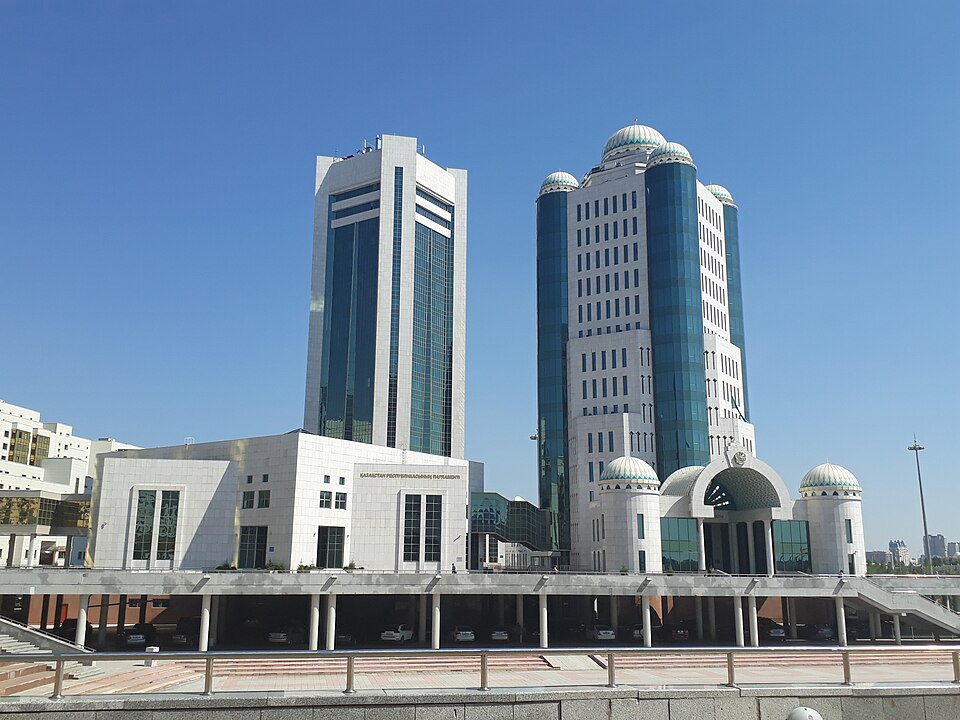
[Photo by Volodya Mazur / Wikipedia]
Artur Lastayev serves as the Commissioner for Human Rights in the Republic of Kazakhstan. The views and opinions expressed in this article are those of the author.
