China’s Deep-Seated Resilience to Volatile Oil Markets
In a global energy landscape perpetually reshaped by geopolitical tensions and supply-demand shifts, China’s strategic positioning stands out. While headlines often focus on the immediate impacts of surging crude prices on major importers, Beijing has quietly built a formidable defense against energy shocks. This analysis delves into China’s multi-pronged approach to energy security, examining its substantial crude stockpiles, aggressive diversification efforts, and reduced reliance on critical chokepoints, illustrating why the nation is far more resilient to $100+ oil scenarios than many of its Asian counterparts.
Strategic Stockpiles and a Greening Energy Mix
China’s journey towards energy independence has been a deliberate, two-decade-long endeavor, culminating in a robust buffer against market volatility. The nation has amassed one of the world’s largest strategic and commercial crude reserves, estimated at an impressive 1.2 billion barrels as of January. This substantial cache provides roughly 3 to 4 months of supply, effectively delaying and mitigating the economic impact of any sudden price spikes or supply disruptions. This strategic foresight gives Beijing considerable breathing room compared to nations with leaner reserves.
Beyond physical stockpiles, China’s rapid transition towards electric vehicles and renewable energy sources provides an additional, structural hedge. The country aims to elevate the share of non-fossil fuels in its total energy consumption to 25% by 2030, a notable increase from 21.7% in 2025. This ambitious shift not only addresses environmental concerns but also strategically reduces its long-term reliance on imported fossil fuels, underpinning a proactive approach to energy security that few other major economies can match.
Navigating Geopolitical Chokepoints and Current Market Realities
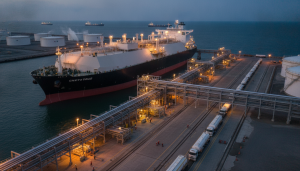
The Strait of Hormuz, a narrow passage connecting the Persian Gulf to global shipping routes, remains a critical artery for international oil flows, accounting for approximately 31% of the world’s seaborne oil last year. Historically, disruptions in this region have sent shockwaves through global energy markets. However, China’s strategic pivot over the past two decades has significantly reduced its vulnerability. Today, the country relies on the Strait of Hormuz for only about 40% to 50% of its seaborne oil imports, a substantial reduction achieved through the development of new overland pipelines and a broader diversification of supply routes. Overall, oil shipments through the strait account for just 6.6% of China’s total energy consumption, with natural gas imports via the route adding another mere 0.6%.
This structural resilience is particularly pertinent in today’s dynamic market. While the prospect of oil prices climbing past $100 a barrel has been a recent concern for investors, our live market data indicates a slight pullback. As of today, Brent Crude trades at $92.78, reflecting a modest dip of 0.49% within a daily range of $92.57-$94.21. Similarly, WTI Crude stands at $89.4, down 0.3%. This contrasts with the recent 14-day trend where Brent had indeed been trading above $100, specifically at $101.16 on April 1st, before gradually declining to its current level of $94.09 by April 21st. China’s robust energy strategy ensures that even when prices were elevated, or should they surge again, the domestic economic impact is buffered, allowing for greater stability in its vast economy.
Investor Focus: Anticipating Future Price Action and Chinese Demand
Our proprietary reader intent data reveals a consistent theme among investors this week: a deep focus on future price trajectory and market catalysts. Questions like “is WTI going up or down?” and “what do you predict the price of oil per barrel will be by end of 2026?” dominate queries, underscoring persistent uncertainty despite recent price moderation. For investors tracking global crude trends, understanding China’s demand outlook and its resilience is paramount.
The market will closely watch key data releases in the coming weeks that could sway sentiment and influence China’s strategic decisions. The EIA Weekly Petroleum Status Report, scheduled for April 24th, April 29th, and May 6th, will provide crucial insights into U.S. crude inventories and demand, which often set the tone for global prices. Additionally, the Baker Hughes Rig Count on April 26th and May 1st will offer a snapshot of drilling activity, impacting future supply expectations. Perhaps most critically for long-term outlooks, the EIA Short-Term Energy Outlook due on May 2nd will deliver official forecasts that many investors use to calibrate their portfolio strategies. China’s continued ability to manage its import needs amidst these global dynamics will be a key determinant of its economic performance and, by extension, global energy demand trends.
A Decades-Long Strategic Evolution and Global Market Position
China’s current energy posture is not an overnight achievement but the result of two decades of methodical strategic transition. While the U.S. has significantly ramped up domestic oil production, becoming a net exporter in many respects, China has focused on insulating itself from external shocks through diversification and stockpiling. As the world’s largest crude importer, buying nearly twice as much as the U.S., China’s import dependence on petroleum is notably lower at 14% compared to India’s 25%, according to 2023 data. This lower reliance, coupled with diversified sourcing including overland pipelines, grants China a unique and advantageous position in the global energy markets.
This long-term strategy provides a structural advantage for China in navigating future energy crises, whether driven by geopolitical events or market forces. For investors, understanding this deep-seated resilience is critical. It suggests that while global oil prices will always impact the Chinese economy, the nation possesses significant buffers that can soften the blow, potentially leading to more stable long-term growth prospects compared to other import-dependent economies. This makes China a key factor to consider when evaluating the broader investment landscape in oil and gas.