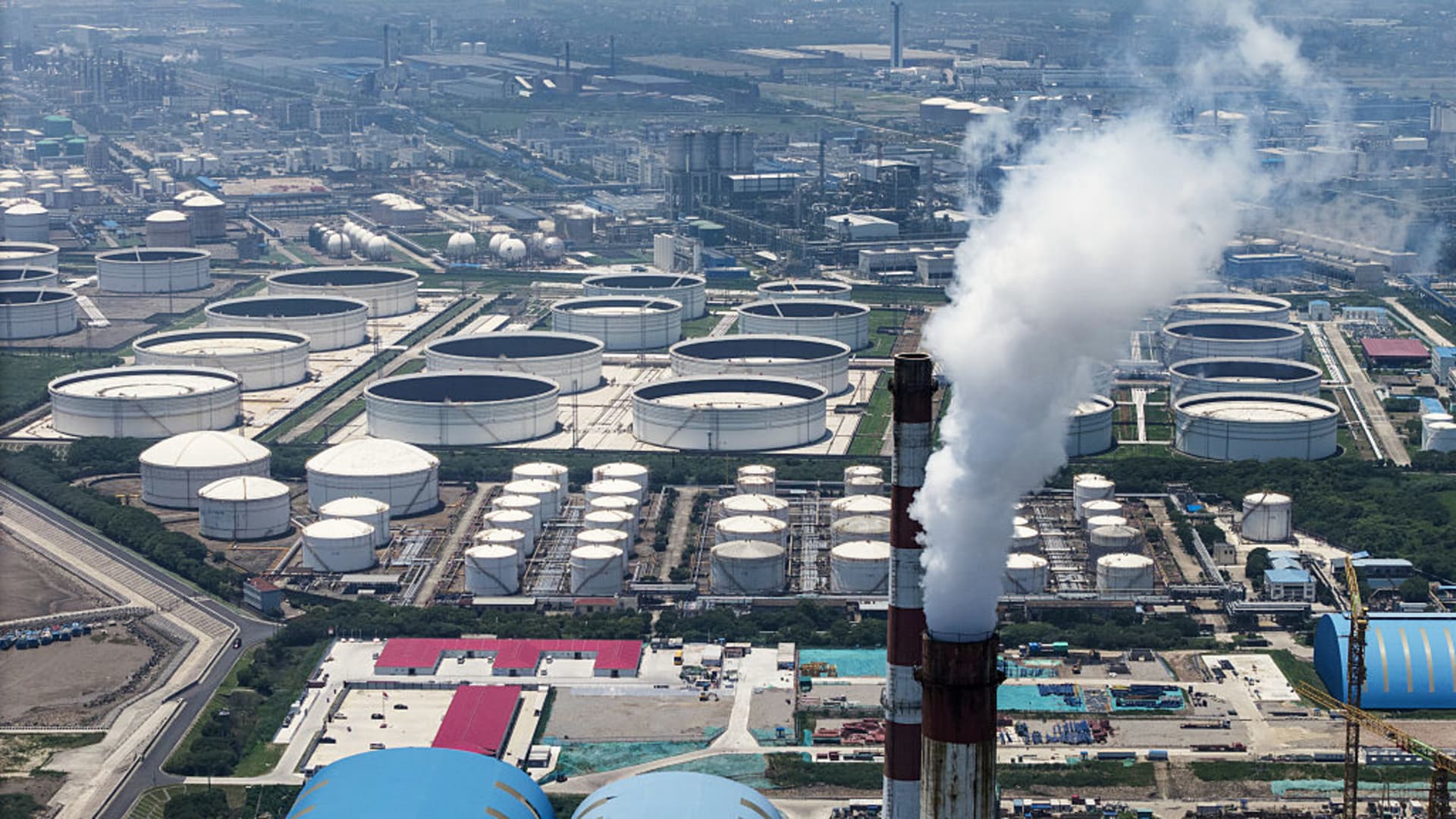
The intensifying geopolitical currents in the Middle East, particularly the recent U.S. and Israeli actions concerning Iran, are reverberating far beyond the immediate region. While headlines focus on military escalation and diplomatic maneuvering, the most profound and complex strategic implications are unfolding in Beijing. China, the world’s largest crude oil importer, finds itself at a critical juncture where immediate economic vulnerabilities clash with a long-term energy security strategy forged precisely for such moments of global instability. For investors tracking global energy markets, understanding this intricate dynamic is paramount to navigating the inherent volatility and identifying opportunities.
China’s Immediate Energy Exposure in a Volatile Market
Beijing’s energy security faces immediate headwinds from any disruption in the Middle East. A significant portion of China’s vast crude imports, essential for powering its industrial base and supporting a still-recovering economy, transits the Strait of Hormuz. The mere specter of this vital chokepoint becoming contested territory is enough to trigger higher insurance premiums, necessitate altered shipping routes, and inject a substantial risk premium into global oil prices, irrespective of physical supply interruptions. This adds considerable pressure on an economy already grappling with uneven recovery and fragile domestic demand, as higher energy costs quickly translate into inflationary pressures and reduced corporate margins.
Adding to this complexity is China’s deep reliance on discounted Iranian crude. Historically, these purchases, alongside those from Venezuela, have offered Beijing a significant economic advantage, enabling it to secure approximately 1.7 million barrels a day of Iranian oil, representing around 90% of Iran’s total exports. However, this strategy also tethers a substantial part of China’s energy supply to politically fragile sources. Any sustained disruption to Iranian exports would force Chinese refiners into fierce competition for alternative barrels in an already constrained global market, potentially erasing those cost advantages and exacerbating supply concerns. As of today, Brent crude trades at $93.83, up 0.63% for the day, with WTI crude at $90.43, showing a 0.85% gain. This recent stability, however, masks a significant correction, with Brent having fallen from $118.35 on March 31st to $94.86 just yesterday, representing a nearly 20% decline over the past two weeks. This downward trend, even amidst heightened geopolitical rhetoric, highlights a market weighing demand concerns and other fundamental factors against perceived supply risks.
Beijing’s Decades-Long Strategic Preparation
While the immediate vulnerabilities are real and cannot be understated, they tell only half of China’s energy story. The current crisis mirrors precisely the scenario Chinese policymakers have been preparing for over more than a decade. Beginning in the early 2010s, Beijing fundamentally reshaped its energy security strategy around the explicit assumption of future geopolitical shocks, sanctions regimes, and maritime chokepoint vulnerabilities. This foresight has driven a multi-pronged approach encompassing the aggressive build-out of strategic petroleum reserves, significant investments in domestic exploration and production, and the diversification of import sources, including the development of overland pipeline infrastructure to bypass maritime chokepoints where possible.
From Beijing’s perspective, U.S. actions against key petro-state partners like Iran, whether intentional or not, will likely be interpreted as further evidence that Washington’s long-term strategic design to limit China’s global competitiveness and capacity remains unchanged. This perception, whether accurate or not, reinforces China’s resolve to continue its energy diversification and self-sufficiency efforts, validating years of strategic planning that now appear prescient in the face of escalating global instability. Investors should watch for further announcements regarding China’s energy infrastructure projects and bilateral energy deals, as Beijing will undoubtedly double down on these long-term initiatives.
Investor Focus: Navigating Price Volatility and Future Outlook
Our proprietary data indicates that investors are keenly focused on the immediate future of oil prices, with frequent queries like “Is WTI going up or down?” and “What do you predict the price of oil per barrel will be by the end of 2026?” These questions underscore the market’s anxiety amidst conflicting signals. While geopolitical tensions in the Middle East typically trigger an upward surge in crude prices due to supply disruption fears, the recent nearly 20% drop in Brent crude over two weeks suggests that broader macroeconomic concerns, such as global demand outlooks and central bank policies, are currently exerting a more dominant influence. The market appears to be balancing the geopolitical risk premium against underlying supply availability and potential demand weakness.
For investors, understanding this delicate balance is crucial. The current relative stability in prices, with Brent at $93.83 and WTI at $90.43, offers a window into market sentiment that is not purely driven by Middle Eastern headlines. Instead, it reflects a complex interplay of factors where the potential for supply disruption is weighed against inventory levels and the health of major consuming economies, including China. This nuanced perspective is essential for making informed investment decisions rather than reacting solely to daily news cycles.
Key Events Shaping the Oil Market’s Next Fortnight
Looking ahead, several key events in the next two weeks will provide critical insights into global supply-demand dynamics and market sentiment, offering valuable clues for investors. The OPEC+ Joint Ministerial Monitoring Committee (JMMC) meeting on April 21st (Tuesday) is paramount. Any statements regarding production quotas, compliance rates, or potential adjustments to current output levels will directly impact global supply expectations and, consequently, crude prices. Investors will be scrutinizing for signs of continued output restraint or hints of future policy shifts, which could significantly influence China’s calculus in securing non-Iranian barrels.
Further insights will come from the EIA Weekly Petroleum Status Reports on April 22nd (Wednesday) and April 29th (Wednesday). These reports provide crucial data on U.S. crude oil, gasoline, and distillate inventories, offering a proxy for global supply-demand balances and U.S. demand strength. Significant builds or draws in inventories often prompt short-term price movements. Additionally, the Baker Hughes Rig Count reports on April 24th (Friday) and May 1st (Friday) will shed light on North American production trends, while the EIA Short-Term Energy Outlook on May 2nd (Saturday) will offer updated forecasts on global supply, demand, and prices through the end of 2026. These data points, combined with ongoing geopolitical developments, will paint a clearer picture for investors seeking to position themselves in a market profoundly influenced by both immediate shocks and long-term strategic maneuvers from major global players like China.


