

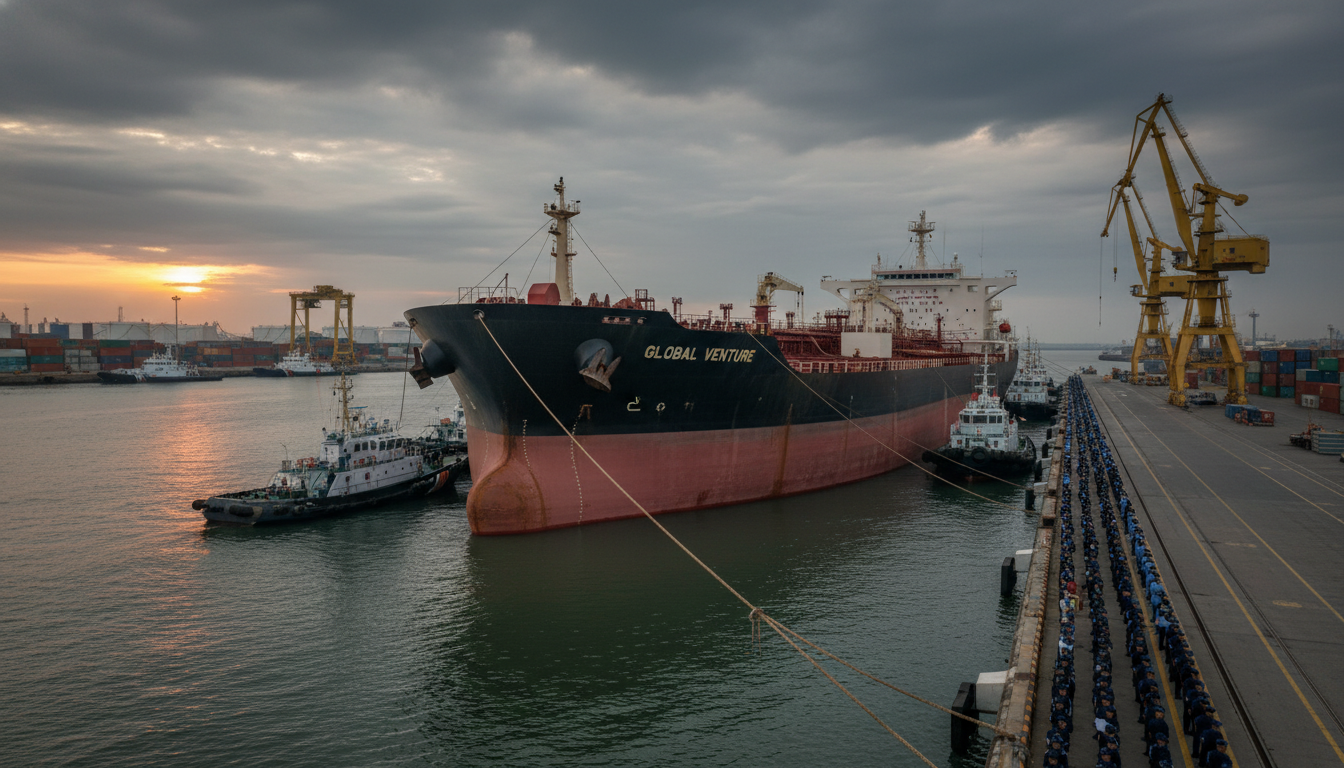
The intricate world of global energy markets and maritime trade faces fresh headwinds as recent geopolitical maneuvers at the critical Panama Canal stir concerns among international investors. China’s unprecedented detention of Panama-flagged vessels, seemingly a direct response to a controversial Panamanian court ruling, has triggered warnings from Washington about the weaponization of economic tools to undermine sovereign legal frameworks.
This escalating dispute, centered on a vital global shipping chokepoint, carries significant implications for the fluidity of energy commodity flows, shipping logistics, and the broader investment climate in key transit regions. Savvy oil and gas investors must closely monitor these developments, as disruptions could reverberate through tanker rates, supply chain stability, and geopolitical risk premiums.
Panamanian Court Nullifies Key Port Concession, Sparking Retaliation
At the heart of the current tension lies a late January decision by Panama’s Supreme Court. The court invalidated the legal framework for a 1997 concession that granted CK Hutchison’s Panama Ports Company the long-term right to operate the crucial Balboa and Cristobal terminals. These terminals, strategically located on both the Pacific and Atlantic entrances of the Panama Canal, are integral to global maritime commerce.
CK Hutchison, a Hong Kong-based port operator, has been a key player in managing these facilities for nearly three decades. The company vehemently rejects the court’s ruling, accusing Panamanian authorities of unlawfully seizing property. In response, CK Hutchison has initiated an international arbitration case against Panama, seeking damages exceeding $2 billion. This substantial claim underscores the perceived commercial and financial fallout from the court’s decision, sending a chilling message to investors in long-term infrastructure projects in emerging markets.
U.S. Secretary of State Marco Rubio, in a recent statement, emphasized that the Panamanian court’s “sovereign ruling upheld transparency, the rule of law, and held private operators accountable to the public interest.” This endorsement highlights Washington’s alignment with Panama’s stance, framing the decision as a defense against undue foreign influence and an upholding of national sovereignty.
China’s Retaliatory Maritime Actions Escalate Tensions
Following the court’s decision and Panama’s refusal to reverse course, China has evidently initiated a campaign of detentions targeting Panama-flagged vessels. The U.S. Federal Maritime Commission (FMC) confirmed it is closely monitoring this surge in detentions, noting a clear correlation with the Panamanian court’s ruling. Data from Lloyd’s List Intelligence reveals the alarming scale of these actions, reporting nearly 70 such detentions since March 8 alone—a number that significantly surpasses historical norms.
Secretary Rubio sharply criticized Beijing’s tactics, stating, “China’s recent actions against Panama-flagged vessels raise serious concerns about the use of economic tools to undermine the rule of law in Panama, a sovereign nation and vital partner for global commerce.” While China’s embassy in Washington has not directly commented on Rubio’s statement, Beijing previously voiced strong opposition to the court ruling, labeling it an “act of bad faith.” This rhetoric signals a hardened stance and a willingness to employ economic pressure in response to perceived commercial injustices.
For the oil and gas sector, these detentions present immediate operational and financial risks. Panama-flagged vessels constitute a substantial portion of the global merchant fleet, including many tankers and LNG carriers. Delays and detentions translate directly into increased shipping costs, potential demurrage charges, and disruptions to supply schedules. Investors in shipping companies, commodity trading houses, and energy producers reliant on timely deliveries should brace for potential volatility and logistical headaches.
The Panama Canal: A Chokepoint for Global Energy Flows
The geopolitical squabble gains heightened significance due to its proximity to the Panama Canal, a waterway that facilitates approximately 5% of global maritime trade. Its strategic importance for the energy sector cannot be overstated. The canal serves as a critical conduit for the transit of crude oil, refined products, and liquefied natural gas (LNG) between the Atlantic and Pacific oceans, significantly reducing transit times and costs compared to alternative routes like the Strait of Magellan around South America.
The U.S. has long been keen to curtail Chinese influence around this vital waterway, a sentiment that reportedly fueled pressure leading up to the Panamanian court’s ruling. Washington perceives the control or significant operational sway over such critical infrastructure as a national security concern. The ongoing dispute effectively positions the Panama Canal as a new arena for the broader U.S.-China strategic competition, with potential ripple effects across global energy geopolitics.
Investor Confidence at Risk: Rule of Law and Long-Term Concessions
Beyond the immediate shipping disruptions, the events in Panama raise fundamental questions for international investors regarding the sanctity of long-term concessions and the predictability of the rule of law in developing nations. CK Hutchison’s pursuit of over $2 billion in damages through international arbitration highlights the substantial financial risks when host governments alter or revoke established agreements.
This situation can deter future foreign direct investment, particularly in capital-intensive infrastructure projects like ports, pipelines, and energy terminals. Investors seek stability and legal certainty; when a host country’s supreme court can overturn a nearly 30-year-old concession, and a major power like China responds with economic retaliation, the perceived risk premium for such investments naturally rises. For oil and gas companies exploring new infrastructure to support energy trade, the Panamanian precedent serves as a cautionary tale.
Secretary Rubio affirmed that the U.S. “stands firmly” with Panama and looks forward to expanding economic and security cooperation. This pledge signals continued U.S. diplomatic backing, which could insulate Panama to some extent but also deepen the friction with Beijing. Investors should consider how this emboldened U.S. stance might further entrench the geopolitical rivalry in crucial trade corridors.
Outlook for Energy Markets and Global Trade
The current standoff in Panama underscores the increasing vulnerability of global supply chains to geopolitical tensions. While direct disruptions to canal transits have not yet materialized from these detentions, the precedent set by China’s actions suggests a willingness to use its economic leverage to protect its commercial interests globally.
For oil and gas investors, a sustained period of heightened risk around the Panama Canal could translate into elevated shipping costs, particularly for U.S. Gulf Coast LNG exports bound for Asian markets, which frequently utilize the canal. Companies might explore diversification of shipping routes, albeit at higher costs and longer transit times, impacting profitability and competitiveness.
As the U.S. continues to support Panama and China persists with its retaliatory measures, the situation demands close monitoring. Investors should evaluate their exposure to companies with significant reliance on Panama Canal transits or those with existing or planned infrastructure investments in regions susceptible to geopolitical influence. The evolving saga at the Panama Canal serves as a stark reminder that political stability and the integrity of commercial agreements are as critical to energy market dynamics as supply and demand fundamentals.
