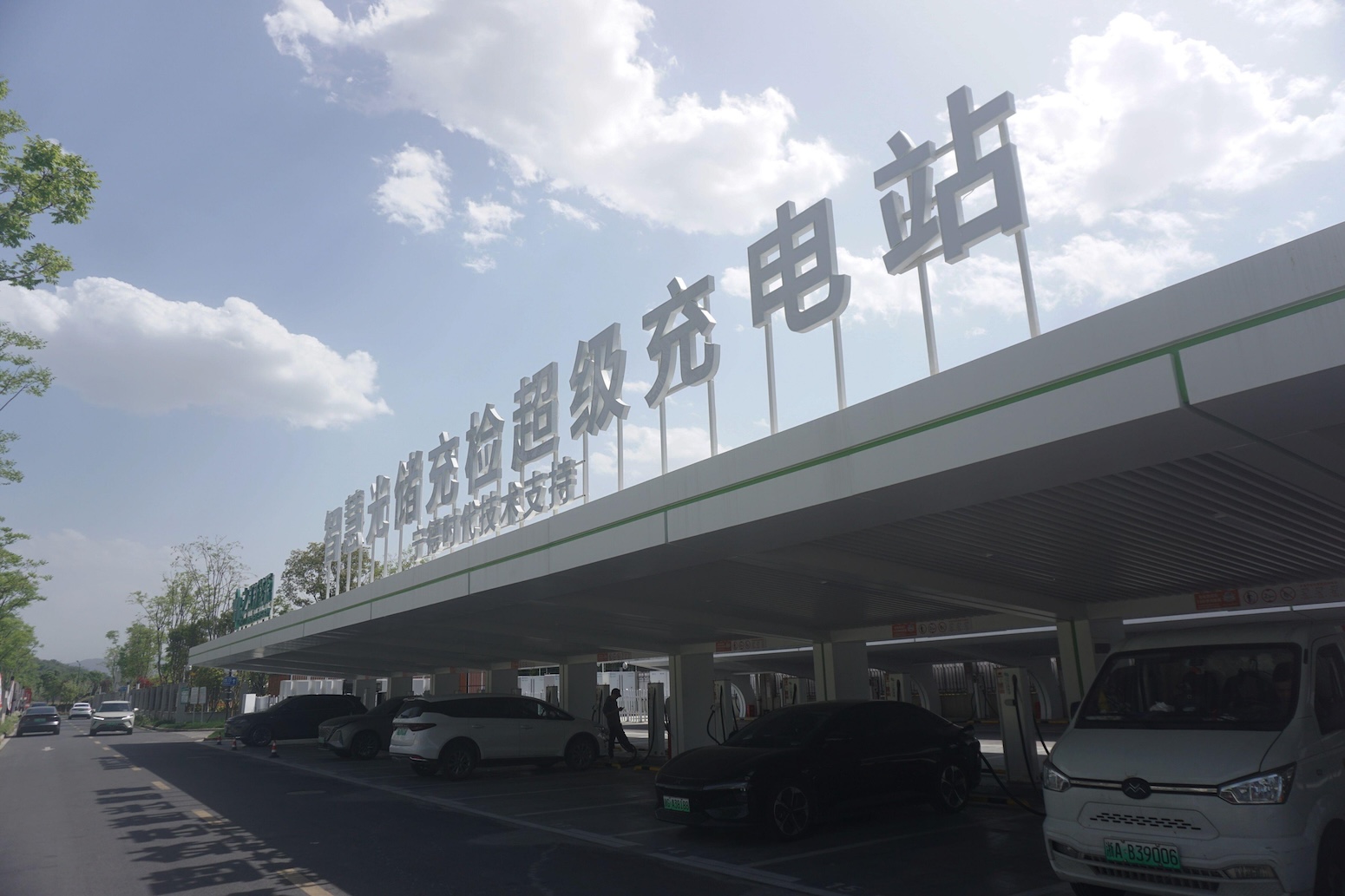
The global energy landscape is undergoing a profound transformation, and nowhere is this more evident than in China’s aggressive push to integrate its burgeoning electric vehicle (EV) fleet into the national power grid. While traditional oil and gas investors typically focus on supply-demand fundamentals for crude and natural gas, the rise of technologies like Vehicle-to-Grid (V2G) in the world’s largest energy consumer presents a critical long-term signal for the entire sector. China, with over 25.5 million EVs already on its roads, is pioneering a system where these vehicles function as “batteries on wheels,” capable of not just consuming but also contributing power back to the grid. This innovative approach promises to enhance grid flexibility, absorb renewable energy surpluses, and fundamentally reshape how electricity is generated, distributed, and consumed – an evolution that demands careful consideration from any investor with exposure to the energy complex.
China’s V2G Initiative: Reshaping Grid Dynamics
China’s strategic embrace of V2G technology marks a significant leap in its energy transition, moving beyond mere EV adoption to a sophisticated integration of electric mobility with national power infrastructure. The core principle of V2G involves two-way charging, allowing EVs to draw electricity from the grid for charging and, crucially, to discharge stored power back into the system when needed. This transforms individual EVs into distributed energy resources, providing much-needed flexibility to a grid increasingly reliant on intermittent renewable sources like wind and solar. With China’s wind and solar capacity now exceeding that of coal power, the existing grid frequently struggles to manage supply fluctuations. A fleet of grid-connected EVs, acting as dynamic storage units, offers a powerful solution, enabling the grid to become more responsive and resilient to power volatility. This “batteries on wheels” concept is not merely theoretical; it’s a strategic pillar in China’s vision for a “new power system” designed to be both flexible and highly efficient.
Policy Momentum and Investor Implications for Future Energy Mix
The speed and scale of China’s V2G rollout underscore its commitment to this transformative technology. A pioneering nationwide pilot policy, announced in April, is currently being trialed in nine major cities, including Shanghai, Guangzhou, and Shenzhen. This initiative allows EV owners to register on platforms like WeChat and sell electricity back to the grid, receiving payments in cash or coupons to offset charging costs in various locations from industrial parks to residential compounds. This April policy builds upon earlier groundwork, notably the National Reform and Development Commission’s (NDRC) pledge in late 2023 to establish V2G technical standards by 2025. For energy investors, these policy frameworks signal a deepening phase of China’s energy transition. While the immediate impact is on electricity markets, the broader implication is a more electrified and less fossil-fuel-dependent future. As investors ponder questions such as what the price of oil per barrel will be by the end of 2026, the accelerating pace of such structural shifts in major economies like China must be factored into long-term demand projections for crude and refined products.
Navigating Oil Market Volatility Amidst Structural Shifts
The oil market remains highly susceptible to short-term dynamics, even as long-term energy transition trends accelerate. As of today, Brent Crude trades at $90.38 per barrel, a notable decline of 9.07% within the day, with its price fluctuating between $86.08 and $98.97. Similarly, WTI Crude has fallen to $82.59, down 9.41%, reflecting a day range of $78.97 to $90.34. This significant daily drop extends a broader trend, with Brent having declined from $112.78 on March 30 to its current level, marking a nearly 20% reduction in less than three weeks. Gasoline prices have also followed suit, currently standing at $2.93, down 5.18% today. This pronounced volatility highlights the market’s sensitivity to macroeconomic signals, geopolitical events, and perceptions of demand. For investors asking about the future trajectory of crude prices, it is crucial to recognize that these short-term fluctuations occur against a backdrop of fundamental, long-term shifts. The widespread adoption of V2G technology in China, enhancing the efficiency and stability of renewable electricity, implicitly suggests a future where electrification increasingly displaces petroleum-based fuels, adding a layer of demand uncertainty to an already complex market equation.
Forward Outlook: Upcoming Events and Long-Term Energy Investment
The coming days and weeks present several critical junctures for the global oil market, offering investors key signals amidst the broader energy transition narrative. This Sunday and Monday, April 19th and 20th, the OPEC+ Joint Ministerial Monitoring Committee (JMMC) and the full Ministerial Meeting will convene. These gatherings are pivotal, as they will likely address current market oversupply concerns and could result in adjustments to production quotas, directly impacting crude prices. Following these, the market will closely watch the API and EIA Weekly Crude Inventory reports on April 21st and 22nd, and again on April 28th and 29th, which provide crucial insights into U.S. supply and demand dynamics. The Baker Hughes Rig Count reports on April 24th and May 1st will further inform views on future production capacity. For investors actively monitoring these events and asking about current OPEC+ production quotas, the decisions made this week will be instrumental in shaping near-term price direction. However, beyond these immediate catalysts, the strategic implications of V2G in China cannot be overstated. As the world’s largest energy consumer increasingly leverages its EV fleet to stabilize its grid and integrate renewables, it signals a gradual but undeniable shift away from traditional fossil fuel reliance. Smart investors are therefore not only tracking weekly inventory changes but also positioning their portfolios for an energy future where electrification and grid flexibility play an ever-larger role in the global energy mix, influencing long-term commodity demand and the valuation of traditional oil and gas assets.