

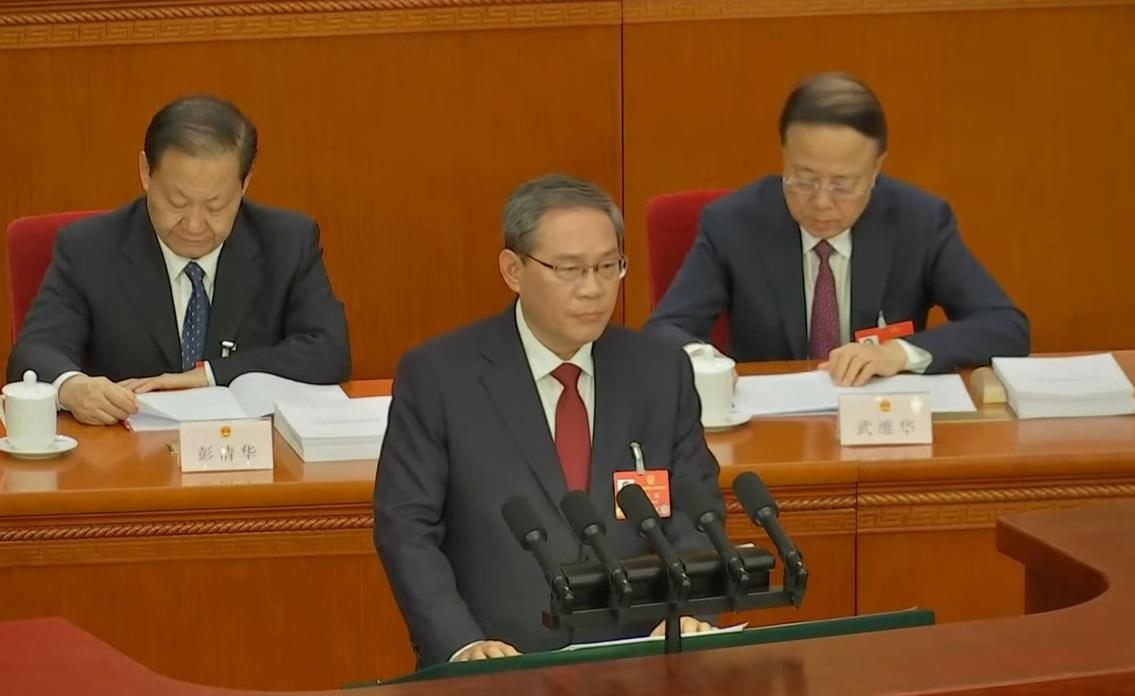
China has unveiled a series of new climate and energy transition-related goals, including targets to reduce CO2 emissions intensity per unit of GDP by 3.8% in 2026, and by 17% by 2030.
The new goals were released as part of China’s new 5-year plan, which includes a GDP growth target of 4.5% to 5% for 2026, a pace that would see absolute emissions increase based on the emissions intensity goal.
China produces more greenhouse gases (GHG) than any other country, accounting for nearly 30% of GHG emissions in 2024, more than double that of 2nd place U.S. The new intensity goals appear cautious relative to China’s most recent climate targets, released last year, which envision reducing absolute GHG emissions by 7%-10% from peak levels by 2035. The 2035 goal marked China’s first-ever absolute emissions reduction target.
Despite the more cautious goals, however, a government work report issued alongside the 5-year plan reiterated China’s interim and long-term targets to peak carbon emissions by 2030, and achieve carbon neutrality by 2060.
In addition to the emissions intensity goals, China also announced a target to have non-fossil energy account for around 25% of total energy consumption by 2030, compared to current levels of approximately 15%, and its existing goal to increase the share of non-fossil energy to more than 30% by 2035.
Coal continues to account for the largest share of China’s energy share, representing more than half of energy consumption, and China’s goals in this area were similarly cautious relative to previous ambitions, with the 5-year plan aiming to peak coal consumption through the forecast period, while a prior pledge from 2021 saw the country seeking to phase down coal consumption between 2026 and 2030.
While noting China’s commitment to continue investing significantly to increase clean energy capacity, environmental groups noted the less ambitious nature of China’s new climate goals, with Norah Zhang, China country lead for Climate Action Tracker calling the 5-year plan “a missed opportunity,” and “could have gone further.”
Climate Action Tracker also noted that China’s new 2030 emissions intensity target was lower than the 18% target in its prior 5-year plan, which it estimated China did not achieve, adding that international good practice is to move away from intensity targets, which allows for emissions to increase if economic growth is strong, and towards absolute targets.
Zhang said:
“In 2025, renewable electricity generation in China grew faster than overall electricity demand, which helped reduce coal-fired power generation and lowered CO₂ emissions in the power sector. However, the new five year plan does not update the 2030 target for newly-installed solar and wind capacity, which China already achieved in 2024. By not updating these targets, the new plan misses an opportunity to create additional momentum through more ambitious goal setting for 2030 and beyond.”
