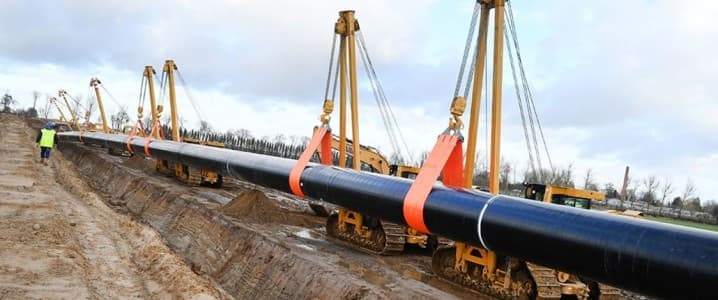
China Pipeline: A Seismic Shift for Global Gas Markets
The strategic alignment between China and Russia has taken a definitive step forward with the binding memorandum for the Power of Siberia 2 pipeline, signaling a profound reorientation of global energy flows. This ambitious project, set to traverse Mongolia with a capacity of 50 billion cubic meters per year, is far more than a simple infrastructure development; it represents a significant move by China to secure long-term, fixed-price pipeline gas, potentially displacing a staggering one-third of its current liquefied natural gas (LNG) imports. For investors, this development demands immediate attention, as it promises to send ripple effects across the entire seaborne gas trade, reshaping supply dynamics and investment decisions for decades to come.
The New Geopolitical Calculus of China’s Gas Supply
China’s intent to diversify and de-risk its energy supply has long been clear, but the formalization of the Power of Siberia 2 pipeline agreement underscores a decisive pivot. By committing to this massive pipeline, Beijing aims to bolster its energy security against the inherent volatility of global LNG spot markets, while simultaneously gaining significant leverage in negotiations with existing and prospective U.S., Qatari, and Australian suppliers. This move is not isolated; it complements Russia’s broader eastward pivot, strengthening its strategic energy partnership with China following the reduction of pipeline exports to Europe. Furthermore, the project builds upon existing infrastructure, with Gazprom reportedly planning to expand flows through the original Power of Siberia line from 38 to 44 bcm annually, and Far East volumes from 10 to 12 bcm, amplifying China’s access to stable, overland gas supplies.
LNG Market Disruptions and Investor Recalibration
The implications for the global LNG market are nothing short of transformative. Analysts project a “shock” to the seaborne gas trade, as China, the world’s largest LNG importer, significantly reduces its demand for cargoes. This structural shift is poised to directly impact U.S., Qatari, and Australian LNG exporters, who have been scaling up capacity with Asia, and particularly China, in mind. The pipeline’s successful implementation would cap demand growth for new liquefaction projects targeting the region, forcing these exporters to compete far more aggressively for a shrinking pool of remaining market share. For investors tracking the sector, this means a fundamental re-evaluation of long-term contract negotiations currently underway and a potential slowdown in Final Investment Decisions (FIDs) for new LNG facilities. The investment landscape for global gas is being fundamentally reshaped, demanding a forward-looking perspective that transcends short-term market fluctuations.
Navigating Volatility: Broader Energy Market Context
While the Power of Siberia 2 pipeline directly targets the gas market, its strategic implications resonate across the broader energy complex, impacting investor sentiment even in crude oil. As of today, Brent crude trades at $98.17 per barrel, reflecting a 1.23% decline, while WTI sits at $89.89, down 1.4%. This recent softening follows a more significant trend; Brent has retreated by approximately $14, or 12.4%, from its level of $112.57 just two weeks ago on March 27th. This broader market volatility underscores the interconnectedness of global energy assets. China’s strategic move to secure a stable, long-term gas supply via pipeline reduces its exposure to global gas price swings, potentially influencing its overall energy procurement strategy and indirectly affecting crude demand or strategic reserves over time. Investors must view such geopolitical energy deals not in isolation, but as a critical piece of the larger global energy puzzle, influencing capital allocation and risk assessment across the entire sector.
Forward-Looking Analysis: Strategic Decisions Amidst Key Events
The strategic significance of China’s pipeline deal will undoubtedly feature in the backdrop of upcoming energy events, influencing investor perspectives as they digest new data. In the immediate term, attention will turn to the OPEC+ Joint Ministerial Monitoring Committee (JMMC) meeting on April 18th, followed by the Full Ministerial OPEC+ meeting on April 20th. Investors frequently ask about OPEC+’s current production quotas and the models powering our market data, highlighting a focus on the fundamental drivers of supply. Russia’s strategic energy moves, including this pipeline, could subtly influence its stance within OPEC+ discussions and broader energy diplomacy. As we monitor weekly crude inventory reports from API and EIA on April 21st/22nd and April 28th/29th, alongside the Baker Hughes Rig Count on April 17th and 24th, investors must integrate these short-term supply-side dynamics with the profound long-term structural shifts exemplified by the China-Russia gas deal. The strategic implications of locking in 50 bcm/year of pipeline gas from a key ally will shape China’s energy policy for decades, creating a “new gas world order” that investment analysts must track closely to accurately forecast market trajectories and identify value.


