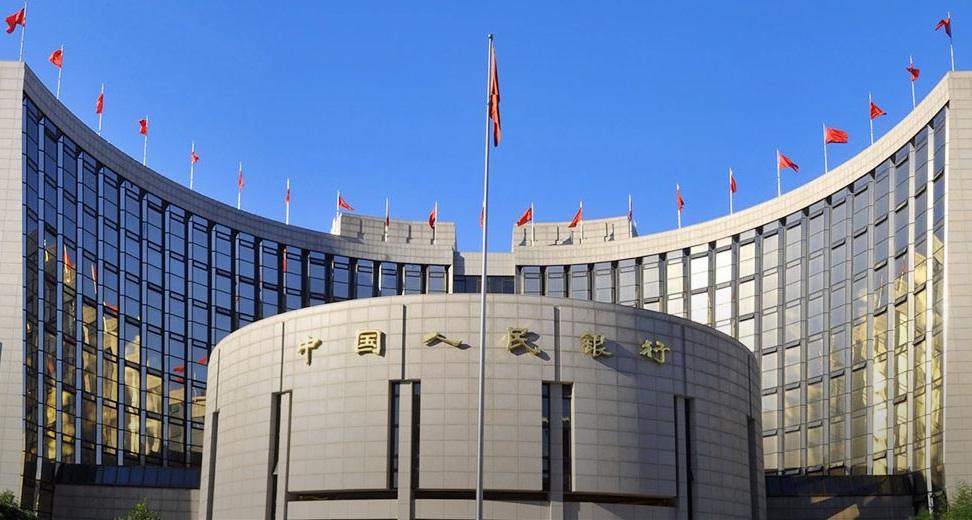
China’s latest move in green finance is set to redefine capital flows, presenting both challenges and nuanced opportunities for the global oil and gas (O&G) investment landscape. The People’s Bank of China (PBOC), alongside the National Financial Regulatory Administration and the China Securities Regulatory Commission, has unveiled its updated Green Finance Endorsed Project Catalogue. Effective October 1, 2025, this consolidated framework aims to unify disparate green finance standards across China, enhancing market liquidity and streamlining the identification of eligible projects for green bonds and loans. While primarily focused on accelerating China’s green transition, this development has significant, albeit indirect, implications for energy investors worldwide. Understanding the nuances of this catalogue, particularly its expanded scope and specific exclusions, is critical for anticipating future capital allocation and market dynamics in the energy sector.
China’s Green Finance Framework: A New Era for Capital Allocation
The new Green Finance Endorsed Project Catalogue represents a significant step in China’s commitment to sustainable development, establishing a unified categorization system for green economic activities. This framework, developed by China’s top financial regulators, consolidates previous standards for green bonds and loans, aiming to improve the efficiency of green financial asset management and reduce the cost of project identification. A key expansion of the catalogue includes new categories like “green trade” and “green consumption,” signaling a broader focus across the entire green value chain, beyond just production. Crucially for the O&G sector, the catalogue introduces a secondary category: “Green and low-carbon transition of key industrial sectors.” This provision enables financing for projects aimed at decarbonizing hard-to-abate industries, which, while not inherently “green,” are vital for China’s broader environmental goals. While China’s framework partially aligns with international standards, such as the ICMA’s Green Enabling Project Guideline, it also features distinct qualifications for “green-enabling” activities, reflecting a tailored approach to its domestic industrial landscape. This specific inclusion is where O&G investors must focus their attention, as it provides a potential pathway for funding projects that enhance the sustainability of existing energy infrastructure, rather than purely renewable energy ventures.
Navigating Immediate Market Volatility: Crude Prices Under Pressure
The strategic shift in China’s financial policy unfolds against a backdrop of considerable volatility in global energy markets. As of today, Brent Crude trades at $90.38, reflecting a sharp decline of 9.07% within the day, with its range spanning $86.08 to $98.97. Similarly, WTI Crude has seen a significant drop, currently at $82.59, down 9.41%, trading between $78.97 and $90.34. This daily downturn is part of a more pronounced trend; our proprietary data reveals Brent Crude shedding $20.91, or 18.5%, from its $112.78 peak just two weeks ago on March 30th. Gasoline prices mirror this sentiment, currently at $2.93, a 5.18% decrease. This persistent downward pressure has prompted considerable concern among investors, with our platform’s reader intent data showing a surge in questions regarding the trajectory of oil prices by year-end 2026. The confluence of demand concerns, geopolitical uncertainties, and shifting inventory levels is creating a challenging environment for short-term forecasts. This immediate market turbulence, coupled with the long-term structural changes heralded by China’s green finance initiatives, creates a complex landscape that demands a dual perspective from O&G investors.
China’s Green Catalogue: Long-Term Implications for O&G Investment Capital
The implementation of China’s Green Finance Endorsed Project Catalogue on October 1, 2025, will act as a significant forward catalyst, fundamentally reshaping how capital flows into the energy sector. While traditional upstream oil and gas exploration and production projects are unlikely to qualify directly for “green finance,” the catalogue’s inclusion of “Green and low-carbon transition of key industrial sectors” presents a crucial avenue. This category targets projects aimed at decarbonizing hard-to-abate industries. For the O&G sector, this translates into potential funding for initiatives such as carbon capture, utilization, and storage (CCUS) projects, methane emission reduction technologies, enhanced energy efficiency in existing facilities, and the development of blue hydrogen from natural gas with integrated carbon capture. Integrated oil and gas companies that can demonstrate robust plans for transitioning their operations and reducing their carbon footprint will likely be better positioned to attract capital, even if it falls under the “transition” rather than “pure green” label. This signals a future where O&G investments will increasingly need to justify their role in the broader energy transition, moving beyond simple production growth to demonstrate environmental stewardship and technological innovation. Investors asking about the long-term prospects of major integrated oil companies must consider their strategic alignment with such green transition frameworks, as access to this burgeoning pool of green capital will become a competitive differentiator.
Upcoming Catalysts and Investor Focus
Beyond China’s strategic policy shifts, several near-term events will continue to drive oil market sentiment and investor decisions. The upcoming OPEC+ Joint Ministerial Monitoring Committee (JMMC) meeting tomorrow, April 18th, followed by the full Ministerial meeting on April 19th, is a critical event. Our reader intent data highlights significant investor interest in “OPEC+ current production quotas,” underscoring concerns about global supply management in a volatile market. The outcomes of these meetings could significantly impact crude prices in the coming weeks. Furthermore, the regular cadence of inventory reports, specifically the API Weekly Crude Inventory on April 21st and 28th, and the EIA Weekly Petroleum Status Report on April 22nd and 29th, will provide crucial insights into supply-demand dynamics within the U.S. market. The Baker Hughes Rig Count on April 24th and May 1st will offer an indication of North American production activity. For investors, these events provide immediate data points to recalibrate positions. However, the overarching theme remains how these short-term market reactions intertwine with the longer-term structural shift in global finance. Companies that can demonstrate resilience in the face of price volatility while simultaneously articulating a credible strategy for leveraging “transition finance” will likely garner investor confidence, separating themselves from those solely reliant on traditional upstream expansion.


