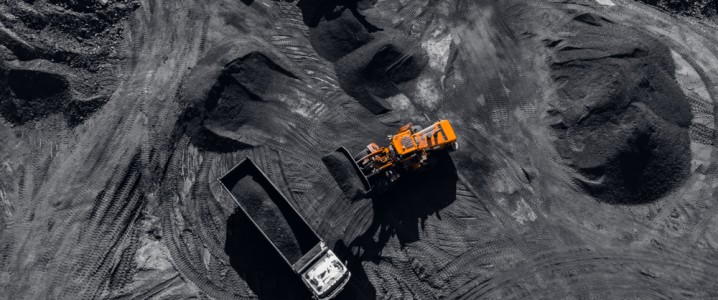
Recent developments in China’s domestic energy landscape present a compelling, albeit often overlooked, bullish signal for global oil and gas markets. A significant downturn in Chinese coal production last month, the first annual decline this year and reaching its lowest point since April, has sparked discussions among analysts. While immediate drivers include adverse weather and government efforts to curb oversupply, the broader implications of Beijing’s energy policy shifts could meaningfully reshape demand dynamics for crude and natural gas, impacting investment theses for the foreseeable future. Investors tracking the complex interplay of global energy supply and demand should view this as a pivotal moment, signaling potential upward pressure on hydrocarbon prices.
China’s Coal Production Dip: A Closer Look at the Drivers
China’s coal production experienced a notable decline of 3.8% year-on-year last month, marking its first annual contraction this year and hitting the lowest output level since April. This reduction comes despite overall year-to-date production remaining 3.8% higher than the previous year, with a total of 2.78 billion tons. The primary factors behind this July dip are twofold. Firstly, the Chinese government has intensified efforts to rein in industrial overcapacity across various sectors, including coal. This campaign involves rigorous mine inspections designed to ensure producers adhere strictly to government-issued quotas, aiming to mitigate the substantial oversupply prevalent in the market. Secondly, severe weather conditions, characterized by intense heatwaves and heavy rainfall, significantly disrupted mining operations across the country. These same climatic and policy pressures concurrently impacted China’s steel production, which saw a 4% decrease in July, extending a downward trend observed since early in the year. This coordinated reduction across key heavy industries highlights a strategic shift from Beijing that could have profound ripple effects on energy demand.
Shifting Asian Energy Flows and Investor Questions
The ramifications of China’s domestic coal strategy are already evident in regional energy import patterns. Previously, record domestic coal output in China contributed to a broader decline in Asian coal imports, which fell by 7.8% last month and 8.4% over the first seven months of the year. This trend was largely driven by reduced purchases from China and India, even as Japan and South Korea saw modest increases in their July imports. Looking ahead, the China Coal Transportation and Distribution Association has projected a significant reduction in Chinese coal purchases for the full year 2025, anticipating volumes to be between 50 million and 100 million tons lower compared to 2024 levels. This forward guidance underscores a structural shift rather than a transient blip.
OMC readers are keenly focused on understanding these regional dynamics, frequently asking about the performance of Chinese ‘tea-pot’ refineries and the drivers behind Asian LNG spot prices. A sustained governmental push to reduce domestic coal dependency and manage industrial overcapacity in China inherently means a greater reliance on alternative energy sources. While renewables are a long-term play, in the near to medium term, this often translates to increased demand for natural gas, particularly LNG, and potentially refined petroleum products. This pivot is a critical factor influencing Asian LNG spot prices, which have been a subject of intense investor scrutiny this week. Any structural shift in China’s energy mix away from coal will inevitably rebalance regional supply and demand, putting upward pressure on cleaner-burning fossil fuels.
Current Market Signals and the Bullish Read for Oil & Gas
The market’s sensitivity to demand-side catalysts is clearly visible in current price action for crude. As of today, Brent crude trades at $98.69, a robust 3.96% increase within the day, showcasing significant upward momentum from a daily low of $94.42. Similarly, WTI crude is priced at $90.55, up 2.75%, recovering from its daily floor of $87.32. This strength comes after Brent experienced a notable decline of 12.4% over the past 14 days, falling from $108.01 on March 26th to $94.58 on April 15th. Gasoline prices also reflect this underlying strength, currently at $3.08, up 2.66% today. The market’s quick rebound suggests that even subtle shifts in global demand expectations can trigger a strong response, and China’s evolving energy policy is far from subtle.
The reduction in domestic coal availability in China, especially when driven by a deliberate government campaign against overcapacity, presents a tangible bullish signal for global oil and gas markets. While some of the immediate energy gap might be filled by increased natural gas imports or even a temporary reliance on stored reserves, the long-term trend points towards a structural increase in demand for cleaner alternatives. With China being the world’s largest energy consumer, any policy-driven constraint on its most abundant domestic fuel source directly translates into higher import requirements for other energy commodities. This structural demand shift provides a compelling narrative for investors seeking a base-case Brent price forecast for the next quarter and contributes significantly to the consensus 2026 Brent forecast, positioning the market for sustained strength.
Forward Outlook: Upcoming Events and Strategic Implications
Looking forward, the implications of China’s energy policy shifts will intersect directly with critical global energy events. Investors should pay close attention to the upcoming OPEC+ meetings, with the Joint Ministerial Monitoring Committee (JMMC) scheduled for April 18th and the full Ministerial Meeting on April 20th. Any decisions or forward guidance from OPEC+ regarding production quotas will be heavily influenced by evolving demand signals from major consuming nations like China. A perceived tightening of Chinese energy supply, particularly from coal, could embolden producers to maintain or even tighten supply, further supporting prices.
Beyond OPEC+, the weekly inventory reports from the American Petroleum Institute (API) on April 21st and April 28th, along with the U.S. Energy Information Administration’s (EIA) Weekly Petroleum Status Reports on April 22nd and April 29th, will provide crucial insights into immediate supply-demand balances in the world’s largest oil consumer. Sustained demand for oil and gas in China, as a direct consequence of reduced coal output, could lead to tighter global markets, influencing U.S. inventory draws and overall market sentiment. Furthermore, the Baker Hughes Rig Count reports on April 17th and April 24th will offer a pulse on upstream activity, which could respond to prolonged bullish signals. The strategic pivot in China’s energy mix, away from unchecked coal production, is not merely a domestic issue; it’s a global market driver that could provide foundational support for oil and gas prices well into 2025 and beyond.


