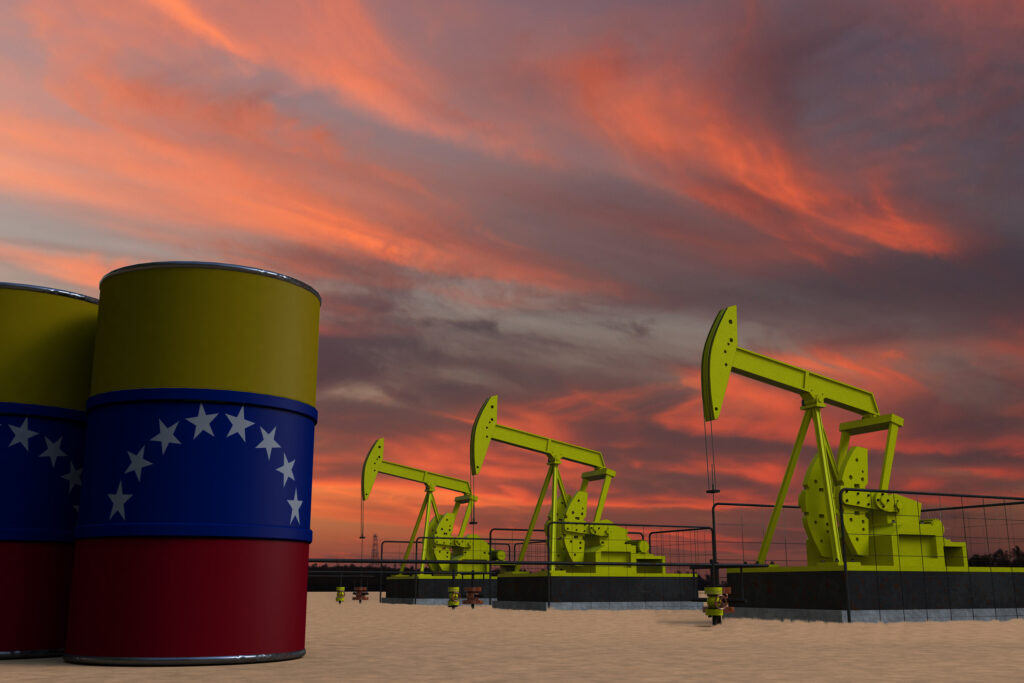
In a development sending ripples through global energy markets, supermajor Chevron is reportedly poised to transfer a portion of its Venezuelan oil production directly to the Maduro government. This arrangement, revealed by sources familiar with the matter, comes on the heels of the U.S. government granting Chevron a critical sanctions exemption, allowing it to resume operations in the embattled South American nation. For investors tracking geopolitical risks and their impact on oil supply, this intricate deal presents a complex calculus of opportunity and underlying tension.
Navigating Sanctions: Crude for Royalty
The core of this new operational framework hinges on a crucial condition imposed by Washington: Chevron is expressly prohibited from making any cash payments to the Venezuelan government. This was a non-negotiable term for the license to return to the country. However, the reported agreement circumvents this by stipulating that royalties will be paid in crude oil, a mechanism not uncommon among international oil majors still operating within Venezuela’s challenging environment.
This “crude-for-royalty” model immediately raises questions about the efficacy of U.S. sanctions. While preventing direct financial transfers, the transfer of physical crude grants the Venezuelan state a highly liquid, marketable asset that can be sold on international markets for profit. From an investor perspective, this highlights the inherent difficulty the U.S. government faces in completely isolating regimes while simultaneously seeking to maintain stability in global energy supply chains.
The U.S. Dilemma: Balancing Policy and Practicality
Washington’s stated objective remains clear: to prevent the Venezuelan government from deriving financial benefit from the nation’s vast oil reserves. Yet, the practical realities of the global oil market, particularly the demand for heavy crude, have forced a nuanced approach. U.S. Gulf Coast refiners, specifically designed to process heavier crude grades, are significant purchasers of Venezuelan oil. Prior to the broader imposition of sanctions earlier this year, U.S. imports of Venezuelan crude had peaked at approximately 300,000 barrels daily, according to Kpler data, underscoring this vital supply link.
The decision to grant Chevron an exemption, therefore, represents a strategic compromise. It aims to restore a crucial supply of heavy crude to American refineries, mitigating potential supply shocks and refining cost increases, while attempting to limit direct financial flows to Caracas. However, the mechanism of crude oil royalties undeniably provides an indirect, yet substantial, economic lifeline to the Maduro government.
Market Re-entry and Price Implications
Before the broader U.S. sanctions halted its activities, Chevron was a significant player in Venezuela, producing around 240,000 barrels per day. The impending return of this output to the global market is a key consideration for oil price analysts and investors. ING, a prominent financial institution, suggests this supply will gradually re-enter the market over the second half of the year. The implication is a potential downward pressure on prices for heavy crude grades, which could benefit refiners but might impact producers focused on similar blends.
For investors, this signals a recalibration in the heavy crude segment. The reintroduction of Venezuelan barrels, even if gradual, adds complexity to supply-demand dynamics, especially as other heavy crude producers grapple with their own operational or geopolitical challenges. Understanding Chevron’s ramp-up schedule and the ultimate volume of crude flowing to market will be crucial for forecasting price movements in this niche but vital sector.
A Tightrope Walk: Geopolitical Risk and Energy Security
The U.S. government’s delicate balancing act underscores a fundamental challenge in applying sanctions: how to exert pressure without inadvertently harming one’s own economic interests or triggering undesirable retaliatory measures. Should Washington attempt to completely block any form of benefit to the Venezuelan state from Chevron’s operations, it risks provoking a forceful response from the Maduro government. Such retaliation could lead to the complete cessation of Chevron’s business activities in the country, thereby eliminating a crucial source of heavy crude for U.S. Gulf Coast refiners and exacerbating energy security concerns.
This inherent tension means that the Chevron deal, while seemingly a pragmatic solution, is fraught with geopolitical risk. Investors must consider the potential for policy shifts, unforeseen escalations, or changes in Venezuela’s domestic political landscape that could swiftly alter the operational environment. The long-term viability and profitability of Chevron’s Venezuelan ventures remain intrinsically linked to the delicate dance between Washington and Caracas.
Investment Horizon: What to Watch
For oil and gas investors, several key indicators bear watching. Firstly, the pace and volume of Chevron’s production ramp-up will be critical. Any delays or faster-than-anticipated increases could impact heavy crude market dynamics. Secondly, the ultimate destination and pricing of the Venezuelan government’s crude share will offer insights into the true financial benefit accruing to Caracas, and by extension, the effectiveness of the sanctions regime.
Finally, the broader geopolitical dialogue between the U.S. and Venezuela, including any further adjustments to sanctions policy, will dictate the stability of this operational model. While Chevron’s return brings a measure of stability to Venezuelan oil output and U.S. refining supply, the underlying political currents ensure that this remains a high-stakes, high-reward proposition for all parties involved.