

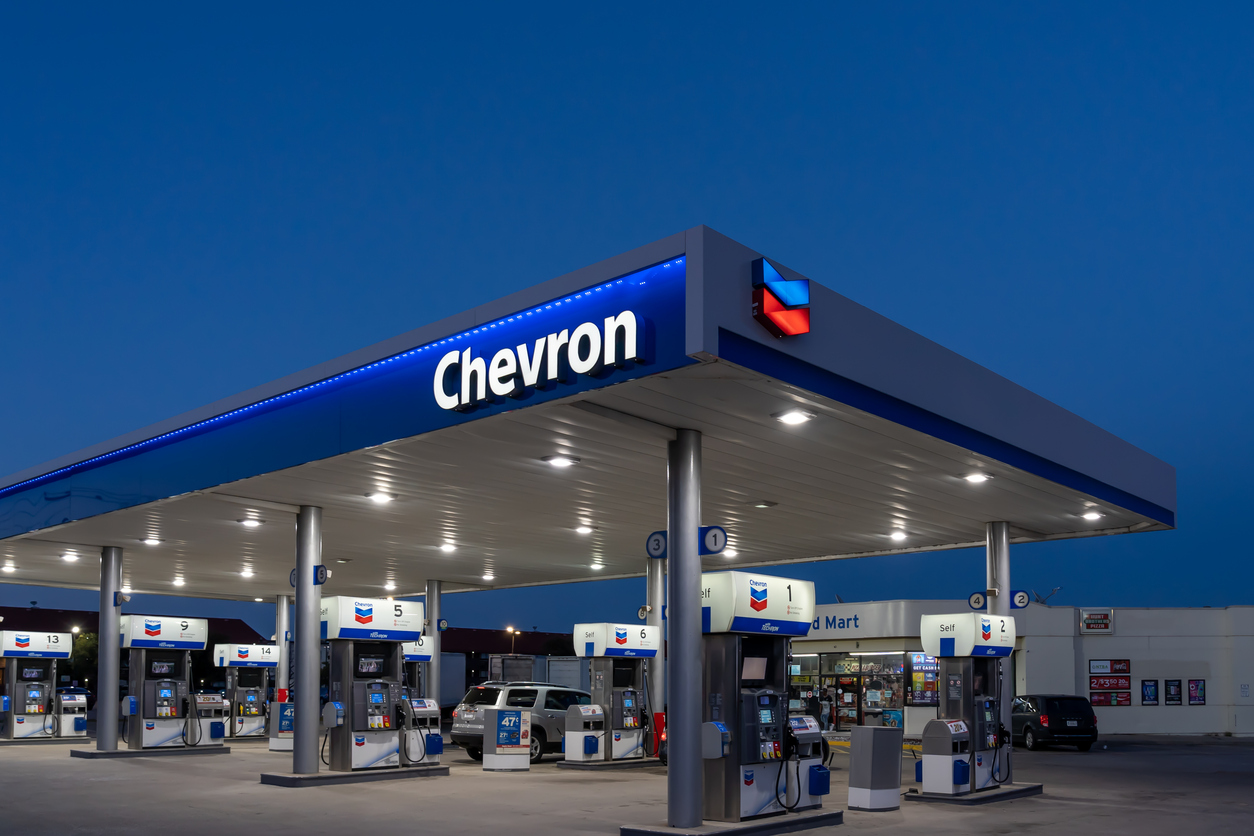
Chevron Navigates Market Shifts: Q1 Earnings Solid, Shareholder Returns Realigned
Global energy behemoth Chevron recently unveiled its first-quarter financial performance, reporting adjusted earnings that precisely matched analyst expectations. While the company demonstrated formidable operational resilience, a key development commanding investor attention was its strategic adjustment to the share repurchase program for the upcoming quarter. This recalibration reflects broader macroeconomic uncertainties currently influencing the entire “Big Oil” sector and prompted an immediate 2% dip in Chevron’s shares during pre-market trading, underscoring the market’s acute sensitivity to capital allocation decisions by major energy players.
Resilient Profitability Amidst Dynamic Markets
For the three months concluding March 31, Chevron posted adjusted earnings of $3.8 billion, translating to $2.18 per share. This outcome directly aligned with the consensus estimates compiled by LSEG data, signaling the company’s robust capacity to sustain profitability even as global market conditions evolve. This steady performance provides a foundational confidence for investors, highlighting Chevron’s operational efficiencies, disciplined cost management across its vast portfolio, and its ability to generate significant free cash flow in a volatile commodity landscape. Such financial fortitude is critical for long-term value creation in the upstream and downstream segments of the oil and gas industry.
Strategic Recalibration of Shareholder Returns
A cornerstone of investor appeal for major integrated oil producers like Chevron remains their unwavering commitment to delivering shareholder value through consistent dividends and strategic share repurchases. During the first quarter, Chevron reinforced this dedication by distributing a substantial $3 billion in dividends and executing $3.9 billion in share buybacks, demonstrating a strong return of capital. However, the forward-looking guidance for the second quarter indicated a moderated pace for share repurchases, with anticipated allocations projected to range between $2 billion and $3.5 billion. This revised outlook signals a prudent and potentially more conservative approach compared to previous periods of aggressive buyback activity.
Chevron’s Chief Financial Officer, Eimear Bonner, provided further clarity on this strategy, projecting the company’s total annual share repurchases for the current fiscal year to land between $11.5 billion and $13 billion. It is important for investors to note that this figure represents the lower end of Chevron’s previously communicated annual range of $10 billion to $20 billion. Despite this adjustment, Bonner emphatically underscored the enduring commitment to shareholder value, stating, “We’re still buying back a significant amount of our shares annually, on top of a dividend that’s growing faster than our peers.” This strategic move aims to balance capital discipline with ongoing investor returns, reassuring the market of Chevron’s long-term value proposition and its focus on sustainable financial health amidst fluctuating energy prices and geopolitical shifts.
Operational Stability Meets Upstream Pressures
Operationally, Chevron maintained impressive global oil production stability year-over-year, recording 3.35 million barrels of oil equivalent per day (boepd) in the first quarter. This consistent output underscores the company’s reliable asset base, efficient extraction capabilities across its diversified global operations, and its commitment to meeting global energy demand. However, the upstream segment, which encompasses the critical activities of oil and gas exploration and production, experienced a notable decline in earnings. Profits for this segment fell to $3.76 billion from $5.24 billion in the comparable period last year. This reduction primarily reflects the direct impact of a challenging and lower crude price environment during the quarter, directly affecting the profitability margins of Chevron’s core production activities and highlighting the sensitivity of upstream earnings to commodity price fluctuations.
Navigating Global Crude Market Dynamics: Tariffs, Supply, and Price Volatility
The global oil market has contended with considerable headwinds, witnessing a significant downturn in crude prices since early April. Several interconnected factors have contributed to this prevailing bearish sentiment. Firstly, the imposition of sweeping tariffs by the U.S. government has fueled widespread expectations of dampened global economic expansion, directly impacting future energy demand projections and creating uncertainty for refined product consumption. Compounding these demand-side concerns, an unexpected decision by the OPEC+ alliance to boost output added to the global supply glut, further exacerbating market pressures. This powerful combination of weaker demand outlooks and increased supply pushed benchmark oil prices to a four-year low, creating a difficult operating landscape for all energy producers, including Chevron, and necessitating strategic financial adjustments to adapt to these volatile market forces.
Investor Outlook: Balancing Prudence with Long-Term Value Creation
Chevron’s first-quarter results, coupled with its strategic recalibration of shareholder returns, present a nuanced picture for discerning investors in the oil and gas sector. While the company demonstrated strong operational execution and met profit expectations, the adjusted share buyback program signals a prudent and proactive response to prevailing market uncertainties and an unwavering commitment to capital discipline. This balanced approach, characterized by a robust and growing dividend alongside a revised buyback strategy, strategically positions Chevron to navigate potential future volatility while continuing to deliver significant long-term value. Investors should interpret these adjustments as a clear signal from a leading energy major to optimize its financial strategy in a constantly evolving global energy landscape, balancing immediate returns with sustainable financial health, strategic investments, and future growth opportunities within the energy transition.
