

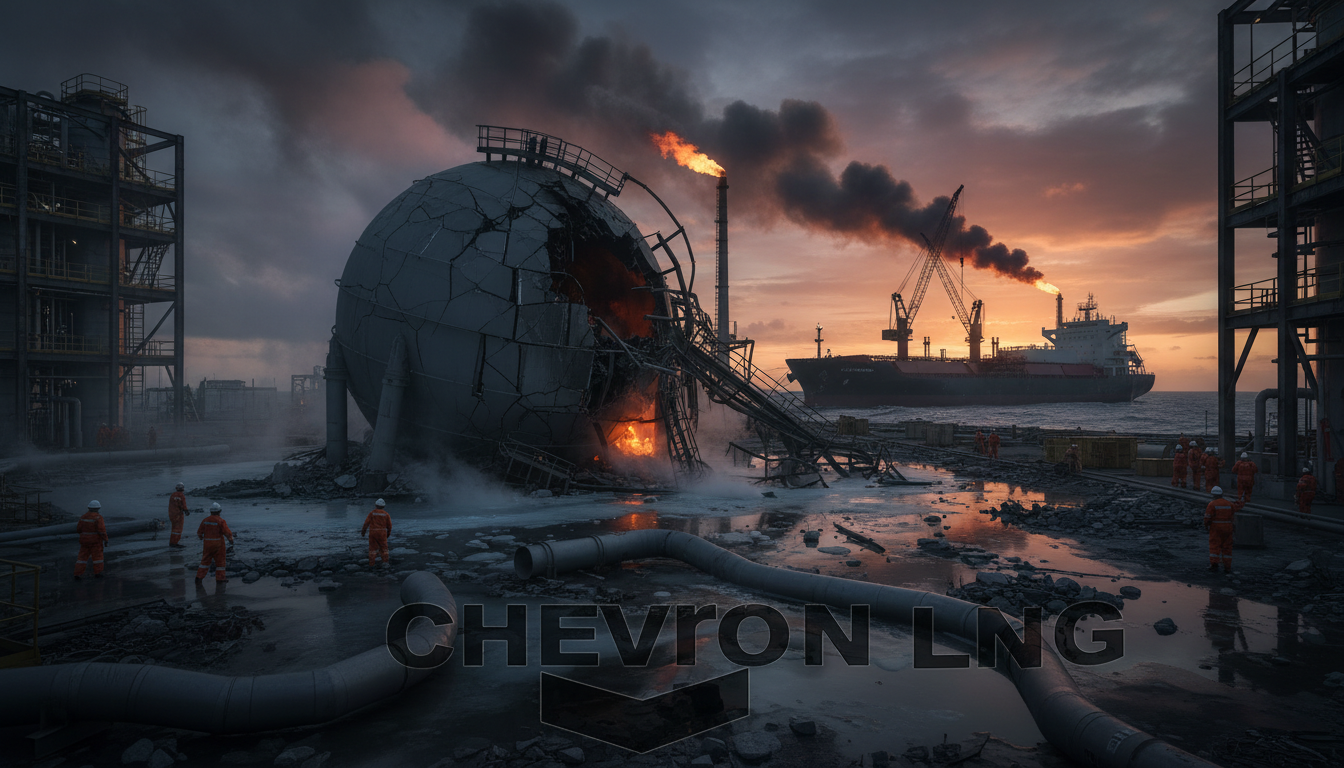
Australian LNG Facilities Grapple with Cyclone Damage, Exacerbating Global Supply Shortage
The global natural gas market, already navigating a period of unprecedented volatility, faces renewed pressure following significant operational disruptions at key Australian liquefied natural gas (LNG) facilities. A recent powerful cyclone, Tropical Cyclone Narelle, swept across the region, inflicting substantial damage and forcing multiple plants offline, further tightening an already strained global supply chain and sending commodity prices soaring.
Chevron’s Wheatstone Hit Hard: Extensive Damage and Prolonged Shutdown
Chevron’s Wheatstone LNG plant, a critical asset in Western Australia’s energy infrastructure, bore the brunt of the cyclone’s fury, sustaining “extensive damage.” The repercussions are severe, with both of the facility’s liquefaction trains – essential units that convert natural gas into liquid form for transport – currently shut down. This immediate cessation of operations removes a significant volume of LNG from an already starved market, impacting global supply availability.
Danny Woodall, Chevron’s Australian director of operations and maintenance, provided clarity on the extent of the damage at an industry gathering in Sydney. He confirmed that “a number of fin fans or air-cooled heat exchangers” were severely compromised. These components are vital for the cooling processes within the liquefaction trains, playing a critical role in the natural gas liquefaction process. Repair teams are now diligently working on restoring these critical systems, signaling that a full return to production will not be instantaneous and will likely require a measured and careful approach to ensure safety and operational integrity, suggesting a potentially prolonged outage.
The comprehensive shutdown of Wheatstone’s two trains represents a considerable blow, particularly given the facility’s scale and its established role in supplying Asian and other international buyers. Investors closely monitor such outages for their direct impact on Chevron’s revenue streams, operational efficiency, and broader market dynamics, as prolonged downtime can erode profitability and market share.
Widespread Disruptions Across Australia’s LNG Hubs
Tropical Cyclone Narelle’s impact extended beyond Chevron’s Wheatstone, creating a significant ripple effect across Australia’s crucial LNG export sector. In total, three major LNG facilities reported operational interruptions. Besides Wheatstone, Chevron’s Gorgon plant, another cornerstone of Australia’s gas liquefaction capabilities, also faced challenges. While Gorgon proved more resilient, one of its three liquefaction trains was forced to suspend operations, although the remaining two continued functioning normally, mitigating some of the potential supply loss from this particular facility.
Earlier reports indicated that Santos, another prominent player in the Australian energy landscape, initiated preemptive shutdowns. Its Barossa gas field, a primary feed source for the Darwin LNG terminal, ceased operations as the cyclone approached. This proactive measure, while necessary for safety and asset protection, nonetheless contributed to the cumulative reduction in Australia’s overall LNG output capacity. Furthermore, Woodside, a key operator in the country’s North West Shelf project, also confirmed cyclone-related disruptions at a linked facility, underscoring the broad geographical reach and severity of the weather event across the nation’s gas-producing regions.
These simultaneous disruptions highlight the inherent vulnerability of critical energy infrastructure to natural phenomena, especially in regions prone to extreme weather events. The collective impact of these outages from Chevron, Santos, and Woodside represents a notable constriction of global LNG availability, putting upward pressure on benchmark prices and challenging supply chain resilience.
Global Gas Prices Surge Amid Tightened Supply
The compounding effect of these Australian outages on an already tight global natural gas market has been immediate and dramatic. Market participants have witnessed significant price escalations in key regional benchmarks. Asian natural gas prices have surged by an astonishing 143% since February 28, reflecting intense competition for available cargoes and deep concerns over future supply stability in a critical demand region. European gas prices have also experienced a substantial upward trajectory, climbing by 85% over the same period, as buyers scramble to secure winter supplies and replenish depleted inventories ahead of seasonal demand.
While some market commentators might point out that current prices, even with these sharp increases, remain below the peak levels observed in 2022, this perspective arguably misses the critical point for investors and consumers alike. The pertinent reality is the sustained and significant removal of a sizable portion of global LNG supply from the market, driven by a confluence of geopolitical conflicts and adverse weather events. This fundamental shift in the supply-demand balance is the primary driver of the current market anxiety and elevated pricing, indicating a structural rather than merely speculative market condition.
Longer-Term Supply Outlook Remains Challenged
The immediate challenges posed by the Australian cyclone damage are unfortunately compounded by existing and emerging long-term supply constraints. The broader outlook for global LNG availability is far from encouraging. QatarEnergy, a major global LNG exporter, recently delivered sobering news, stating that it anticipates years to fully repair its crucial LNG facilities that sustained damage from Iranian missile attacks. This revelation casts a long shadow over future supply projections, indicating that the current tightness in the market is not merely a transient phenomenon but a persistent structural issue that will likely influence energy markets for an extended period.
The combination of ongoing geopolitical instability affecting key production regions and the increasing frequency and intensity of extreme weather events creates a complex and volatile landscape for the natural gas sector. For investors, this translates into sustained commodity price risk but also potential opportunities for companies with resilient supply chains, diversified portfolios, or those strategically positioned to develop new LNG export capacity in more stable regions. Such investments could benefit from elevated prices and strong demand.
The critical task for market observers and energy companies now involves meticulously assessing the repair timelines for the damaged Australian facilities and the progress in Qatar, while also monitoring broader geopolitical developments. The confluence of these factors underscores a challenging period ahead for global energy security and natural gas market stability, demanding agile strategies and robust risk management from market participants.
The recent events in Australia serve as a stark reminder of the delicate balance governing global energy supply. As repair efforts commence at Wheatstone and other affected sites, the market will remain acutely sensitive to any further disruptions. Investors should brace for continued volatility and closely track developments across the global LNG value chain, recognizing that the interplay of natural disasters and geopolitical tensions will continue to shape market dynamics for the foreseeable future, creating both significant risks and strategic investment opportunities in the energy sector.
