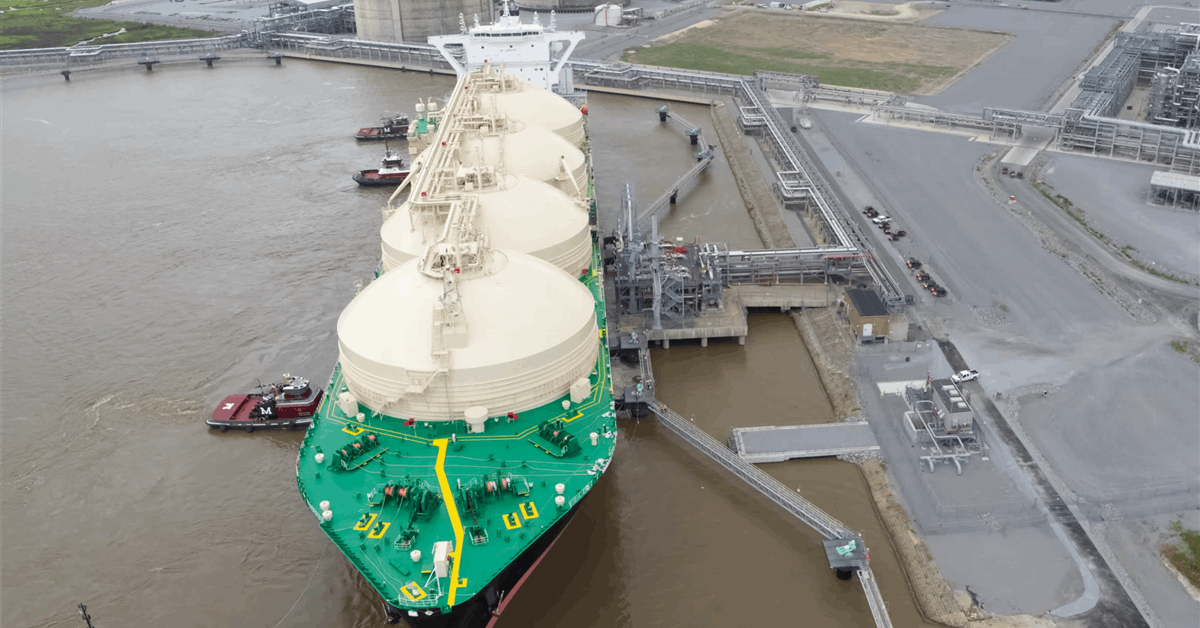
In a decisive move signaling continued bullishness on global natural gas demand, Cheniere Energy Inc. has made a final investment decision (FID) to expand its Corpus Christi LNG facility in South Texas. This commitment to add two “midscale” trains, 8 and 9, to the existing infrastructure underscores the company’s aggressive growth trajectory and the strategic importance of U.S. LNG in the evolving global energy landscape. With an expected capacity increase of over 3 million metric tons per annum (MMtpa) from these new trains, Cheniere is not just adding capacity; it’s solidifying its role as a cornerstone of international energy supply and a compelling proposition for investors seeking exposure to long-term energy trends.
Strategic Expansion Amidst Global Energy Shifts
Cheniere’s FID for Corpus Christi LNG (CCL) Midscale Trains 8 & 9 is a testament to the robust and growing demand for liquefied natural gas. These two new trains will be constructed by Bechtel Energy, Inc., adding significant liquefaction capacity to an already formidable export hub. This expansion builds upon the ongoing CCL Stage 3 project, which includes seven midscale trains poised to contribute over 10 MMtpa, ultimately raising the terminal’s total capacity to more than 25 MMtpa. With the facility currently boasting a production capacity of around 16.5 MMtpa from its initial four trains and having dispatched approximately 1,140 cargoes since 2018, the scale of Cheniere’s operations is immense. The United States Department of Energy (DOE) granted authorization for Trains 8 & 9 to export to Free Trade Agreement (FTA) countries in July 2023, with a non-FTA permit still pending. However, the DOE’s recent resumption of issuing final orders on pending decisions suggests a supportive regulatory environment for American energy exports, aligning with broader national energy policy objectives.
Navigating Market Volatility: LNG’s Unique Appeal
While the broader crude oil market has seen significant fluctuations, the long-term drivers for LNG investment remain distinct and compelling. As of today, Brent Crude trades at $90.38, marking a sharp -9.07% decline in a single trading session, with a day range between $86.08 and $98.97. This recent dip is part of a broader trend, with Brent having fallen from $112.78 on March 30th to $91.87 on April 17th, representing an 18.5% drop in just over two weeks. WTI Crude mirrors this volatility, currently at $82.59, down -9.41%. Gasoline prices have also softened, trading at $2.93, a -5.18% decrease. This volatility naturally leads investors to question, “what do you predict the price of oil per barrel will be by end of 2026?” While crude oil faces its own set of supply-demand dynamics, the LNG sector often operates on long-term contracts, providing a degree of insulation from daily price swings and offering investors a more predictable revenue stream. Cheniere’s expansion capitalizes on this structural demand for natural gas, driven by global energy security concerns, the push for cleaner power generation, and the need for reliable baseload energy, positioning it as a diversification play in an otherwise volatile energy commodity landscape.
Forward Momentum: Shareholder Value and Upcoming Catalysts
Cheniere’s FID is not just about expanding physical infrastructure; it’s intricately linked to a robust capital allocation strategy designed to enhance shareholder value. The company plans to deploy approximately $20 billion of capital by 2026, targeting a run-rate distributable cash flow (DCF) of around $20 per share. This commitment is further underscored by a planned over 10 percent increase in its third-quarter 2025 dividend, raising it from $2.00 to $2.22 per share annualized. Looking further ahead, Cheniere projects generating over $25 billion of available cash through 2030, which will be strategically allocated across accretive growth initiatives and direct shareholder returns through buybacks and dividends. These financial targets provide a clear roadmap for investor expectations. While the immediate focus for the broader energy market includes upcoming events like the OPEC+ Joint Ministerial Monitoring Committee (JMMC) meeting on April 18th and the full Ministerial meeting on April 19th, which could influence crude supply and overall market sentiment, Cheniere’s long-term contract-backed LNG projects are more responsive to structural demand shifts than short-term cartel decisions. Nevertheless, weekly inventory reports from the API (April 21st, 28th) and EIA (April 22nd, 29th) and the Baker Hughes Rig Count (April 24th, May 1st) will offer insights into the health of the U.S. energy sector, indirectly influencing feed gas prices and thus the profitability of LNG operations. The ongoing commissioning of CCL Stage 3’s trains 1 (started production December 2024, first cargo February 2025) and 2 (began production earlier this month) further demonstrates Cheniere’s consistent execution and operational excellence, building confidence in future project deliveries.
The Long-Term Outlook for U.S. LNG Leadership
Cheniere’s latest FID reinforces the company’s ambition to significantly expand its liquefaction capacity, with plans for further brownfield expansions at both Corpus Christi and Sabine Pass. This phased approach aims to grow Cheniere’s total LNG platform to approximately 75 MMtpa by the early 2030s, cementing its position as a global leader in LNG exports. This trajectory aligns with the increasing global reliance on natural gas as a critical bridge fuel in the energy transition and a key component of national energy security strategies. The strategic advantage of U.S. LNG lies in its abundant domestic natural gas resources, competitive pricing, and robust export infrastructure. Investors are keenly watching how companies like Cheniere leverage these advantages to capture market share and deliver consistent returns. The FID for Trains 8 & 9 represents another concrete step in realizing this long-term vision, promising sustained growth and significant shareholder value for those positioned in the burgeoning U.S. LNG sector.


