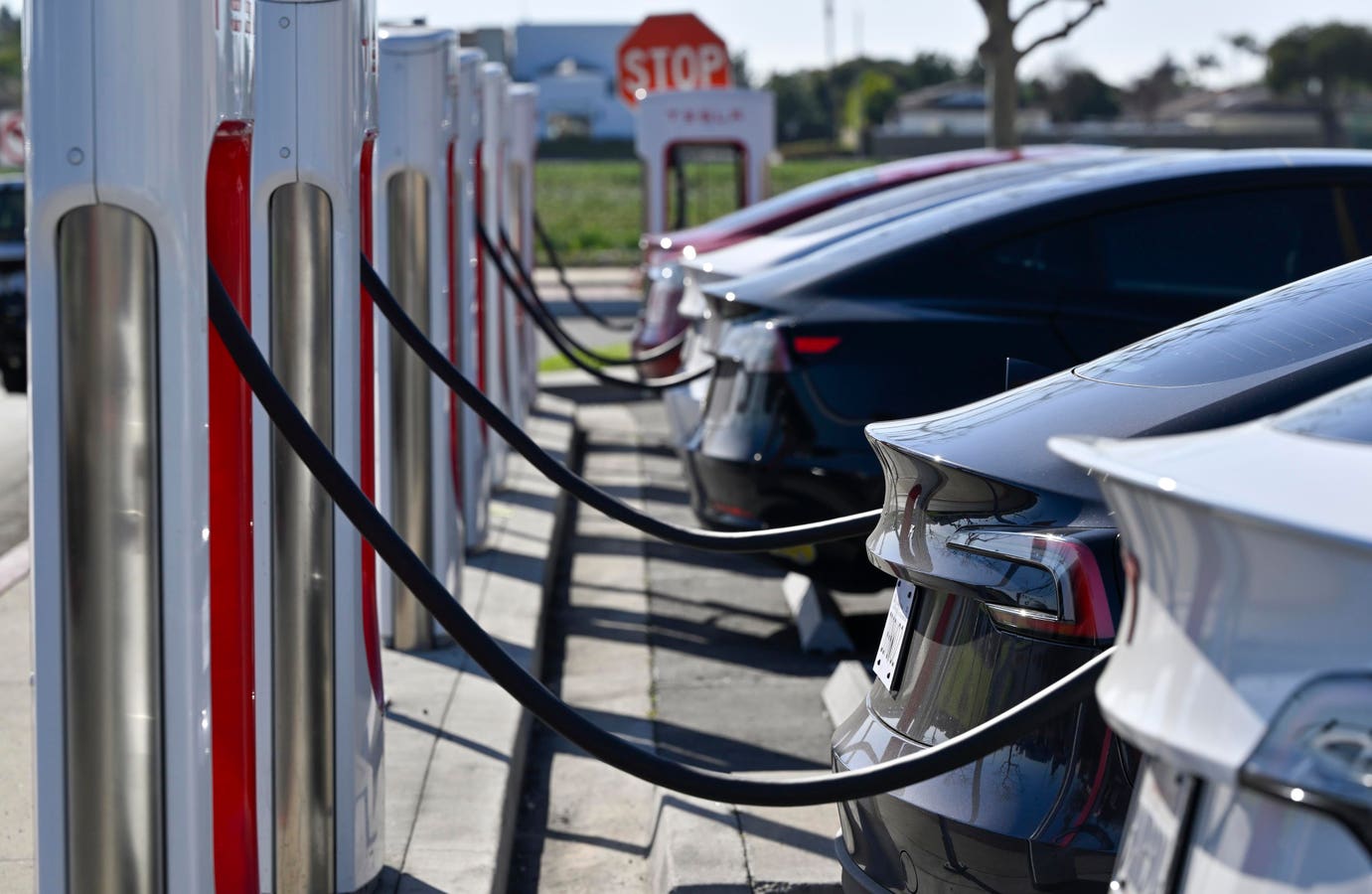
The energy landscape is shifting at an unprecedented pace, driven by both regulatory mandates and technological innovation. A recent significant climate regulation, issued by the Biden administration, is poised to reshape the American automotive market, targeting a majority of new passenger cars and light trucks sold in the U.S. to be all-electric or hybrids by 2032. This ambitious goal, coupled with projections from the Edison Electric Institute suggesting a tenfold increase in U.S. electric vehicles (EVs) by 2035, presents a clear long-term challenge to traditional oil demand. However, the path to mass EV adoption isn’t just about car production; it’s intricately linked to the underlying electricity grid’s capacity. Enter managed charging – a seemingly technical solution that, if widely deployed, could significantly accelerate the energy transition and deepen the long-term demand impact on the oil and gas sector.
The Accelerating EV Transition and Its Demand Implications
The regulatory push announced on March 20, 2024, sets a firm trajectory for vehicle electrification, directly threatening gasoline consumption. Automakers are already responding, rolling out numerous new electric models, and public incentives are further spurring consumer adoption. While drivers are attracted to the promise of quieter rides and lower “fuel” costs, the sheer scale of the projected EV growth raises critical questions for the power grid. Our proprietary reader intent data reveals a consistent investor focus on the future of oil demand, with many asking, “What do you predict the price of oil per barrel will be by end of 2026?” The success and speed of EV integration, particularly through innovative solutions like managed charging, will be a crucial variable in answering such questions, potentially pushing demand lower than many current models anticipate.
Managed Charging: A Catalyst for Mass EV Adoption
The core challenge for utilities isn’t just the overall increase in electricity demand from EVs, but rather the timing of that demand. According to the U.S. Department of Energy, approximately 80% of EV charging happens at home, usually overnight. The concern arises if millions of drivers all plug in simultaneously around 6 p.m., coinciding with peak household energy use. This scenario could overwhelm the grid, leading to costly infrastructure upgrades and higher electricity bills, thereby undermining a key incentive for EV ownership. This is where managed charging steps in. This concept, championed by experts like Garrett Fitzgerald of the Smart Electric Power Alliance, treats EV charging not as a political issue but an economic one. By allowing utilities and third-party providers, such as ev.energy, to stagger, delay, or temporarily reduce charging speeds during off-peak hours, the system avoids expensive demand spikes. Nick Woolley, CEO of ev.energy, emphasizes that EVs “don’t have to be a burden” and can actually make the grid more reliable and affordable if charging is managed effectively.
The economic benefits are substantial. A white paper from ev.energy suggests managed charging could deliver approximately $575 in annual savings per EV. If widely deployed, this translates into a staggering $30 billion in system-wide benefits by 2035. These savings arise from lower rates for consumers and avoided expenses for utilities, who can defer or eliminate the need for costly new power plants, poles, and wires. This direct economic incentive for both consumers and utilities makes EVs a more attractive, sustainable option. For oil and gas investors, this means the ‘cost barrier’ of grid strain is being systematically addressed, potentially accelerating the transition away from internal combustion engines at a faster rate than previously modeled, making the long-term outlook for gasoline demand increasingly vulnerable.
Current Market Realities and Upcoming Supply-Side Dynamics
Against this backdrop of accelerating demand-side shifts, the immediate oil market presents a volatile picture. As of today, Brent Crude trades at $90.38, reflecting a significant -9.07% drop from its opening, with WTI Crude similarly down -9.41% at $82.59. This recent weakness continues a downward trend, with Brent having declined from $112.78 on March 30 to its current level, representing a substantial $22.4 or nearly 20% contraction in less than three weeks. While this immediate price action is influenced by a multitude of factors, including global economic sentiment and inventory adjustments, it underscores the sensitivity of the market to any perceived demand erosion.
Looking ahead, investors are keenly focused on upcoming supply-side decisions and inventory data that will further shape price action. The OPEC+ Joint Ministerial Monitoring Committee (JMMC) Meeting on April 19th, followed by the full Ministerial Meeting on April 20th, will be critical. Our readers are actively querying “What are OPEC+ current production quotas?”, highlighting the market’s reliance on these organizations to balance supply amidst evolving demand signals. Following these high-stakes meetings, attention will quickly shift to the API Weekly Crude Inventory report on April 21st and the EIA Weekly Petroleum Status Report on April 22nd, providing granular insights into U.S. supply and demand. These reports will be repeated on April 28th and 29th, offering continuous real-time data. Furthermore, the Baker Hughes Rig Count on April 24th and May 1st will indicate future production trends in North America. These events will offer crucial context for understanding how producers are reacting to both current market weakness and the longer-term structural shift towards electrification.
Investment Implications: Navigating a De-Carbonizing Future
For oil and gas investors, the implications of a rapidly electrifying transport sector, bolstered by efficient grid management, are profound. Companies heavily reliant on gasoline or diesel refining, or those with significant upstream exposure to light, sweet crude primarily used for transportation fuels, face increasing headwinds. The shift towards EVs, made more attractive and viable by managed charging solutions, means peak oil demand for transportation could arrive sooner and decline more steeply than many conservative forecasts suggest.
This evolving landscape necessitates a strategic re-evaluation of portfolios. Investors are increasingly asking about the resilience of integrated energy majors and their diversification strategies, implicitly touching upon concerns like “How well do you think Repsol will end in April 2026?” The answer lies in adaptability. Companies that are actively investing in sustainable energy solutions, petrochemicals, or even leveraging their infrastructure to support EV charging networks may be better positioned. The accelerated pace of electrification, driven by both policy and practical grid solutions, demands that oil and gas companies not only manage existing assets efficiently but also pivot towards a lower-carbon future with deliberate speed. Ignoring the economic benefits and increasing viability of mass EV adoption facilitated by managed charging would be a significant oversight for any forward-thinking energy investor.