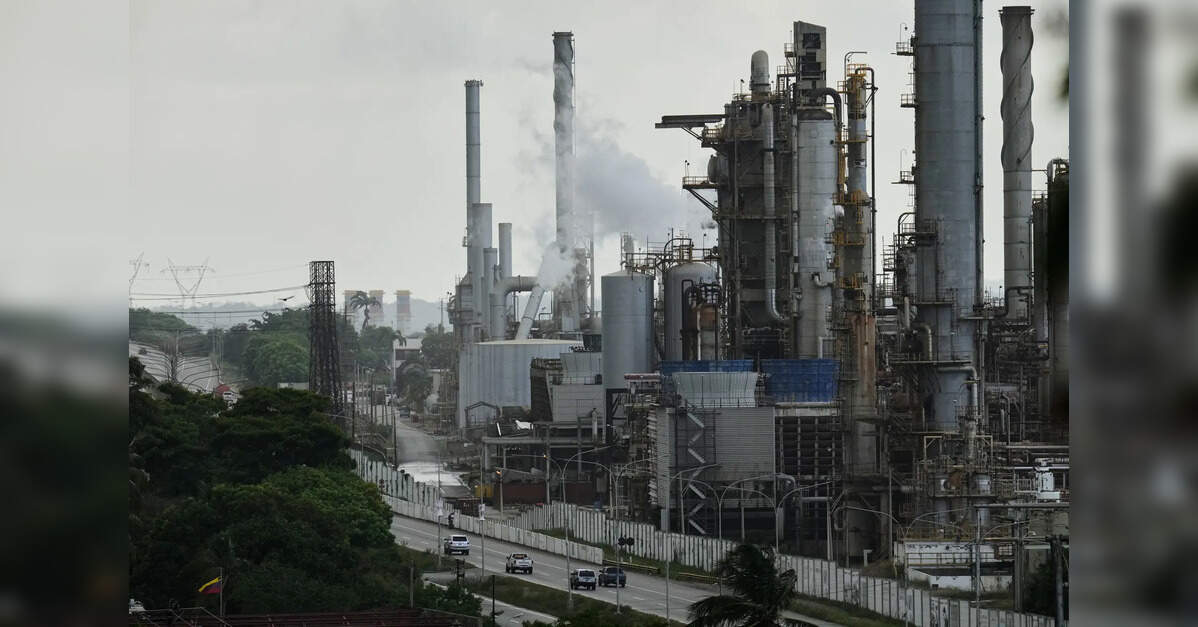
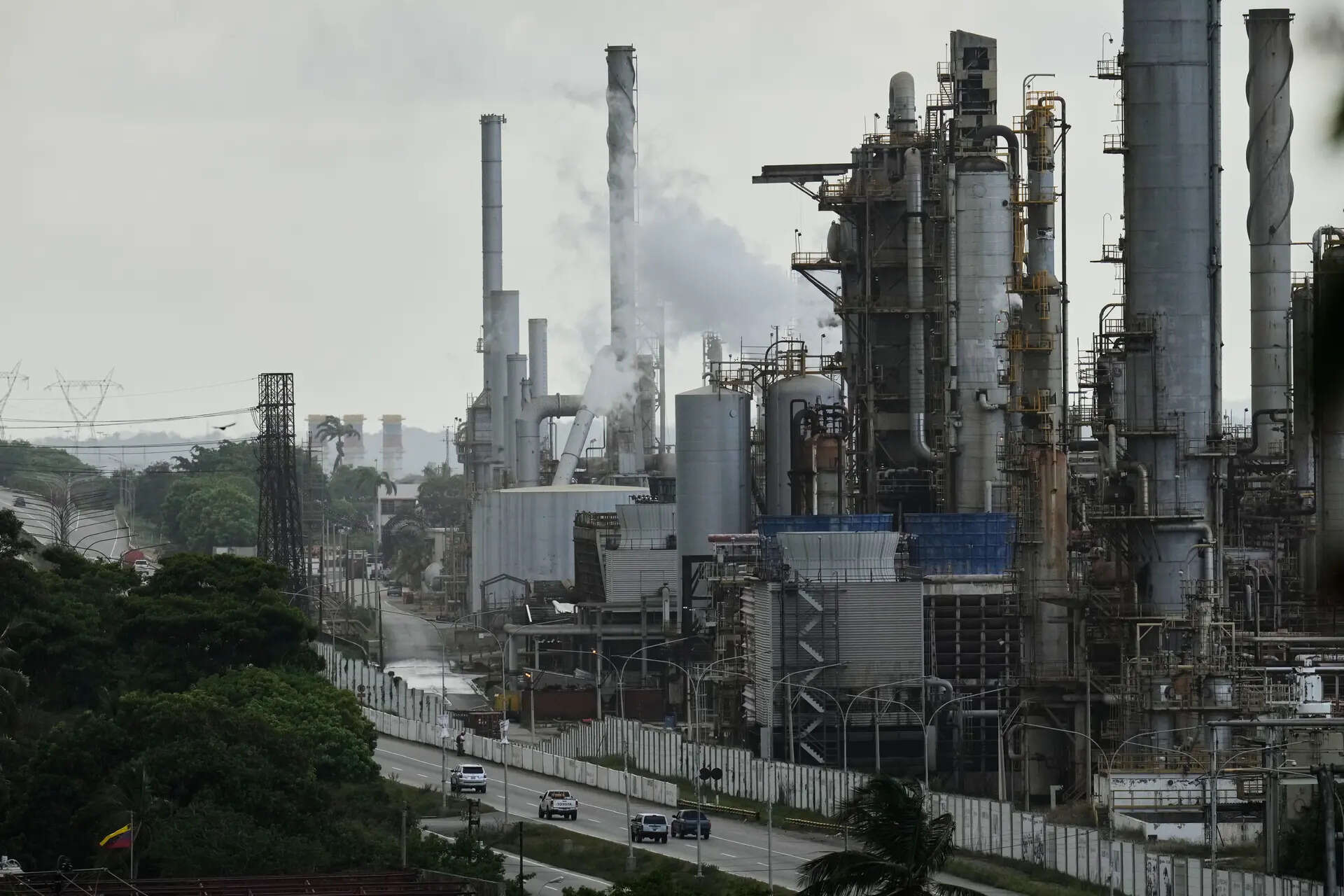
New Delhi: The US would struggle to quickly revive Venezuela’s oil sector, as local institutional capacity has been hollowed out and American oil companies-many of them forced out more than a decade ago-are likely to seek political stability before committing billions of dollars, industry executives said.
US President Donald Trump said on Saturday that large American oil companies would “spend billions of dollars” to fix the “badly broken” oil infrastructure in the country that holds among the world’s largest proven crude oil reserves.
To be sure, India’s exposure to Venezuela is rather minimal, and ONGC Videsh and other Indian state firms hold minority stakes in two oilfields, with about $500 million in dividends trapped in the Latin American country.
Industry executives say the US faces formidable hurdles, including potential political opposition. “Maduro may not have been a very popular president, yet Americans will face political resistance when they attempt to assert control,” said an executive.
Equally challenging will be resistance from entrenched interests within the bureaucracy and energy administration-groups that have continued to extract rents even as the oil industry collapsed, said the executive cited above.
Regaining control over the local administrative machinery will be critical.
“Without a credible authority to design, award, and enforce contracts, American companies will have little incentive to return,” he said.
For India, the regime change is unlikely to translate into immediate opportunities.
“We don’t have muscle power there in terms of ground presence,” an Indian energy executive said. “The American control could create opportunities for US companies – not really for India. For us to recover our dues, production has to stabilise, which will take time.”
Lifting of US sanctions, however, would allow Indian refiners, mainly Reliance Industries, to access heavier Venezuelan crude, which typically boosts margins at complex refineries.
Most international oil majors-apart from Chevron with a limited presence-exited Venezuela on a bitter note more than a decade ago.
Once bitten, twice shy
“Companies that sold assets at a loss will think twice before returning,” said an executive. “Oil majors may listen to Trump, but they remain accountable to shareholders-and without durable political stability and legal certainty, committing billions will be difficult.”
Beginning in the mid-2000s, the Hugo Chavez government systematically pushed out foreign operators through forced contract renegotiations, steep tax and royalty increases, and outright expropriations.