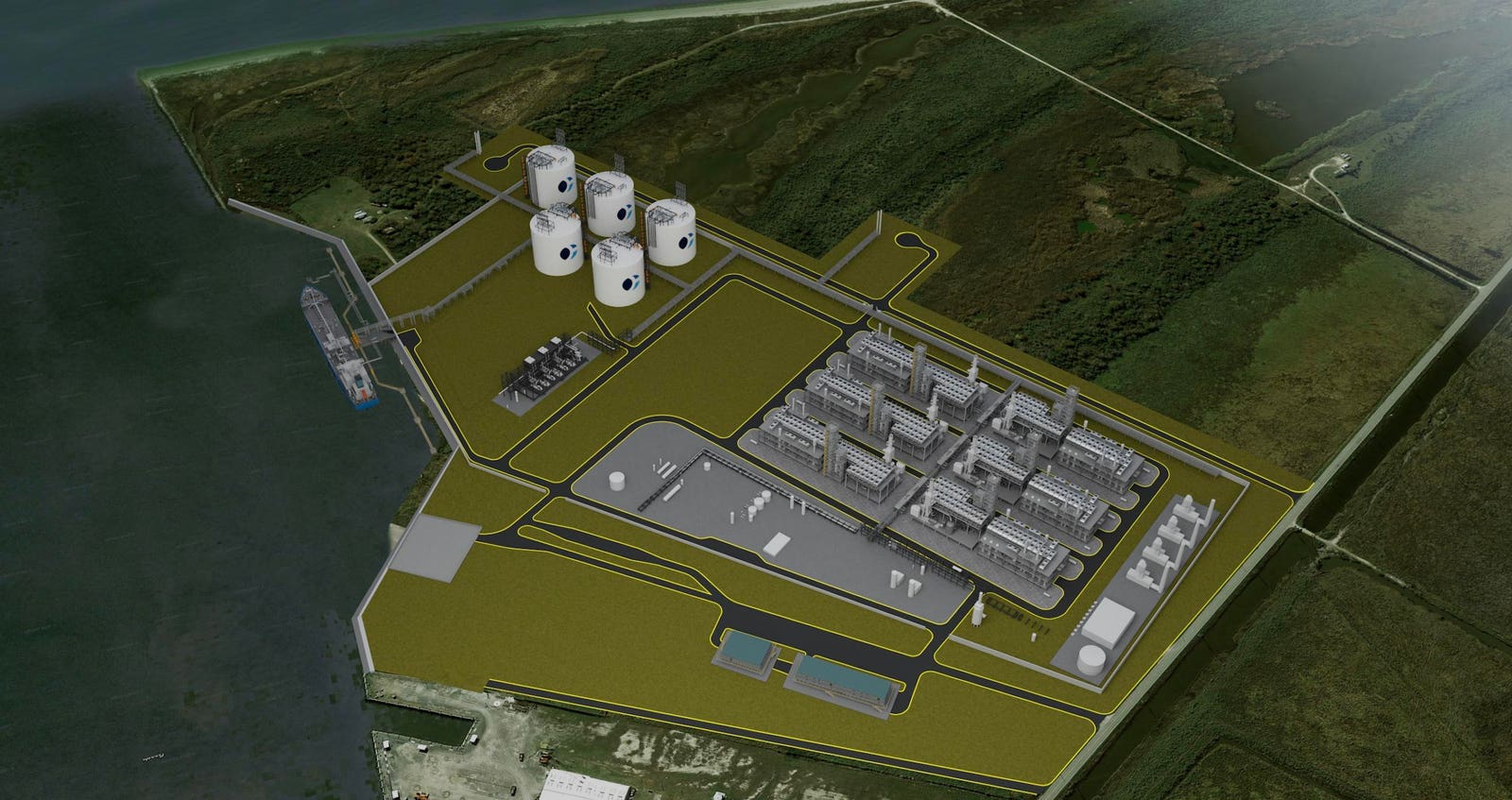
The global energy landscape is undergoing a profound transformation, with liquefied natural gas (LNG) emerging as a critical bridge fuel and a cornerstone of future energy security. In this dynamic environment, a new entity, Caturus, is making a strategic entrance, poised to redefine efficiency in the natural gas value chain. Forged by the private equity group Kimmeridge, Caturus is designed as a fully integrated “well-to-water” operation, combining robust upstream natural gas production with a significant downstream LNG export facility. This integrated strategy, backed by substantial international capital, positions Caturus as a compelling case study for investors seeking exposure to resilient growth in the evolving energy sector.
Caturus’s Integrated Strategy: De-Risking in Volatile Markets
Caturus represents a bold bet on the power of vertical integration within the natural gas sector. The company’s core strategy links its upstream gas production assets, Kimmeridge Texas Gas, directly to its downstream Commonwealth LNG export terminal in Cameron, Louisiana. This “well-to-water” model is designed to optimize the entire value chain, from extraction to global delivery, thereby mitigating the inherent risks associated with commodity price volatility and supply chain disruptions.
The upstream arm, led by seasoned industry veteran Dave Lawler, has already established a formidable presence, producing 600 million cubic feet per day (equivalent to 100,000 barrels of oil daily) from ultra-deep, high-pressure wells across 200,000 acres between Encinal and Laredo. With over 1,000 identified drilling locations, Caturus projects a doubling of its production volumes by 2029. This robust and expanding gas supply is earmarked to feed the Commonwealth LNG project, which boasts a planned capacity of 9 million tons per annum (MTPA). Crucially, 6 MTPA of this capacity is already secured under 20-year contracts with major international players like Glencore, Jera, and EQT, providing a strong foundation of predictable revenue streams.
This integrated approach is particularly pertinent given the current market volatility. As of today, Brent crude trades at $90.38, marking a significant 9.07% decline from its previous close, with WTI crude similarly down 9.41% to $82.59. This sharp correction follows a notable two-week trend where Brent shed 18.5%, falling from $112.78 on March 30th to $91.87 just yesterday. Such pronounced swings in the broader energy complex underscore the value of Caturus’s strategy. By controlling both the supply and export components, the company aims to insulate itself from the acute price fluctuations that often plague single-segment operators, offering a more stable investment profile amidst market uncertainty.
Strategic Capital & Geopolitical Underpinnings
The successful realization of the Commonwealth LNG project hinges on substantial capital, estimated at approximately $9 billion in project finance debt coupled with $2 billion in equity. A significant portion of this equity is being provided by Mubadala Energy, part of the United Arab Emirates’ $330 billion sovereign wealth fund, which has acquired a 24% stake in Caturus. This investment is not an isolated event but part of a broader geopolitical movement, with the UAE pledging a massive $1.4 trillion in U.S. investments and the European Union committing to buying $700 billion worth of American energy products. These commitments highlight the strategic importance of U.S. energy exports in global energy security and diversification efforts.
The influx of international capital not only de-risks the project financing but also underscores the global demand for reliable, long-term LNG supply. Kimmeridge’s decision to open an Abu Dhabi office this year further solidifies these international partnerships, ensuring close collaboration with key investors. Furthermore, Caturus is embracing innovative construction methodologies, leaning towards a modular building approach for the LNG plant. This strategy, where large components are fabricated off-site in controlled environments, is a pragmatic response to Gulf Coast labor constraints and aims to enhance cost-effectiveness and project timelines, a critical factor for large-scale infrastructure developments.
Forward Outlook: Navigating Supply Dynamics and Investor Expectations
For many investors, the overarching question remains: “What do you predict the price of oil per barrel will be by end of 2026?” This sentiment, frequently observed in our reader intent data, reflects a broader concern about future commodity prices and their impact on energy investments. While Caturus’s long-term LNG contracts provide a degree of insulation from immediate price gyrations, the overall health of the energy market significantly influences investor appetite for new projects and expansion capital.
The coming weeks are packed with events that could shape this sentiment. The OPEC+ Joint Ministerial Monitoring Committee (JMMC) meeting this Saturday, April 18th, followed by the Full Ministerial meeting on Sunday, will be closely watched. Any decisions regarding production quotas, which are also a frequent query from our readership, could impact global crude supply and, by extension, general energy market sentiment. While Caturus focuses on natural gas, crude oil prices often act as a bellwether for the broader energy complex. Furthermore, the weekly API and EIA inventory reports on April 21st, 22nd, 28th, and 29th will offer fresh insights into U.S. crude and natural gas supply-demand balances, providing critical data points for investors assessing the market environment Caturus will operate in. Caturus’s integrated model, with its locked-in long-term contracts, offers a compelling counter-narrative to short-term market volatility, promising more predictable cash flows amidst an otherwise unpredictable landscape.
Investment Implications for Long-Term Growth
Caturus emerges as a strategically positioned player in the global energy market, offering investors a unique opportunity to participate in the growth of integrated natural gas and LNG. The “well-to-water” strategy, coupled with significant international backing and innovative project execution, creates a robust framework designed for resilience and long-term value creation. The projected doubling of upstream volumes by 2029, alongside the substantial contracted capacity of Commonwealth LNG, underscores the company’s clear growth trajectory.
While project execution, market shifts, and the evolving regulatory environment always present risks for large-scale energy infrastructure, Caturus’s proactive approach to integration and its strong financial foundation mitigate many of these concerns. For investors seeking exposure to the global demand for natural gas, particularly in the context of energy transition and security, Caturus presents a well-thought-out and strategically sound investment thesis. Its ability to navigate commodity price volatility through vertical integration and secure long-term contracts positions it favorably against more exposed peers, making it a noteworthy consideration for diversified energy portfolios.