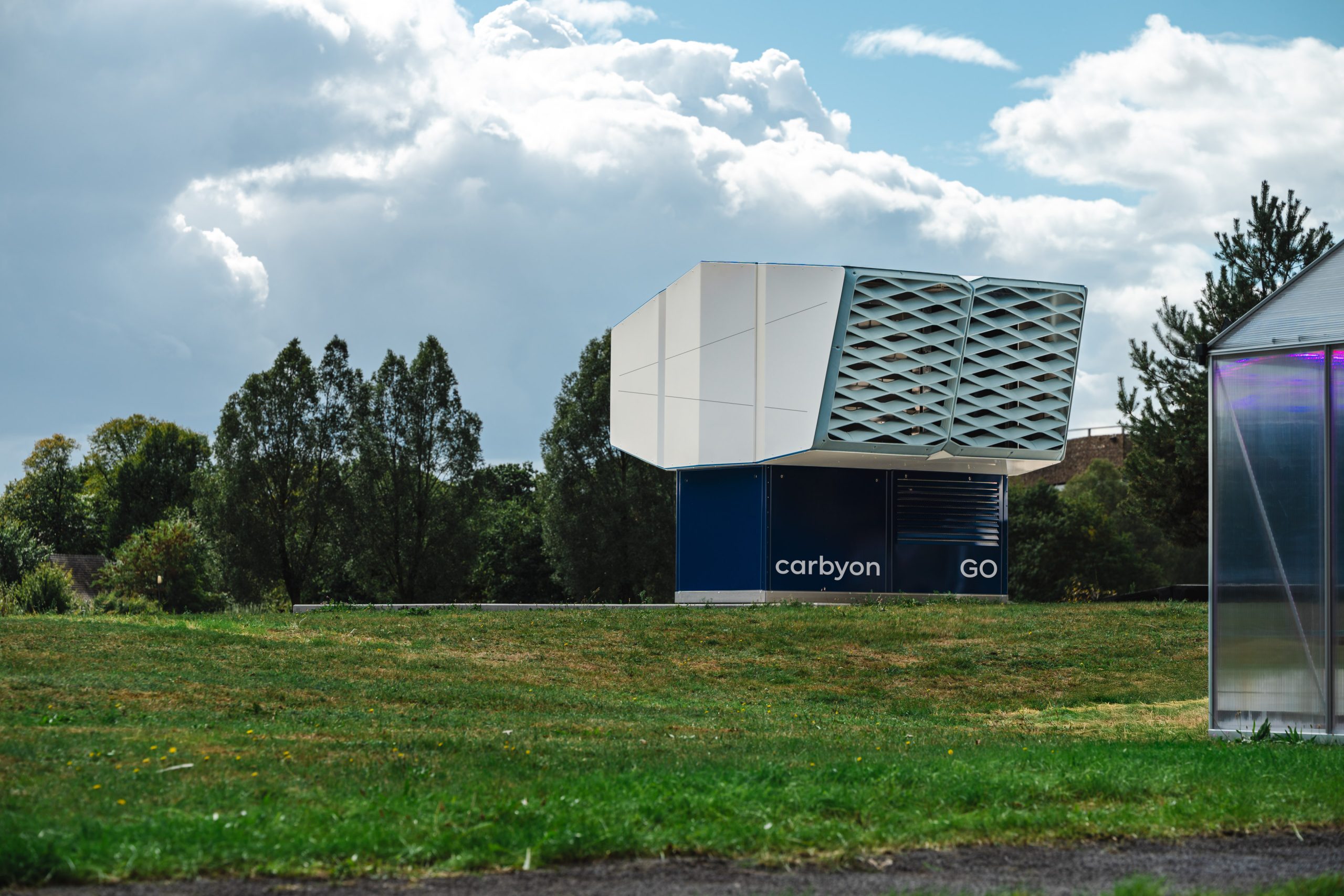
The global energy landscape is undergoing a profound transformation, presenting oil and gas investors with a dual challenge: meeting persistent energy demand while navigating an accelerating push towards decarbonization. In this complex environment, breakthrough technologies that offer scalable and economically viable carbon removal are not just innovative; they are essential for the long-term strategic positioning of the sector. Carbyon GO, a newly unveiled Direct Air Capture (DAC) machine, promises just such a breakthrough, positioning itself as a potential game-changer in the quest for gigaton-scale carbon management. Its compact design, rapid capture capabilities, and modular scalability could redefine how the industry approaches emissions reduction, offering a crucial pathway for the oil and gas sector to thrive in a carbon-constrained future.
Carbyon GO: A New Paradigm for Carbon Capture Efficiency
Carbyon GO represents a significant leap forward in carbon capture technology, moving beyond the limitations of traditional, often cumbersome, DAC systems. This Dutch startup has introduced what it claims is the world’s fastest DAC machine, capable of capturing three tons of CO2 per year with just one kilogram of sorbent material – an impressive feat comparable to the CO2 absorption of 150 trees. The core innovation lies in its proprietary sorbent technology, which allows Carbyon GO to capture CO2 200 times faster than conventional solutions, achieving 90% CO2 saturation in a mere 100 seconds. This unparalleled speed translates directly into significantly more cost-effective carbon capture, a critical factor for widespread adoption.
Beyond its speed, the modular and all-electric design of Carbyon GO is a crucial differentiator. Unlike the large, complex installations that have historically characterized carbon capture, this compact system allows for easier installation and scaling, opening up possibilities for global deployment, particularly in regions abundant with sustainable energy sources. This flexibility is vital for achieving the kind of widespread impact necessary to address atmospheric CO2 at a meaningful scale, making it an attractive proposition for energy companies looking to integrate carbon removal into their operations without prohibitive infrastructure costs or lengthy development cycles.
Navigating Volatility: Market Dynamics and Decarbonization Pressures
The backdrop against which Carbyon GO emerges is one of continued market volatility, underscoring the intricate balance between traditional energy reliance and the urgent need for decarbonization. As of today, Brent crude trades at $98.1 per barrel, reflecting a 1.3% dip, while WTI crude is at $89.58, down 1.74% within its daily range. This softness continues a broader trend, with Brent having declined by approximately 12.4% from its $112.57 peak just two weeks ago. Despite these recent fluctuations, crude prices remain elevated compared to historical averages, indicating sustained global demand for hydrocarbons. Simultaneously, gasoline prices hover around $3.07 per gallon, showing only a slight daily decrease of 0.65%, highlighting ongoing consumer demand.
This dynamic market environment fuels investor inquiries, a trend we see clearly reflected in the questions our readers are posing. Investors are actively seeking clarity on the fundamental drivers behind these price movements, asking about OPEC+ production quotas, the models powering live crude price responses, and the underlying data sources informing our market insights. This intense focus on market mechanics signals a critical need for transparent and robust data to inform investment decisions. It also highlights the strategic dilemma for oil and gas firms: how to capitalize on current energy demand while simultaneously de-risking against future carbon liabilities and regulatory shifts. Technologies like Carbyon GO offer a potential answer, providing a tangible avenue for the sector to actively participate in the carbon transition and diversify its long-term value proposition amidst fluctuating conventional commodity markets.
The Path to Gigaton Scale: Upcoming Catalysts and Strategic Vision
Carbyon’s vision extends far beyond the initial GO prototype, outlining a clear trajectory towards gigaton-scale carbon capture by 2032. This ambitious goal is underpinned by tangible development milestones. The company is actively developing a next-generation machine, which is scheduled for presentation as early as next year. This advanced model is projected to deliver a staggering 25 times more capacity within the same footprint as Carbyon GO, alongside significant reductions in energy consumption. Such an exponential increase in efficiency and capacity would be a monumental step, directly addressing the scale and cost challenges that have historically plagued DAC technologies.
For investors, these forward-looking developments must be viewed in the broader context of the energy calendar. While Carbyon’s specific milestones are internal, the upcoming OPEC+ Joint Ministerial Monitoring Committee (JMMC) and full Ministerial Meetings on April 17th and 18th, respectively, along with subsequent API and EIA weekly inventory reports, will set the near-term tone for global oil markets. These events offer critical insights into supply-demand balances and production policies, which directly influence the profitability and strategic focus of traditional oil and gas operations. As these short-term market forces unfold, the long-term investment thesis for scalable carbon capture grows stronger. A successful demonstration of Carbyon’s next-gen machine could significantly de-risk future investments in the DAC space, offering a concrete solution that allows the energy sector to contribute to climate goals without immediately abandoning its core business, thereby bridging the gap between today’s energy needs and tomorrow’s decarbonized imperatives.
Investment Implications and Strategic Positioning for O&G Portfolios
For oil and gas investors, Carbyon GO and its ambitious roadmap present a compelling opportunity to engage with the energy transition in a tangible, technologically advanced manner. This is not merely an environmental play; it’s a strategic move to future-proof portfolios against evolving regulatory landscapes, carbon pricing mechanisms, and shifting societal expectations. The promise of “affordable, accessible, and scalable” carbon capture directly addresses the industry’s need for economically viable solutions that can be integrated into existing infrastructure or deployed as standalone projects in conjunction with renewable energy assets.
The modular design of Carbyon GO makes it particularly attractive for potential partnerships or direct investment by large energy firms. Imagine the potential for O&G majors to deploy these compact units near their operations or in areas with abundant renewable energy, generating carbon credits, offsetting their own emissions, or even creating new revenue streams from captured CO2. The company’s aim for mass production by 2032 aligns with the long-term investment horizons of many institutional players in the energy sector. As Carbyon GO establishes a “strong foundation for what comes next” and serves as a “blueprint for the next generation of DAC technology,” early strategic engagement could offer significant competitive advantages. Investors should monitor the progress of the next-generation machine closely, as its anticipated 25-fold capacity increase and reduced energy consumption would be a game-changer, solidifying Carbyon’s position as a frontrunner in the race to achieve gigaton-scale carbon removal and offering a powerful tool for the oil and gas industry to navigate its evolving future.