A recent comprehensive review has cast a long shadow over the efficacy of carbon offsets, revealing that their failure to genuinely reduce global emissions stems from deep-seated, systemic issues rather than isolated incidents. For investors navigating the complex landscape of energy transition and ESG commitments, this finding is not merely academic; it represents a material risk to capital allocated to offset-reliant strategies and raises critical questions about the credibility of corporate net-zero targets. The study, drawing on two decades of evidence, concludes that the inherent problems plaguing most major carbon credit programs are “intractable,” suggesting that incremental adjustments, even those from recent international climate summits, are insufficient to address the core quality concerns. This analysis delves into the implications for energy sector investors, particularly amidst fluctuating commodity markets and pivotal upcoming events.
The Systemic Erosion of Carbon Offset Value
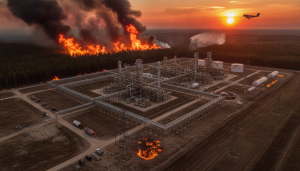
The core issue highlighted by the research is the pervasive poor quality of carbon credits, a problem far more fundamental than a “few bad apples.” The study identifies four critical dimensions where projects frequently fall short, often undermining any claimed emission reductions. First is the challenge of “additionality,” where credits are generated for projects that would have proceeded even without offset financing – think of a wind farm built purely for economic viability rather than as a direct result of carbon market incentives. Second, “permanence” remains a significant hurdle; projects like reforestation, while laudable, are vulnerable to natural disasters such as wildfires, negating their long-term carbon sequestration benefits. Third, “leakage” occurs when protecting emissions in one area inadvertently displaces them elsewhere, such as safeguarding a forest parcel only to push logging activities to an adjacent, unprotected region. Finally, “double-counting” allows both the project developer and the offset buyer to claim the same emission reduction, inflating global climate progress. These systemic flaws mean that a significant portion of the carbon credits in circulation do not represent verifiable, additional, or permanent reductions, with one meta-analysis suggesting less than 16% of investigated credits deliver real greenhouse gas emission cuts. This presents a considerable risk to any investment portfolio or corporate strategy heavily reliant on the integrity of voluntary carbon markets.
Navigating Volatility: Oil Markets and Carbon Credit Credibility
Against the backdrop of these revelations in carbon markets, traditional energy commodity prices continue their dynamic movements, directly impacting investor sentiment and capital allocation. As of today, Brent crude trades at $90.38 per barrel, marking a significant 9.07% decline from yesterday’s close. Similarly, WTI crude has seen a substantial drop, now priced at $82.59, down 9.41% within the last trading session. This sharp daily downturn follows a broader trend; Brent has shed nearly 20% of its value over the past two weeks, falling from $112.78 on March 30th to its current level. Gasoline prices have also dipped, now at $2.93, a 5.18% decrease. This market volatility underscores the inherent risks and opportunities in the energy sector. While a dip in crude prices might alleviate some inflationary pressures, it also impacts the revenue streams of oil and gas producers. For investors, this environment compels a re-evaluation of diversification strategies. If the perceived “green” hedge offered by carbon offsets is now compromised by systemic integrity issues, capital might be re-directed, either towards more resilient, directly verifiable emission reduction technologies or back into traditional energy assets, depending on the long-term outlook for oil and gas.
Future Catalysts and Investor Concerns
The immediate future holds several critical events that will further shape the energy investment landscape, influencing decisions for both traditional oil and gas plays and evolving energy transition strategies. Investors are keenly focused on forward-looking scenarios, with many asking about the trajectory of oil prices into late 2026 and the implications for integrated energy companies. The upcoming OPEC+ Ministerial Meeting on April 19th, 2026, is a pivotal event. Decisions made regarding production quotas, a frequent point of inquiry from our readership, could significantly impact global supply-demand dynamics and crude price stability. Any unexpected shifts could introduce further volatility, influencing the capital allocation decisions of major players. Additionally, the regular API and EIA weekly inventory reports on April 21st, 22nd, 28th, and 29th, alongside the Baker Hughes Rig Count on April 24th and May 1st, will provide crucial insights into immediate supply levels and drilling activity. These data points, while focused on conventional energy, invariably affect the broader investment climate, including the appetite for alternative energy ventures. As the credibility of carbon offsets diminishes, the pressure on companies like Repsol, which investors are tracking closely, to demonstrate concrete, verifiable emission reduction pathways beyond offsetting will only intensify, potentially shifting investment towards direct decarbonization technologies or more robust, transparent renewable energy projects.
Rethinking Energy Transition Investment Strategy
The implications of this study are profound for investors committed to the energy transition and those evaluating the ESG credentials of their portfolios. The notion that “incremental change will not solve” the carbon offset crisis demands a fundamental shift in how corporations approach their net-zero commitments and how investors assess those strategies. Simply purchasing carbon credits, even those from supposedly certified schemes, may no longer be a viable or credible path to achieving genuine climate targets. This necessitates enhanced due diligence for any investment linked to carbon offsetting. Investors must scrutinize the underlying projects for true additionality, verifiable permanence, and the absence of leakage or double-counting. The focus should shift towards companies demonstrating direct, measurable reductions in their operational emissions, investing in renewable energy generation, or developing breakthrough decarbonization technologies. The current market volatility, exemplified by recent crude price movements, combined with the systemic risks identified in carbon offsetting, creates a complex but also opportune moment for investors to re-evaluate their portfolios. Capital previously earmarked for questionable offset projects may now be redirected to more robust, transparent, and genuinely impactful energy transition initiatives, ensuring that investment not only aligns with climate goals but also delivers tangible, defensible value.